The Freedom Nobody Prepared Me For
Your healing won’t be a straight line, but you are more than the labels that have been given to you
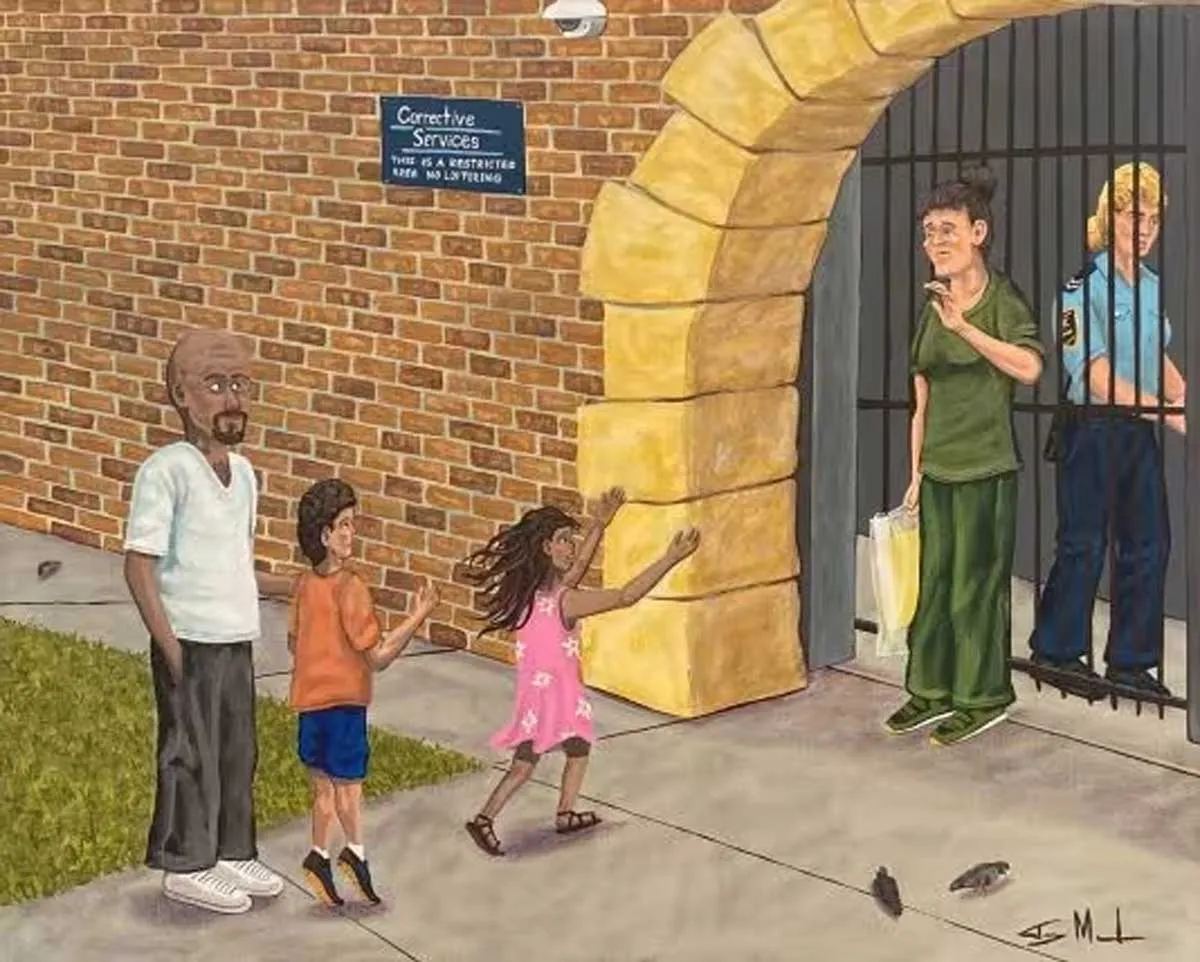
Boom Gate Gallery – 'Going Home Anxieties' by Tony, $900, #5494, 60cm x 75cm, acrylic on canvas


Your browser window currently does not have enough height, or is zoomed in too far to view our website content correctly. Once the window reaches the minimum required height or zoom percentage, the content will display automatically.
Alternatively, you can learn more via the links below.
In 2020, I faced a prison sentence that changed my life forever. But honestly, the punishment followed long after my sentence ended. At that time, I was drowning in addiction, homelessness, domestic violence, self-harm and risky behaviours. I was living in a world I genuinely wasn’t sure I would survive.
Prison was dehumanising me and gave me labels that felt impossible to escape.
It felt like people were deciding what kind of support I needed, what programs I should engage in and what was wrong with me, and that my survival depended on complying with this.
During this time, it felt like I was performing recovery after prison, not actually doing it.
Not once did somebody ask me what I needed, what mattered to me, or what healing looked like from my perspective.
At first I thought I could speak honestly about how I was going. I told the truth. I said I was struggling and that I felt isolated. I was trying to balance employment, exclusion orders, parole conditions, and rebuilding my life. It felt like a losing battle.
But instead of being met with understanding about my situation, I was made to feel dangerous, broken and undeserving of compassion.
After that, I became hardened.
I stopped being honest about how I was feeling and started focusing on getting through it. I cared less about my own version of healing and more about performing what others considered “successful reintegration”, even if that was isolating and difficult. I accepted the isolation. I accepted that maybe this was just what my life was now.
I was later commended by some people for having a “full 360”.
Looking back, I keep coming back to questions about power dynamics. I wonder what it would have been like to have a lived experience peer worker beside me, someone to witness that experience, hold space, and remind me that I was still human.
I don’t think a peer worker would have solved every problem I faced. But I do think they could have changed how I experienced those problems.
Instead of feeling like something was wrong with me, I might have felt understood. Instead of trying to perform recovery, I may have felt safe enough to be honest about where I was. Having someone who believed my voice mattered could have made reintegration feel less like something being done to me, and more like something I was actively part of.
Over the last six years, I’ve been rebuilding my life and rediscovering who I am outside of those labels. During this time, I realised people don’t always need solutions. Sometimes they need connection before anything else.
That understanding became the foundation for why I began studying. In the last two years, I have completed a Diploma of Counselling, Intentional Peer Support training, and I am currently finishing my Alcohol and Drug Skill Set. I am also a member of FIGJAM Collective where I have found a community of staunch advocates providing connection, support, and stability.
My life now isn’t perfectly healed or resolved, but I’ve learnt that healing was never about becoming a perfect version of myself. It was about finding connection, safety, and spaces where I could be fully human.
Through peer work I’ve learnt that we don’t stand above people as experts trying to fix them. We stand beside them. We learn from each other. We create relationships built on honesty, shared humanity, and understanding.
After a lifetime of being judged for my experiences, the person I once felt ashamed of has become the person I now use to connect with others.
For those of you who are still incarcerated, please know there is a beautiful life out there waiting for you. Your journey may be slow. Healing may not happen in a straight line. Some days will simply be about surviving, and that’s okay too.
Allow yourself the chance to rediscover who you are beyond survival, shame or labels. Your people and your peers are here to walk alongside you through that journey – not to judge you, fix you, or tell you who to become, but to remind you that your life, your story, and your future still hold value.
Walking out of jail here in Perth wasn’t the moment my life changed.
What helped me was realising that there was nothing inherently wrong with me and that it was my brain trying to cope.
For many of us, the idea of re-entering society after incarceration can feel like standing at a crossroad, unsure of which way to go.
Talking about prison once you’re out in the community can be challenging. It’s difficult to know the right thing to say, or how people might react.
Welcome to another exciting instalment of Ask Stacey!
Owning my story became one of the most liberating decisions I’ve ever made.
Welcome to another exciting instalment of Ask Stacey! And I got one of my favourite questions!
For any person in prison and coming up for release within the next year, have you ever thought about what your transitional worker should be doing?