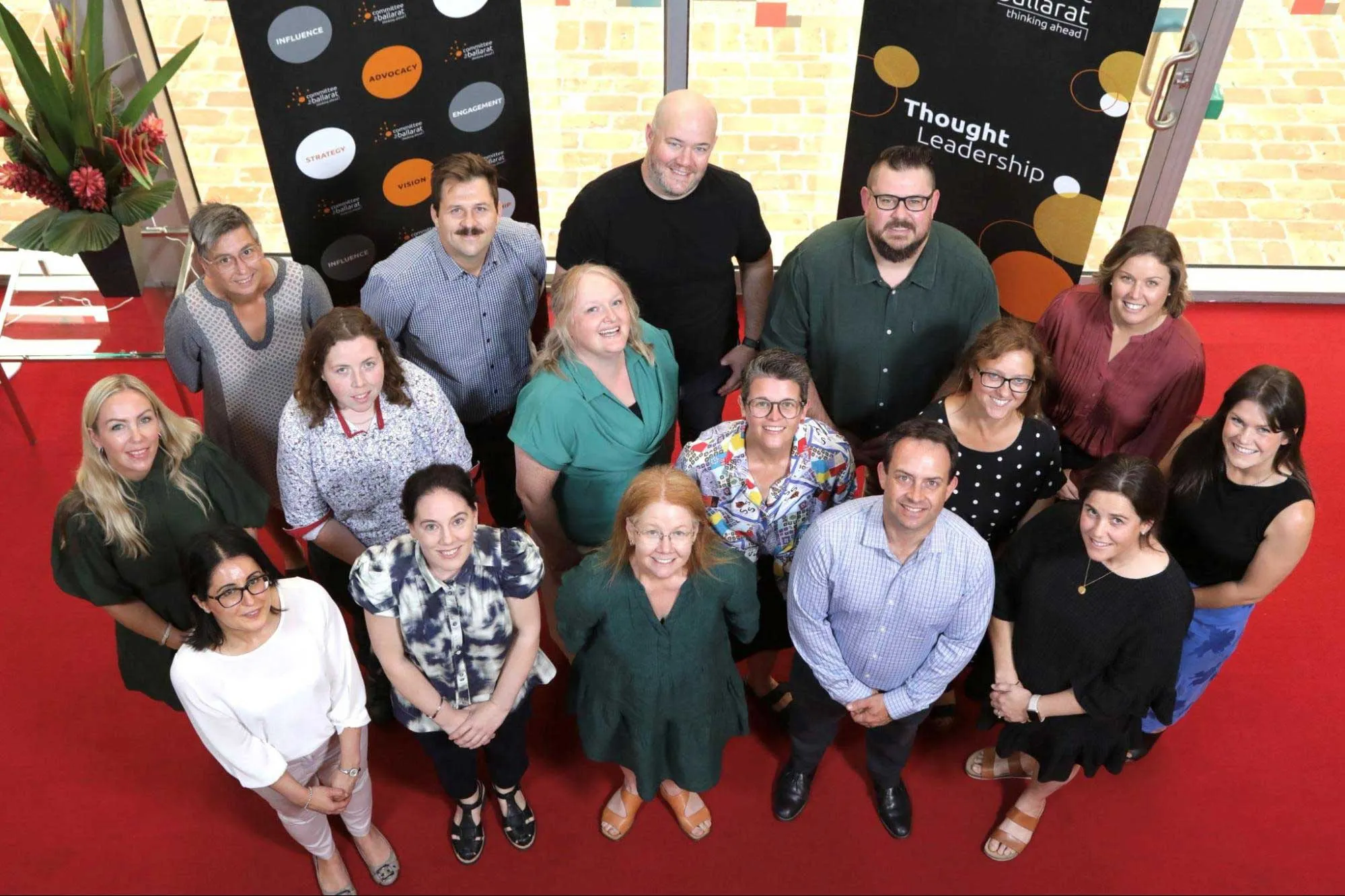
A program in Ballarat, Victoria is connecting regular community members with people in prison. The program, ‘The Future Shapers,’ conducts tours of local prisons and sit-down group interviews with inmates.
Launched in 2006 by the Committee for Ballarat, the leadership program draws together emerging leaders from Ballarat and the surrounding region. The Committee for Ballarat is a visionary membership body that develops innovative leadership with a strategic, long-term focus to encourage progressive change across government.
The program goes for three months. During this time, participants engage in numerous activities designed to help develop their leadership skills. The hallmark experience is the prison visit, which is designed to take the participants outside of their comfort zones.
For most people, visiting a prison is not something they would ever experience. For the inmates of these prisons, visits by the community never happens.
Normally, access to the prison system and its population by community members is strictly controlled and limited to contractors, officials and legal consults.
Access to the community for inmates is also extremely limited, as prison purposefully separates people from the general public.
Due to this separation, the opinions formed by both sides can be born in isolation. People can be ignorant, fed only by the information they’re exposed to by circumstance, such as a specific news source and the opinions of family and friends. Unfortunately, inmates often form the view that society hates them. Meanwhile, the community often sees inmates as monsters just waiting for another chance to strike again.
The program works to challenge this, and these prison visits allow for the reality to be seen by both groups.
So how does it work?
The participants attend the prison and are given a tour of the facilities, including the cells and industry areas of the prison. They are also given the chance to talk to the custodial staff and ask any questions. Each participant is vetted before they are allowed to enter the prison.
They are then settled into the visit centre where they are seated at various tables. The inmates are brought in to introduce themselves to the group. Each of the five or so inmates then sits at a table. What follows is similar to speed dating, or ‘speed friending’. Participants are able to ask questions to the inmate at their table, and after a certain amount of time, the inmates swap tables.
At the conclusion of the ‘speed friending’ part of the night, the group are given the opportunity to tell each other how they feel the night went. Usually, the feedback is positive for everyone. Participants are then asked to write a letter about the night and hand it to the facilitator, to be read out to the other group at a later date.
The letters from the program participants to the inmates will often focus on individual’s stories that have stood out to them. These letters don’t just serve as words of encouragement to inmates, but also as letters of hope.
For inmates, reading genuinely kind letters from members of the community is a sign that society maybe doesn’t hate them, and that they are not seen as a monster by everyone.
The letters from the inmates to the program participants help humanise people in prison, showing that they are not just CRN numbers; they are people – people who will be asking for a job, a rental property, maybe even help one day.
From this experience, each group has a better understanding of the other, and an understanding rooted in personal experience rather than theory. Maybe these future leaders will be deciding policy one day and they will remember the people they met in prison.
So how does it work?
The participants attend the prison and are given a tour of the facilities, including the cells and industry areas of the prison. They are also given the chance to talk to the custodial staff and ask any questions. Each participant is vetted before they are allowed to enter the prison.
They are then settled into the visit centre where they are seated at various tables. The inmates are brought in to introduce themselves to the group. Each of the five or so inmates then sits at a table. What follows is similar to speed dating, or ‘speed friending’. Participants are able to ask questions to the inmate at their table, and after a certain amount of time, the inmates swap tables.
At the conclusion of the ‘speed friending’ part of the night, the group are given the opportunity to tell each other how they feel the night went. Usually, the feedback is positive for everyone. Participants are then asked to write a letter about the night and hand it to the facilitator, to be read out to the other group at a later date.
The letters from the program participants to the inmates will often focus on individual’s stories that have stood out to them. These letters don’t just serve as words of encouragement to inmates, but also as letters of hope.
For inmates, reading genuinely kind letters from members of the community is a sign that society maybe doesn’t hate them, and that they are not seen as a monster by everyone.
The letters from the inmates to the program participants help humanise people in prison, showing that they are not just CRN numbers; they are people – people who will be asking for a job, a rental property, maybe even help one day.
From this experience, each group has a better understanding of the other, and an understanding rooted in personal experience rather than theory. Maybe these future leaders will be deciding policy one day and they will remember the people they met in prison.


