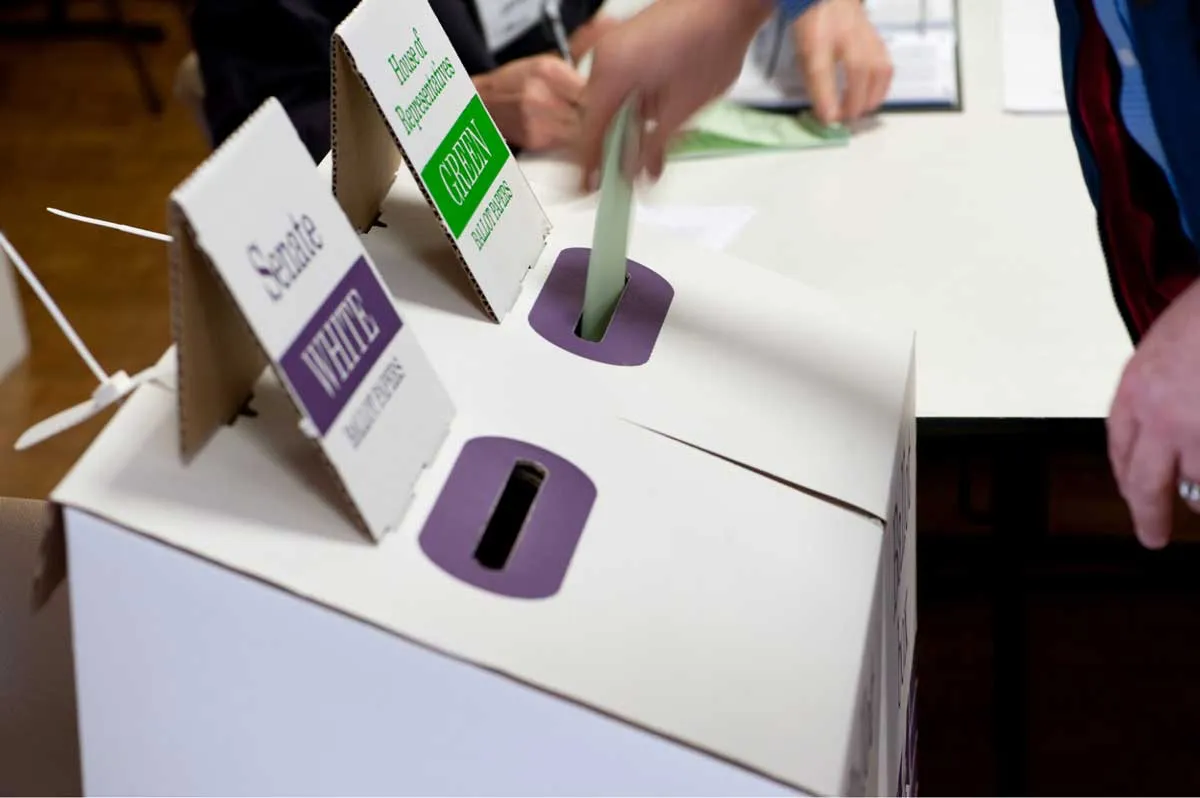
Nearly 10,000 people in prison voted in the recent federal election – a massive increase from previous polls.
In the 2022 federal election, just 274 people in prison cast their vote. In the 2025 election, the Australian Electoral Commission (AEC) issued just over 9,700 votes in mobile polling services in 82 prisons around the country.
That’s an increase of more than 3,000 percent.
It shows that people who are in prison want to vote and participate in the democratic process but have been unable to do so in previous elections due to a range of barriers.
All people in prison serving a sentence of less than three years are eligible to vote in a federal election. While it’s estimated that about 80 per cent of Australia’s prison population are eligible to vote, equalling about 35,000 people, there is no exact figure.
In Tasmania, a report found that more than 80 per cent of its prison population are serving a sentence of less than three years, while the Victorian Electoral Commission in 2010 found that only a quarter of eligible people in prison were enrolled to vote.
The huge uptick in voting this year was driven mainly by state and territory governments allowing mobile polling services to be placed in prisons for the first time, making voting in prison far easier than the complicated process of postal voting while incarcerated.
All states and territories allowed mobile polling booths to be established in most prisons for the federal election this year, with the AEC confirming that mobile polling booths were established in 82 out of the more than 110 prisons around Australia.
Pre-polling mobile voting booths were established in some of the largest prisons in the country for the first time, including Clarence Correctional Centre and Junee Correctional Centre in NSW, Port Phillip Prison and Ravenhall Correctional Centre in Victoria and Acacia Prison in Western Australia.
While the New South Wales Government had earlier blocked mobile polling booths due to safety concerns, it eventually allowed a “trial” of this to be done.
“In the 2025 federal election, CSNSW facilitated a trial of mobile polling booths within most of the state’s prisons,” a spokesperson for Corrective Services NSW told About Time. “The opportunity to engage in postal voting also remained available to inmates.”
The spokesperson also confirmed that eligible people in prison who did not vote will not be fined.
The NSW Government did not allow mobile voting booths to go into prisons during the 2023 referendum on the First Nations Voice to Parliament.
The NSW Inspector of Custodial Services then found that, of the 350 people incarcerated at the Bathurst Correctional Centre who were eligible to vote in the referendum, just 10 per cent actually did so, despite most people wanting to vote.
The Inspector urged mobile polling booths to be allowed and found that relying on just postal voting “carries a higher risk that voting is subject to unexpected barriers”.
The AEC ran 49 mobile polling booths during the referendum in other states and territories. It nearly doubled this figure for this year’s federal election.
While the New South Wales Government had earlier blocked mobile polling booths due to safety concerns, it eventually allowed a “trial” of this to be done.
“In the 2025 federal election, CSNSW facilitated a trial of mobile polling booths within most of the state’s prisons,” a spokesperson for Corrective Services NSW told About Time. “The opportunity to engage in postal voting also remained available to inmates.”
The spokesperson also confirmed that eligible people in prison who did not vote will not be fined.
The NSW Government did not allow mobile voting booths to go into prisons during the 2023 referendum on the First Nations Voice to Parliament.
The NSW Inspector of Custodial Services then found that, of the 350 people incarcerated at the Bathurst Correctional Centre who were eligible to vote in the referendum, just 10 per cent actually did so, despite most people wanting to vote.
The Inspector urged mobile polling booths to be allowed and found that relying on just postal voting “carries a higher risk that voting is subject to unexpected barriers”.
The AEC ran 49 mobile polling booths during the referendum in other states and territories. It nearly doubled this figure for this year’s federal election.


