ONLINE NEWS
May 1, 2026
Donate Here

News and Investigations

‘Overcrowded, Degraded and Infested with Cockroaches’: Inspection Finds Broome Prison Still Not Fit-For-Purpose

Denham Sadler is the Chief Reporter at About Time.

Office of the Inspector of Custodial Services

A remote WA prison holding mostly First Nations people is “entirely unsuitable and unfit for purpose”, with people sleeping on the floors and cockroach infestations, the state’s prison inspector has found.

In its report on the Broome prison the Office of the Inspector of Custodial Services (OICS) said that conditions in the Broome Regional Prison failed to meet the most basic of standards.

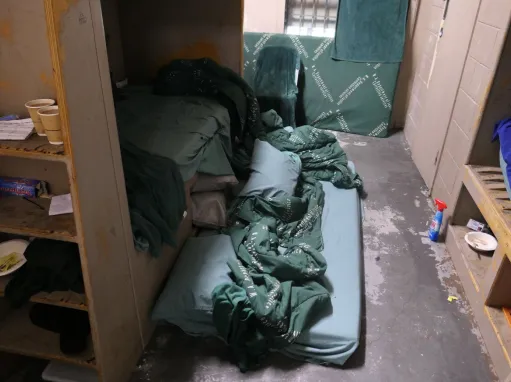
It identified degrading infrastructure, mass overcrowding, cockroach infestations, incarcerated people sleeping on the floor and men being held in what is meant to be a women-only unit.

“The absence of clarity around a new prison in Broome means that men and women sent there must endure substandard conditions that offer limited rehabilitation opportunities, and most will be released no better than when they were first sent there,” WA Inspector of Custodial Services Eamon Ryan said.

The conditions at Broome prison have become “routinely, administratively absorbed and politically tolerated”, Western Australia-based human rights campaigner Gerry Georgatos said.

“Broome Prison is an uninterrupted slow violence in the Kimberley,” Georgatos told About Time.

“Broome Prison, as it exists today, functions less as a place of correction than as a quiet repository for people society has decided not to see. It is an asylum of neglect, a warehouse of discarded lives, maintained not be accident but by indifference.”

A separate inspection of the Broome prison last year by WorkSafe identified similar issues, including in relation to pest control.

“Cockroach infestations are not sporadic but persistent, a symptom of neglect rather than surprise,” Georgatos said.

Office of the Inspector of Custodial Services

The Broome prison was built in 1945 and has three accommodation blocks surrounding a secure shed, known as the “bull pen”, which was commissioned in 1895.

The prison has an operating capacity of 66 people, but had 76 people incarcerated there at the time of the inspection, with 12 people sleeping on the floor.

The vast majority (95 percent) of people incarcerated at the Broome prison are First Nations.

“When substandard conditions persist in a facility where nearly everyone detained is of First People, it raises an unavoidable question: would these conditions be tolerated if the population were different?” Georgatos said.

“The answer is uncomfortable, but it is increasingly difficult to avoid.”

The inspection found  “dark and stale-smelling” cells in the Maximum-Security Section of the prison, with food scraps left uncleaned, toilets and basins in poor condition and cockroach infestations. People on remand, those who have not yet been found guilty of a crime, are also subject to these conditions.

This unit has a capacity of 28, but held up to 39 men during the inspections, with several forced to sleep on mattresses on the floor.
Office of the Inspector of Custodial Services

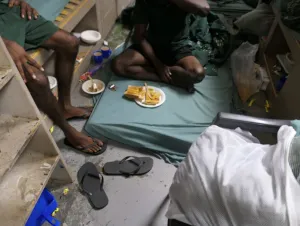
Broome prison has a small self-contained four-cell precinct meant to house just women, but the inspection found that one of the cells is regularly occupied by men, in breach of minimum national and international standards.

At the time of the inspection, four women were held in one overcrowded cell, while four men were held in a neighbouring cell.

Health and mental health services at the prison were also found to be inadequate, with only four GP hours available each week, and a reliance on limited telehealth mental health support.

The OICS called for significant interim investment in the prison while a new facility is planned and built. This was noted by the Department of Justice in its response, which said the construction of a new prison is a matter for government.

The Department did not support the OICS’s recommendation for more resourcing of onsite mental health services.

The Department said that weekly cleaning parties now attend the prison, and local pest control contractors have been engaged and will continue to visit the centre.

From the start of this year, GP services on offer doubled, up to two four-hour sessions, and efforts are underway to recruit more nurses, a prison support officer and an Aboriginal health worker.

For the last 25 years, the Western Australia Inspector of Custodial Services has been warning that Broome Regional Prison needs to be closed down.

“It is a prison that has long been described as unfit for purpose, yet it continues to operate as if its failures were incidental rather than structural,” Georgatos said.

“These warnings have not been whispered; they have been formally published, repeatedly, and with increasing alarm. And yet little has changed in substance.”

The WA government announced the prison would be closing in 2012 but reversed this decision three years later.

In 2019, funding was allocated to start looking for a new site, but there has been no real progress in replacing the prison, which the WA Inspector of Custodial Services has found falls “well short of community expectations and international standards”.

Since 2001, the OICS has conducted eight inspections of the prison, and all have found it to be well below minimum standards.

“At this stage, the only certainty for Broome seems to be that this intolerable situation will remain for the foreseeable future,” the report said.

“The people who will suffer the most will be the men and women sent there, and the staff who work there.”

A remote WA prison holding mostly First Nations people is “entirely unsuitable and unfit for purpose”, with people sleeping on the floors and cockroach infestations, the state’s prison inspector has found.

In its report on the Broome prison the Office of the Inspector of Custodial Services (OICS) said that conditions in the Broome Regional Prison failed to meet the most basic of standards.

It identified degrading infrastructure, mass overcrowding, cockroach infestations, incarcerated people sleeping on the floor and men being held in what is meant to be a women-only unit.

“The absence of clarity around a new prison in Broome means that men and women sent there must endure substandard conditions that offer limited rehabilitation opportunities, and most will be released no better than when they were first sent there,” WA Inspector of Custodial Services Eamon Ryan said.

The conditions at Broome prison have become “routinely, administratively absorbed and politically tolerated”, Western Australia-based human rights campaigner Gerry Georgatos said.

“Broome Prison is an uninterrupted slow violence in the Kimberley,” Georgatos told About Time.

“Broome Prison, as it exists today, functions less as a place of correction than as a quiet repository for people society has decided not to see. It is an asylum of neglect, a warehouse of discarded lives, maintained not be accident but by indifference.”

A separate inspection of the Broome prison last year by WorkSafe identified similar issues, including in relation to pest control.

“Cockroach infestations are not sporadic but persistent, a symptom of neglect rather than surprise,” Georgatos said.

Office of the Inspector of Custodial Services

The Broome prison was built in 1945 and has three accommodation blocks surrounding a secure shed, known as the “bull pen”, which was commissioned in 1895.

The prison has an operating capacity of 66 people, but had 76 people incarcerated there at the time of the inspection, with 12 people sleeping on the floor.

The vast majority (95 percent) of people incarcerated at the Broome prison are First Nations.

“When substandard conditions persist in a facility where nearly everyone detained is of First People, it raises an unavoidable question: would these conditions be tolerated if the population were different?” Georgatos said.

“The answer is uncomfortable, but it is increasingly difficult to avoid.”

The inspection found  “dark and stale-smelling” cells in the Maximum-Security Section of the prison, with food scraps left uncleaned, toilets and basins in poor condition and cockroach infestations. People on remand, those who have not yet been found guilty of a crime, are also subject to these conditions.

This unit has a capacity of 28, but held up to 39 men during the inspections, with several forced to sleep on mattresses on the floor.

Office of the Inspector of Custodial Services

Broome prison has a small self-contained four-cell precinct meant to house just women, but the inspection found that one of the cells is regularly occupied by men, in breach of minimum national and international standards.

At the time of the inspection, four women were held in one overcrowded cell, while four men were held in a neighbouring cell.

Health and mental health services at the prison were also found to be inadequate, with only four GP hours available each week, and a reliance on limited telehealth mental health support.

The OICS called for significant interim investment in the prison while a new facility is planned and built. This was noted by the Department of Justice in its response, which said the construction of a new prison is a matter for government.

The Department did not support the OICS’s recommendation for more resourcing of onsite mental health services.

The Department said that weekly cleaning parties now attend the prison, and local pest control contractors have been engaged and will continue to visit the centre.

From the start of this year, GP services on offer doubled, up to two four-hour sessions, and efforts are underway to recruit more nurses, a prison support officer and an Aboriginal health worker.

For the last 25 years, the Western Australia Inspector of Custodial Services has been warning that Broome Regional Prison needs to be closed down.

“It is a prison that has long been described as unfit for purpose, yet it continues to operate as if its failures were incidental rather than structural,” Georgatos said.

“These warnings have not been whispered; they have been formally published, repeatedly, and with increasing alarm. And yet little has changed in substance.”

The WA government announced the prison would be closing in 2012 but reversed this decision three years later.

In 2019, funding was allocated to start looking for a new site, but there has been no real progress in replacing the prison, which the WA Inspector of Custodial Services has found falls “well short of community expectations and international standards”.

Since 2001, the OICS has conducted eight inspections of the prison, and all have found it to be well below minimum standards.

“At this stage, the only certainty for Broome seems to be that this intolerable situation will remain for the foreseeable future,” the report said.

“The people who will suffer the most will be the men and women sent there, and the staff who work there.”

Victoria Pours $229m Into New Prison Beds

By Denham Sadler

The Victorian government will spend $229 million on new prison beds, five times what it has allocated to programs aiming to keep people out of them.

News and Investigations

ONLINE NEWS

3 MIN READ

Who’s Watching the Prisons? Introducing ‘Inspector’s Corner’

By About Time

There are a number of groups around the country that inspect prisons and provide feedback and recommendations to governments. These often involve visiting prisons and talking directly to people in custody.

News and Investigations

ISSUE NO. 22

2 MIN READ

New Civil Law Service for Women in NSW Prisons

By About Time

The Women’s Advocacy Service is a partnership between Legal Aid NSW and the Aboriginal Legal Service (NSW/ACT), providing face-to-face appointments with both a lawyer and a social worker.

News and Investigations

ISSUE NO. 22

2 MIN READ

Australia’s Oldest Prison Vegetable Garden?

By Hayley McKee

The men at Fremantle Prison learnt how to grow fresh food by planting concentrated rows of sturdy cabbage, corn, carrots, spring onions and other edible plants that could withstand the harsh WA sun. At its peak, the garden supplied the prison kitchen with more than 10,000 kilograms of fruit and vegetables each year.

News and Investigations

ISSUE NO. 22

3 MIN READ

Welcome to About Time

About Time is the national newspaper for Australian prisons and detention facilities

Your browser window currently does not have enough height, or is zoomed in too far to view our website content correctly. Once the window reaches the minimum required height or zoom percentage, the content will display automatically.

Alternatively, you can learn more via the links below.

Donations via GiveNow

Email

Instagram

LinkedIn