Donate Here

News and Investigations

‘Cascade of Harms’: Report Finds Racial Profiling Leading to Criminalisation and Over-Incarceration

Denham Sadler is the Chief Reporter at About Time.

Willy Pleasance

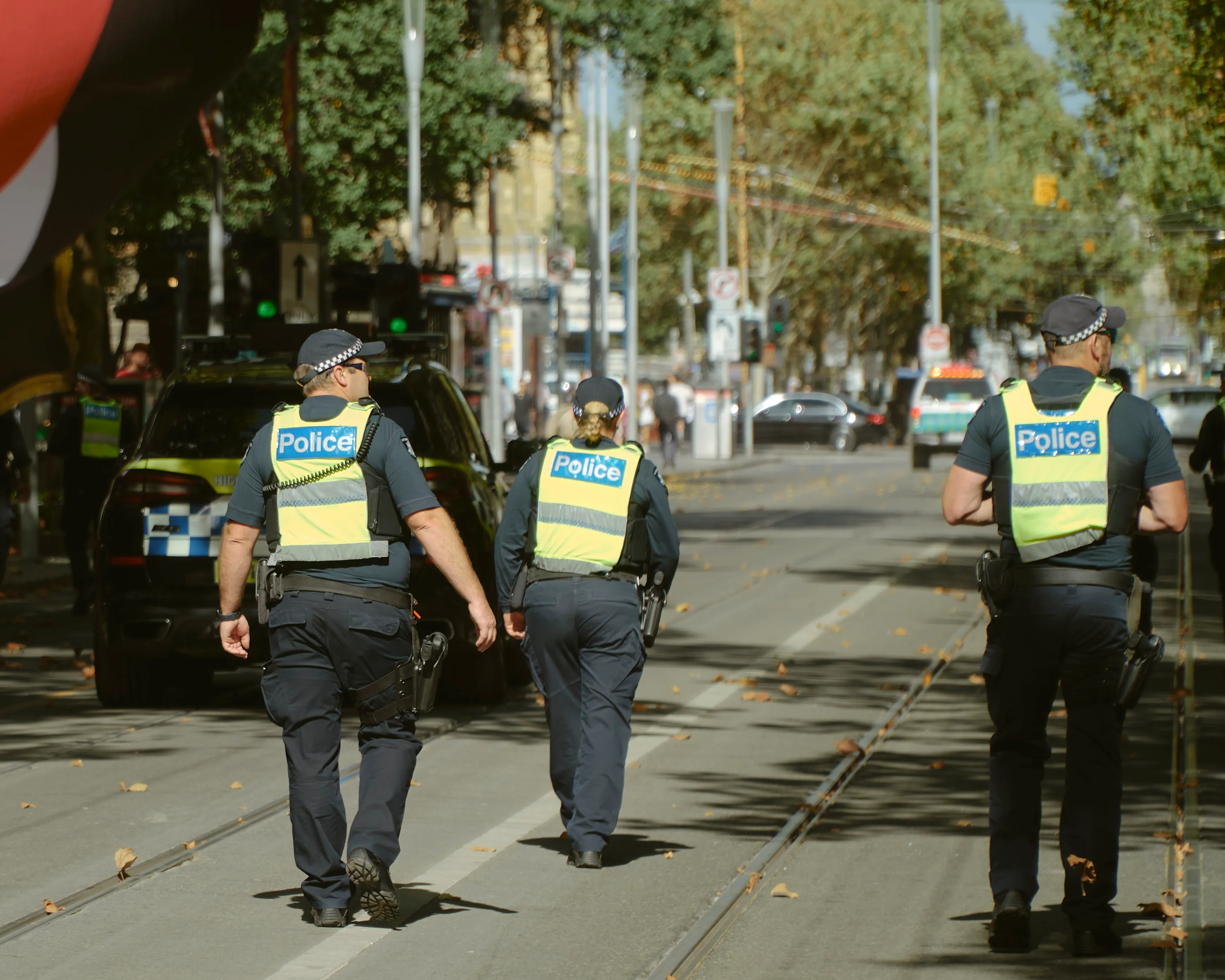
Racial profiling and the over-policing of certain groups is contributing to increased use of force and disproportionate incarceration rates, a new report has found. 

The report by the Racial Profiling Data Monitoring Project is based on Victoria Police data obtained through Freedom of Information requests.

The data reveals that in Victoria, First Nations people and those of African descent are far more likely to be searched by police and have force used against them. 

According to the report, First Nations people were 15 times more likely to be searched by Victoria Police officers in 2024 than those perceived to be white. Those perceived to be African were nine times more likely to be searched. First Nations people were also 10 times more likely to have force used or threatened against them, and 14 times more likely to be tasered or threatened with a taser than someone perceived to be white. 

The report also found that other racialised groups are far more likely to be searched than those perceived to be white, such as those of Middle Eastern or Pacific Island descent.

The over-policing of these particular communities is “confronting and deeply disturbing”, the report said.

“As the search rate for all groups is less than one in four searches, this over-policing is evidence of both systemic racism in Victoria Police practices and systematic racial profiling,” the report said.

Being searched by police can often be an individual’s entry point to the criminal justice system and racialised policing can lead to disproportionate incarceration rates, the report’s author Tamar Hopkins said.

“If police are 15 times more likely to search a person they perceive to be Aboriginal than a person they perceive to be white – and the hit rates for searches of these groups are roughly the same – this means that Aboriginal people are 15 times more likely to be criminalised and enter the criminal legal system than white people as a consequence of police activities alone,” the report said.

“This over-sampling has dramatic consequences in terms of who is arrested, who has to deal with courts, who has force used against them, who has to encounter the prison system, criminal record discrimination, time off work, impacts on families, stigma, stereotyping and a whole range of other consequences including increasing risks of physical and psychological harm and deaths associated with police and criminal justice contact.”

The first point of contact through a police search can have a devastating impact on an individual, Hopkins said.

“What that shows is that it is police contacts and police decisions about who to investigate that then leads to a cascade of additional harms, including use of force and custody and arrest,” Hopkins told About Time.

“It reinforces that link that it’s the police decision about who to stop and then search.”

The findings of the report have been rejected by Victoria Police.

“Assertions made in this research are incorrect,” a spokesperson for Victoria Police said.

“Victoria Police has zero tolerance towards racial profiling. Our officers are trained to police in response to a person’s behaviour, not their background.”

The spokesperson said that it is not mandatory for police to record ethnic appearance information when they are conducting searches, and that use of force incidents include the use of physical force and the threat to use force. 

Victoria Police in 2015 pledged to stamp out racial profiling in a  Federal Court settlement. 

But Hopkins said the new data shows that this was “in name only”.

“The policies introduced are sitting there in the police manual and they are not translating into action in any way,” Hopkins said.

“I think that really speaks to the disconnect between what police say to the public and the actual activities on the ground. The racial profiling ban was presentational only.”

The data shows that less than one in five searches conducted by police with reasonable grounds resulted in a “find” in 2024, a substantially lower rate than many other comparable jurisdictions.

“The poor performance of Australian police suggests that they engage in higher rates of unlawful searches,” the report said.

“This suggests that Australian police are subject to less scrutiny and accountability than police in comparable countries.”

Victoria Police recently designated the Melbourne CBD as a "designated search area" for six months, meaning they can search anyone within that zone without needing reasonable grounds or a warrant.

Racial profiling and the over-policing of certain groups is contributing to increased use of force and disproportionate incarceration rates, a new report has found. 

The report by the Racial Profiling Data Monitoring Project is based on Victoria Police data obtained through Freedom of Information requests.

The data reveals that in Victoria, First Nations people and those of African descent are far more likely to be searched by police and have force used against them. 

According to the report, First Nations people were 15 times more likely to be searched by Victoria Police officers in 2024 than those perceived to be white. Those perceived to be African were nine times more likely to be searched. First Nations people were also 10 times more likely to have force used or threatened against them, and 14 times more likely to be tasered or threatened with a taser than someone perceived to be white. 

The report also found that other racialised groups are far more likely to be searched than those perceived to be white, such as those of Middle Eastern or Pacific Island descent.

The over-policing of these particular communities is “confronting and deeply disturbing”, the report said.

“As the search rate for all groups is less than one in four searches, this over-policing is evidence of both systemic racism in Victoria Police practices and systematic racial profiling,” the report said.

Being searched by police can often be an individual’s entry point to the criminal justice system and racialised policing can lead to disproportionate incarceration rates, the report’s author Tamar Hopkins said.

“If police are 15 times more likely to search a person they perceive to be Aboriginal than a person they perceive to be white – and the hit rates for searches of these groups are roughly the same – this means that Aboriginal people are 15 times more likely to be criminalised and enter the criminal legal system than white people as a consequence of police activities alone,” the report said.

“This over-sampling has dramatic consequences in terms of who is arrested, who has to deal with courts, who has force used against them, who has to encounter the prison system, criminal record discrimination, time off work, impacts on families, stigma, stereotyping and a whole range of other consequences including increasing risks of physical and psychological harm and deaths associated with police and criminal justice contact.”

The first point of contact through a police search can have a devastating impact on an individual, Hopkins said.

“What that shows is that it is police contacts and police decisions about who to investigate that then leads to a cascade of additional harms, including use of force and custody and arrest,” Hopkins told About Time.

“It reinforces that link that it’s the police decision about who to stop and then search.”

The findings of the report have been rejected by Victoria Police.

“Assertions made in this research are incorrect,” a spokesperson for Victoria Police said.

“Victoria Police has zero tolerance towards racial profiling. Our officers are trained to police in response to a person’s behaviour, not their background.”

The spokesperson said that it is not mandatory for police to record ethnic appearance information when they are conducting searches, and that use of force incidents include the use of physical force and the threat to use force. 

Victoria Police in 2015 pledged to stamp out racial profiling in a  Federal Court settlement. 

But Hopkins said the new data shows that this was “in name only”.

“The policies introduced are sitting there in the police manual and they are not translating into action in any way,” Hopkins said.

“I think that really speaks to the disconnect between what police say to the public and the actual activities on the ground. The racial profiling ban was presentational only.”

The data shows that less than one in five searches conducted by police with reasonable grounds resulted in a “find” in 2024, a substantially lower rate than many other comparable jurisdictions.

“The poor performance of Australian police suggests that they engage in higher rates of unlawful searches,” the report said.

“This suggests that Australian police are subject to less scrutiny and accountability than police in comparable countries.”

Victoria Police recently designated the Melbourne CBD as a "designated search area" for six months, meaning they can search anyone within that zone without needing reasonable grounds or a warrant.

Court Chaos as Hearings Missed Due to Overcrowding

By Denham Sadler

Cells at the courts are so full that people can’t be taken there from prison to attend their hearings.

News and Investigations

NEWS

4 MIN READ

‘She Is Me’: Stories By Us, For Us

By Stacey Stokes and Tahlia Isaac

Project: herself is an organisation I set up to advocate and support women to have self-determined lives. We do that through a couple of things – including storytelling advocacy and frontline service delivery.

News and Investigations

ISSUE NO. 20

4 MIN READ

Around the Country – February 2026

By About Time

Including a death in custody at Acacia prison in WA, Victoria spending the most on youth detention, remand numbers skyrocketing in NSW and more.

News and Investigations

ISSUE NO. 20

10 MIN READ

Our Voices at the United Nations: A Joint Fight for Human Rights

By Sisters Inside, National Network of Incarcerated and Formerly Incarcerated Women and Girls, Scarlet Alliance and Asian Migrant Sex Worker Advisory Group

In July 2025, four organisations came together to make sure the truth about prisons, policing and criminalisation in Australia was heard on the world stage.

News and Investigations

ISSUE NO. 20

2 MIN READ

Welcome to About Time

About Time is the national newspaper for Australian prisons and detention facilities

Your browser window currently does not have enough height, or is zoomed in too far to view our website content correctly. Once the window reaches the minimum required height or zoom percentage, the content will display automatically.

Alternatively, you can learn more via the links below.

Donations via GiveNow

Email

Instagram

LinkedIn