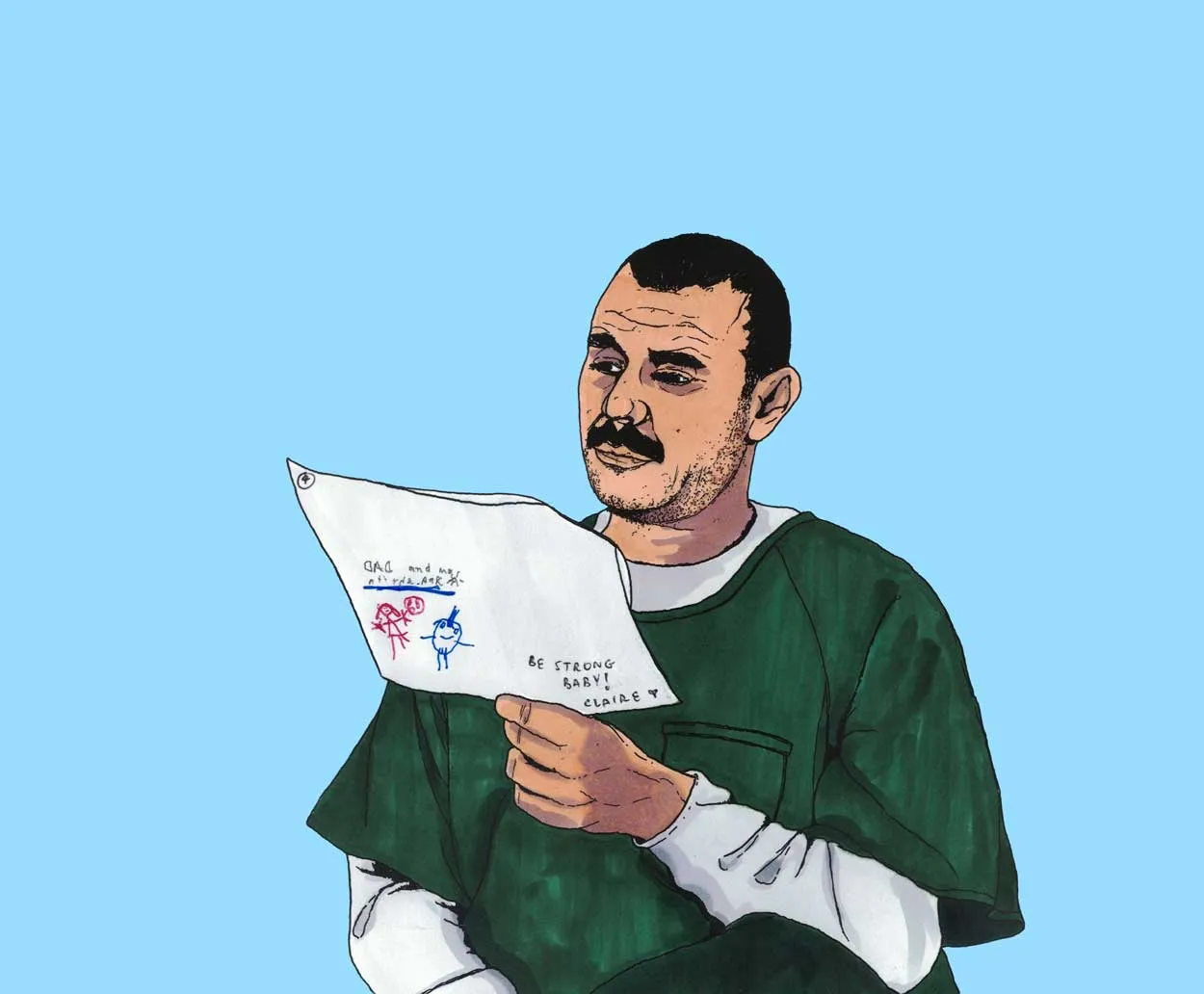
When Oscar* was in prison earlier this year, receiving a letter from his wife was the highlight of his week.
He would often get back from his work in the prison and hope to see the sign saying that he had mail to collect.
But, due to a blanket ban on physical mail in New South Wales prisons, these letters were photocopied and then thrown out, with Oscar receiving a photocopied version instead.
He said that often the letters would be photocopied so poorly that they were unreadable, and sometimes pages were missing or given to the wrong people. On one occasion, a hand print had been photocopied on top of a letter.
“You’d receive mail and get excited – it’s such a big thing receiving mail – only to open it up and it would just be unreadable or have pages missing,” Oscar told About Time.
“It’s a false promise – it gives false hope. You open it up, and it’s unreadable.
“So many people have their mail lost. There were guys with kids getting their school reports sent in, and it was just unreadable garbage.”
For Oscar’s wife, Sarah*, it was demoralising to know that much of what she was sending her husband on the inside was not making it to him.
“I went from writing every day to basically not writing at all by the end, because it was so poorly photocopied or it was delayed,” Sarah told About Time.
“It just felt like my efforts to document our memories and keep in contact were being destroyed and my efforts to keep his morale up were ending up being something that would make him upset.
“In some of the letters I poured my heart out, but he’s not gotten it, which is pretty deflating.”
Since 2020, all letters sent to prisons in New South Wales have been photocopied and then thrown out or shredded, with the photocopy provided to the inmate.
The regulation was introduced during the Covid pandemic with the aim of preventing drugs being sent in through the mail or on the letters.
There have been widespread concerns that letters are regularly being photocopied in a way that makes them unreadable, with some pages lost and others provided to the wrong people. It is also preventing people in prison from having physical copies of things like birthday cards and drawings by their children.
Despite calls by the NSW prison inspector for the policy to be overhauled and questions over its legality, all mail to prisons in the state is still being photocopied.
A similar regulation has been in place in Victoria since 2021, allowing for non-exempt mail to be photocopied and the original destroyed. In Victoria, not all mail is photocopied, with a decision to do so made based on “intelligence and known risk factors”, including a history of drug use and trafficking, a government spokesperson told
About Time.
“Mail is one of the most common methods used by people attempting to smuggle contraband into Victorian prison, with some mail photocopied to prevent this from occurring,” the spokesperson said.
It’s understood that no other state has a blanket rule for all physical mail to be photocopied then thrown out or shredded.
“It seems like they’re trying to isolate prisoners even further from their families,” Sarah said.
“Why would you be doing that when we all know that having strong family connections and support reduces recidivism?”
The NSW Inspector of Custodial Services first raised the issue in a 2023 report in which it called on the destruction of inmate mail to “cease entirely”.
“The persistent implementation issues mean we cannot support the continuation of this practice, even if it should be found to be lawful,” the report said.
“In the absence of evidence that correspondence is imprinted with an illicit substance, original mail should be either provided to the inmate or stored in their property.”
This recommendation was rejected by the state government.
The prison inspector found the rule was having a significant negative psychological impact by denying people the sentimental value of original mail, particularly the smell of home or a child’s drawing.
In 2021–22, the first full year since the policy was implemented in NSW, there were 260 instances of contraband found in mail sent to prisons in the state. This number has fallen to 53 in 2023–24.
At the privately-run Clarence Correctional Centre, in New South Wales, physical mail is scanned and then the photocopied version is sent digitally to inmates on their tablets.
The prison has also introduced a secure messaging service on the tablets, allowing immediate communication with approved contacts.
It uses artificial intelligence technology to scan these messages for sentiment analysis and key words.
Other states and territories employ different security screening methods for mail, including sniffer dogs.
In Victoria, the rules are that mail can be photocopied based on “sound rationale”, including if the recipient has a history of trafficking or there is intelligence suggesting they might.
The rules state that it is "critical that there is justification” for the photocopying to be done.
Several states in the United States use scanners to check for contraband in mail, with the original physical versions then provided to inmates.
A VeroVision scanner costs just over $225,000 ($US150,000) and would allow for all mail going into prison to be scanned for drugs and other contraband.
Oscar said it would make a big difference for people in prison in the state.
“It would have a huge impact. It’s such a big thing for guys inside to get mail,” he said.
“They have enough issues to deal with – they’re trying to work through mistakes they’ve made – and this is just an extra punishment.”
Sarah said that making sure that the original letter goes to someone in prison would encourage more loved ones in the community to write.
“I went from writing every day to not at all, and I can only imagine others doing the same,” she said.
“It would be a big morale boost for people inside and give them something to look forward to.
“They’d be able to stick things up on the wall like their kids’ drawings – it’s not the same when you receive a digital copy on a tablet or something poorly photocopied with lines through it.
“It would improve the quality of life – it’s a small but significant detail. It would turn letters from a source of frustration to one of hope again.”
It’s understood that no other state has a blanket rule for all physical mail to be photocopied then thrown out or shredded.
“It seems like they’re trying to isolate prisoners even further from their families,” Sarah said.
“Why would you be doing that when we all know that having strong family connections and support reduces recidivism?”
The NSW Inspector of Custodial Services first raised the issue in a 2023 report in which it called on the destruction of inmate mail to “cease entirely”.
“The persistent implementation issues mean we cannot support the continuation of this practice, even if it should be found to be lawful,” the report said.
“In the absence of evidence that correspondence is imprinted with an illicit substance, original mail should be either provided to the inmate or stored in their property.”
This recommendation was rejected by the state government.
The prison inspector found the rule was having a significant negative psychological impact by denying people the sentimental value of original mail, particularly the smell of home or a child’s drawing.
In 2021–22, the first full year since the policy was implemented in NSW, there were 260 instances of contraband found in mail sent to prisons in the state. This number has fallen to 53 in 2023–24.
At the privately-run Clarence Correctional Centre, in New South Wales, physical mail is scanned and then the photocopied version is sent digitally to inmates on their tablets.
The prison has also introduced a secure messaging service on the tablets, allowing immediate communication with approved contacts.
It uses artificial intelligence technology to scan these messages for sentiment analysis and key words.
Other states and territories employ different security screening methods for mail, including sniffer dogs.
In Victoria, the rules are that mail can be photocopied based on “sound rationale”, including if the recipient has a history of trafficking or there is intelligence suggesting they might.
The rules state that it is "critical that there is justification” for the photocopying to be done.
Several states in the United States use scanners to check for contraband in mail, with the original physical versions then provided to inmates.
A VeroVision scanner costs just over $225,000 ($US150,000) and would allow for all mail going into prison to be scanned for drugs and other contraband.
Oscar said it would make a big difference for people in prison in the state.
“It would have a huge impact. It’s such a big thing for guys inside to get mail,” he said.
“They have enough issues to deal with – they’re trying to work through mistakes they’ve made – and this is just an extra punishment.”
Sarah said that making sure that the original letter goes to someone in prison would encourage more loved ones in the community to write.
“I went from writing every day to not at all, and I can only imagine others doing the same,” she said.
“It would be a big morale boost for people inside and give them something to look forward to.
“They’d be able to stick things up on the wall like their kids’ drawings – it’s not the same when you receive a digital copy on a tablet or something poorly photocopied with lines through it.
“It would improve the quality of life – it’s a small but significant detail. It would turn letters from a source of frustration to one of hope again.”


