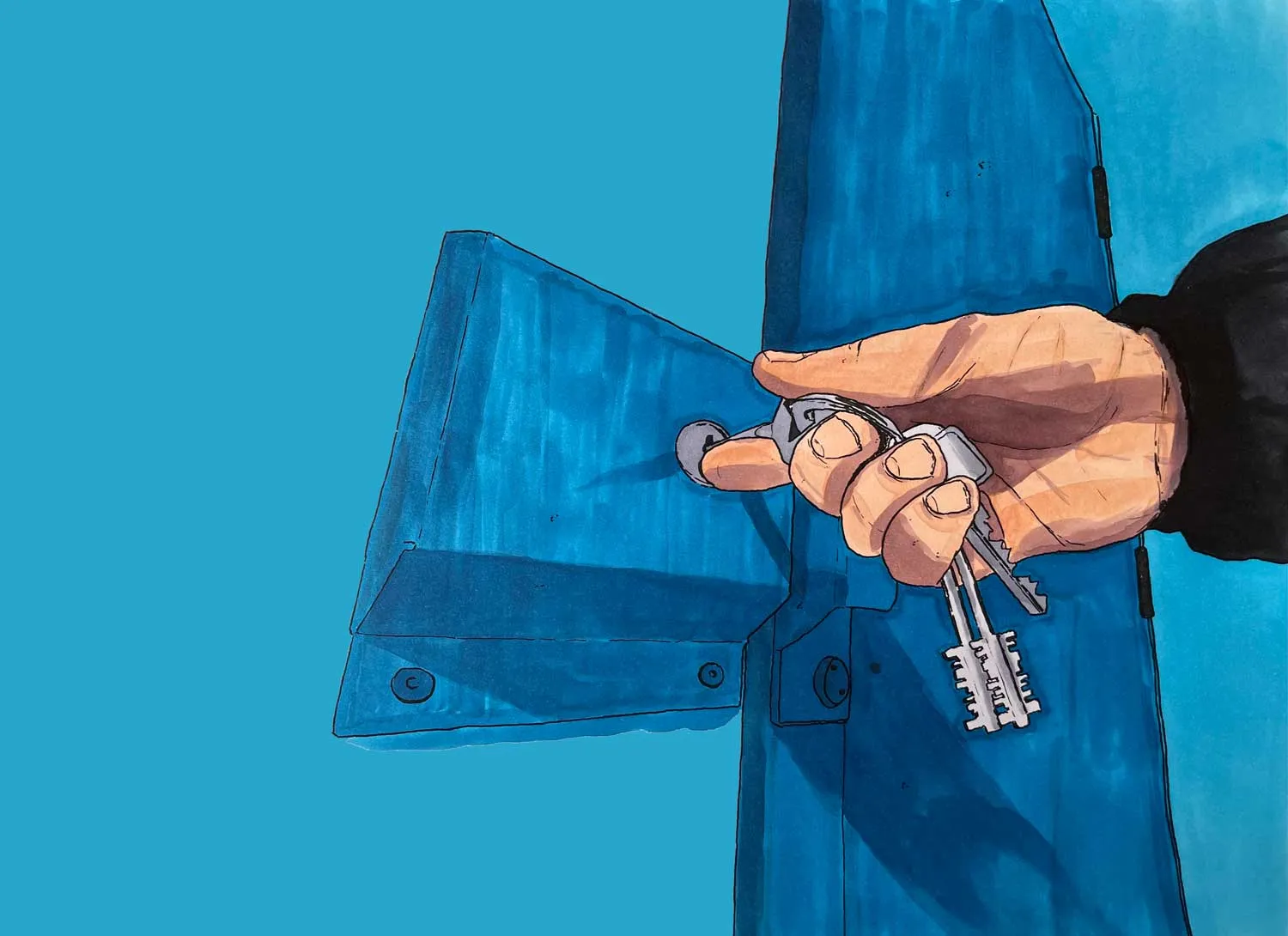
In early December, all public prisons in South Australia were thrown into lockdown after prison officers went on strike.
At Yatala Labour Prison in Adelaide, the lockdown stretched for four and a half days with no time out of the cells across more than 110 hours.
During the lockdown, About Time heard that people in prison were unable to shower, and had no access to clean clothes.
There was also no access to phone calls – restricting contact with children, loved ones and legal teams.
Court proceedings, including bail hearings, were also cancelled, as were all visits.
In what could be an Australian first, with just a handful of non-union staff left to run the whole prison, reportedly a number of remanded people were let out of the cells to help run the facility.
The South Australian prison officers went on strike as part of a push for a 20 percent pay rise over the coming 18 months.
There have been several strikes by prison officers recently around the country, with prisons placed into long lockdowns typically as part of bargaining negotiations with the government.
The situation in South Australia is typical of what happens when these strikes occur, with those in prison given little notice before being confined to their cells for hours or days on end.
In October last year, thousands of New South Wales prison officers also went on strike, plunging incarcerated people into abrupt and extended lockdowns.
These lockdowns also led to cancelled legal appointments, court appearances and family visits.
Peter* had a bail application court hearing on the morning the officers went on strike. He was left sitting in the AVL room at Silverwater Correctional Complex until late evening, with no-one telling him that the strike had led to the hearing being cancelled.
“They took him down first thing in the morning and the strike happened not long before lunchtime, but no one explained anything to him,” Peter’s partner told About Time.
“He was left there completely unaware of what was going on. Our lawyer couldn’t get a hold of him either because no-one was available to operate the AVL phones.
It was incredibly distressing for everyone involved.”
Last year’s NSW strike was in protest to the sentence handed to a man found to have assaulted a prison officer at Cessnock Correctional Complex.
Thousands of prison officers across NSW took part in the strike, which lasted for three days, and led to some centres that typically have 60 staff operating with just six people.
Department of Communities and Justice Assistant Commissioner Craig Smith told a commission that the strike had been “catastrophic”, and all people in prison in the state were in lockdown because of it.
Skye Humphrey had a scheduled visit with her husband at the Metropolitan Remand and Reception Centre at Silverwater cancelled because of the officers’ strike.
“Everyone was punished the week they cancelled visits due to a strike for something that happened in another jail,” Humphrey told About Time.
“To cancel visits over Christmas and then to continue doing it from the strike onwards has been an absolute heartbreak for everyone involved.”
A spokesperson for Corrective Services NSW said that industrial action happens in prisons in the state “from time to time”.
“When strikes occur, prisons are operated by a reduced number of staff who provide care and essential services for all inmates,” the spokesperson told About Time.
“On some occasions there will be service impacts to court appearances.”
In October last year, thousands of New South Wales prison officers also went on strike, plunging incarcerated people into abrupt and extended lockdowns.
These lockdowns also led to cancelled legal appointments, court appearances and family visits.
Peter* had a bail application court hearing on the morning the officers went on strike. He was left sitting in the AVL room at Silverwater Correctional Complex until late evening, with no-one telling him that the strike had led to the hearing being cancelled.
“They took him down first thing in the morning and the strike happened not long before lunchtime, but no one explained anything to him,” Peter’s partner told About Time.
“He was left there completely unaware of what was going on. Our lawyer couldn’t get a hold of him either because no-one was available to operate the AVL phones.
It was incredibly distressing for everyone involved.”
Last year’s NSW strike was in protest to the sentence handed to a man found to have assaulted a prison officer at Cessnock Correctional Complex.
Thousands of prison officers across NSW took part in the strike, which lasted for three days, and led to some centres that typically have 60 staff operating with just six people.
Department of Communities and Justice Assistant Commissioner Craig Smith told a commission that the strike had been “catastrophic”, and all people in prison in the state were in lockdown because of it.
Skye Humphrey had a scheduled visit with her husband at the Metropolitan Remand and Reception Centre at Silverwater cancelled because of the officers’ strike.
“Everyone was punished the week they cancelled visits due to a strike for something that happened in another jail,” Humphrey told About Time.
“To cancel visits over Christmas and then to continue doing it from the strike onwards has been an absolute heartbreak for everyone involved.”
A spokesperson for Corrective Services NSW said that industrial action happens in prisons in the state “from time to time”.
“When strikes occur, prisons are operated by a reduced number of staff who provide care and essential services for all inmates,” the spokesperson told About Time.
“On some occasions there will be service impacts to court appearances.”


