People are repeatedly missing crucial court hearings or being forced to appear via audiovisual link because Victorian court cells and prisons are struggling to keep pace with a rapidly rising number of people being denied bail.
A lawyer from the Victorian Aboriginal Legal Service (VALS) told About Time that despite trying 15 times to contact the client for an important bail hearing, the first time she spoke with them was when the audiovisual link connected to the court room.
“This caused delays and disadvantage for the client, which ultimately denied them an important conversation and right they have to legal consult,” VALS CEO Nerita Waight told About Time.
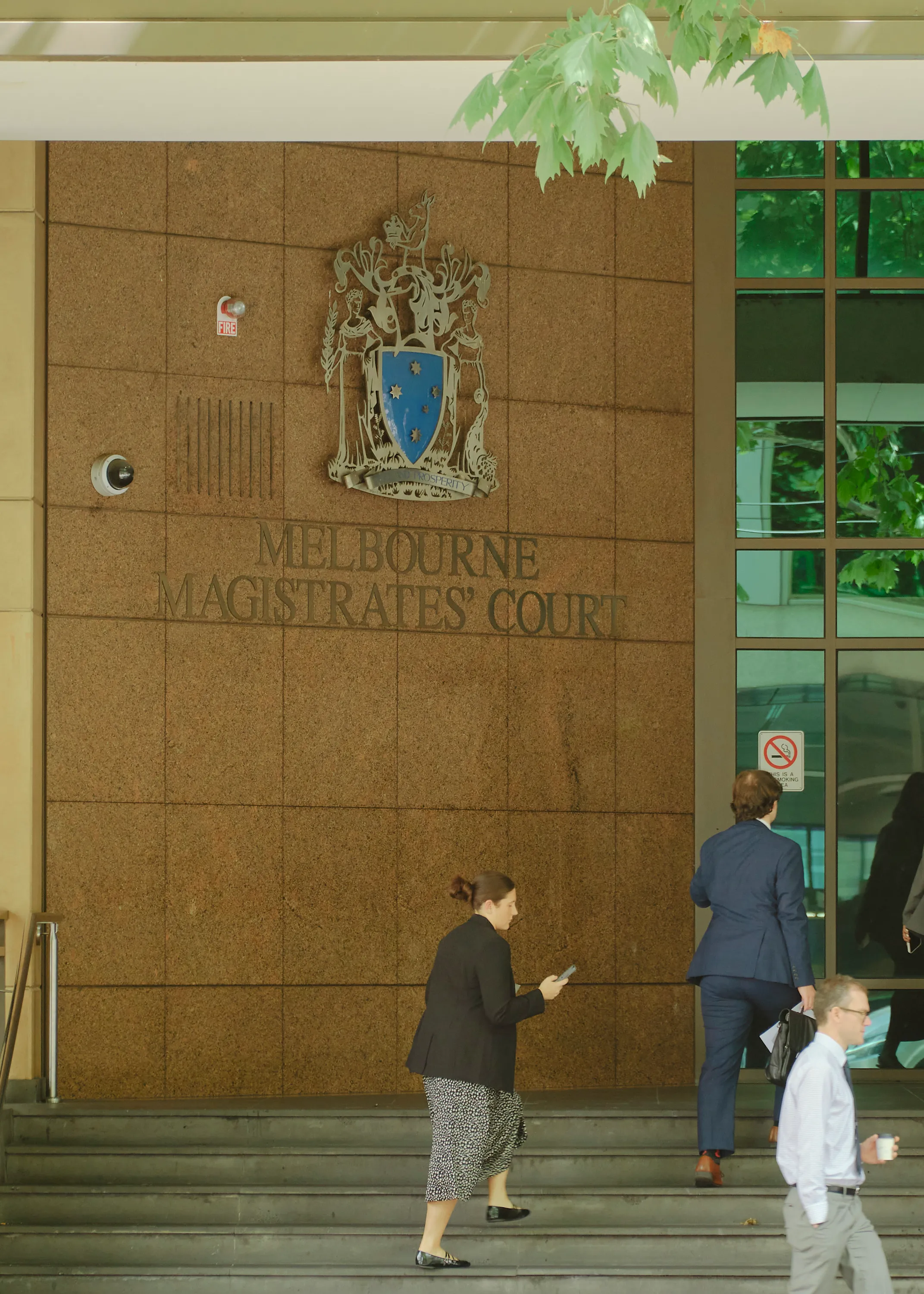
The issue stems from the cells at the Magistrates’ Court, the Melbourne Custody Centre, being full. People being held in police stations or in prisons who have a court appearance are transferred to these cells - but if there isn’t room, they are not transported. This means they are missing court completely or forced to take part via patchy video connections.
The situation has been brought on by the Victorian government’s crackdown on bail. Far higher number of people are being held on remand meaning they have not been found guilty of a crime, and missing these hearings means they will be kept in prison for longer, further fuelling overcrowding.
There were over 7000 people in Victorian prisons as of January this year, a near-15% increase from the previous year.
“Victoria currently has an under-resourced and overpopulated Corrections system – a direct result of Jacinta Allan’s bad bail laws and the tremendous pressure they are putting on the system,” Waight said.
Prominent defence lawyer and Doogue + George director Bill Doogue said the situation in Victoria currently is “appalling”.
“A magistrate might say they want someone to turn up for sentencing and then they’re not brought, and it’s regularly occurring,” Doogue told About Time.
“It’s just so bad. It’s a systematic failure that has ripple effects, and it’s the sort of thing you just have to avoid because why waste everyone’s time and money?”
Galbally Parker principal lawyer and director Ruth Parker said many clients of her law firm are not being brought to court for their hearings, including for their own bail applications.
“It’s very frustrating when a client has a court matter where they are supposed to attend in person, particularly if their matters are listed for a bail application, and they aren’t being brought in because the logistics and planning is atrocious,” Parker told About Time.
“In circumstances where accused people are presumed innocent, this failure by the system to facilitate access to justice is really concerning.”
The situation is creating further delays and preventing accused persons from progressing and finalising their matters. Missed court hearings can lead to people spending more time in custody until another hearing is scheduled, with potentially significant impacts on the individual and their families. This can also cause more strain on the wider prison system, with more people held in custody for longer periods.
“The magistrate might be off on a month’s holiday afterwards – they’re the one that has to sentence them, you can’t get someone else to do it,” Doogue said.
“It’s always going to be a difficulty in scheduling, you can’t just say next Tuesday because their lists and time allocated for other people are on them.”
In one case, a two-day committal hearing could not go ahead as scheduled because both the witness and the accused individual were being held in custody and could not be transferred to the court by authorities due to overcrowding.
For hearings at the Koori Court, accused persons are generally required to appear in person, meaning if a First Nations person scheduled to appear at that court is not transported there, they are unable to join via videolink and their case has to be adjourned.
In another case, a First Nations person’s plea hearing at the Koori Court was adjourned for a month because they were not taken to the court.
“This is a highly stressful situation, affecting not only our clients but their loved ones who are powerless in this process,” Waight said.
A lack of transport due to overcrowded has also led to some VALS clients being due to be released but not being able to be freed.
“Police custody is never a safe place for Aboriginal people,” Waight said.
“The impact this has on our communities, our families, our people and our spirit is felt far beyond the period of time someone is incarcerated.”
A number of magistrates have remarked in court about the issues in ensuring people on remand are transported to court for their hearing, and the huge impact this is having on access to justice.
“It is much worse than it was previously and we are seeing courts consistently make critical comments in relation to the failures of Corrections to get accused people into court,” Parker said.
“It is reflective of a system that is bottlenecking because of a number of factors. There has been an increase in policing, bail reforms which increase the number of people in custody, the closure of prisons and, also, because of increased privatisation of prisons.”
Parker has called on an investigation to look into the issue and “how the system can be supported so that it works to promote access to justice, not impede it.”
A spokesperson for the Department of Justice and Community Safety said, however, that hearings can usually be done via video link.
“The option to appear via video link has been available for about 10 years and was significantly expanded during the pandemic after proving to be an effective way to ensure matters are heard quicker and from anywhere in the state,” the spokesperson told About Time.
“Corrections Victoria works closely with courts and prisoner transport services to ensure that offenders can attend court in person when required.”
But the audiovisual appearances can be glitchy, and can make the process harder to understand, Waight said.
“This technology has its limitations and can greatly impact proceedings, and the way in which clients and lawyers can effectively communicate – the connection is often glitchy, delayed or with distorted audio,” she said.
“Communication aside, video link proceedings can make it difficult to understand court processes and what they mean for you.
“The complexity of legal issues and the proceedings are not understood by most people, leaving them confused, stressed and further isolated.”
In many cases, VALS lawyers have filed specific requests for in-person hearings for their most vulnerable clients, but were told on the day of the hearing that it would be on audiovisual link only.
A number of magistrates have remarked in court about the issues in ensuring people on remand are transported to court for their hearing, and the huge impact this is having on access to justice.
“It is much worse than it was previously and we are seeing courts consistently make critical comments in relation to the failures of Corrections to get accused people into court,” Parker said.
“It is reflective of a system that is bottlenecking because of a number of factors. There has been an increase in policing, bail reforms which increase the number of people in custody, the closure of prisons and, also, because of increased privatisation of prisons.”
Parker has called on an investigation to look into the issue and “how the system can be supported so that it works to promote access to justice, not impede it.”
A spokesperson for the Department of Justice and Community Safety said, however, that hearings can usually be done via video link.
“The option to appear via video link has been available for about 10 years and was significantly expanded during the pandemic after proving to be an effective way to ensure matters are heard quicker and from anywhere in the state,” the spokesperson told About Time.
“Corrections Victoria works closely with courts and prisoner transport services to ensure that offenders can attend court in person when required.”
But the audiovisual appearances can be glitchy, and can make the process harder to understand, Waight said.
“This technology has its limitations and can greatly impact proceedings, and the way in which clients and lawyers can effectively communicate – the connection is often glitchy, delayed or with distorted audio,” she said.
“Communication aside, video link proceedings can make it difficult to understand court processes and what they mean for you.
“The complexity of legal issues and the proceedings are not understood by most people, leaving them confused, stressed and further isolated.”
In many cases, VALS lawyers have filed specific requests for in-person hearings for their most vulnerable clients, but were told on the day of the hearing that it would be on audiovisual link only.


