Strip searching is a security practice purportedly used by prison authorities to prevent drugs and other contraband from entering prisons. Yet, according to sources including the HRLC and the Queensland Human Rights Commission (QHRC), 20 years of research, investigations and inquiries have shown no convincing evidence that strip searches effectively reduce contraband from entering prisons.
According to a 2017 Human Rights Law Centre (HRLC) report, Corrections Victoria conducted 6,200 strip searches in six months across two women’s prisons. In these searches, only six items were detected – four tobacco or nicotine products, a “small quantity of gum” and one unidentified object. It is data like this that questions the justification by prison authorities across Australia in their use of strip searches, particularly in the face of the harm caused to those subjected to these searches.
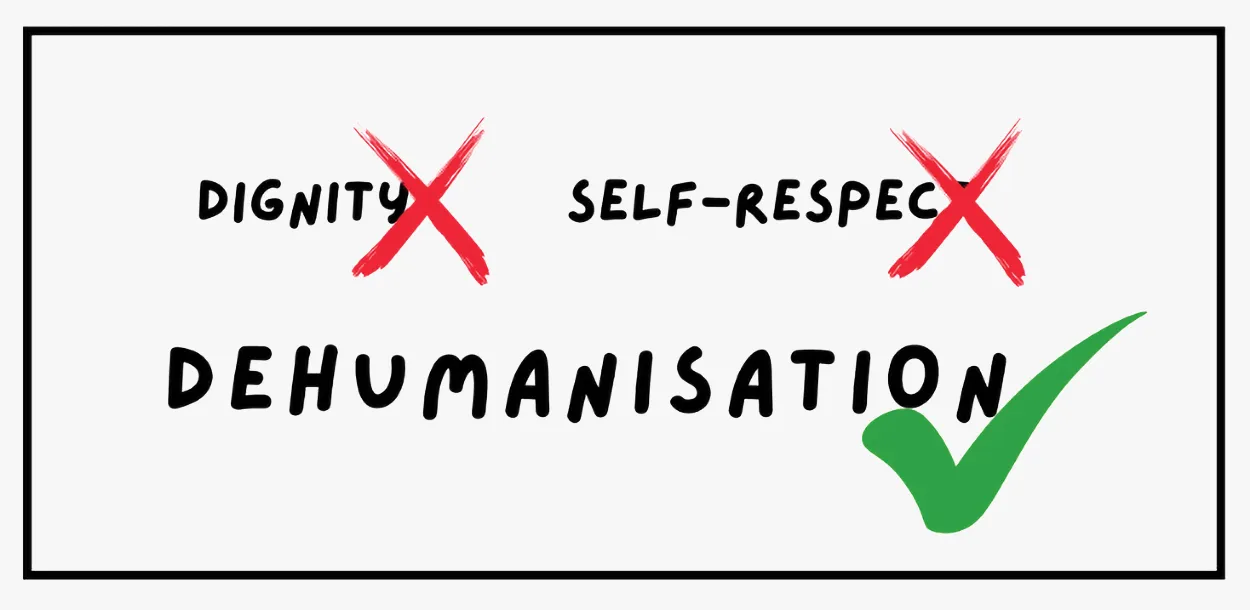
The impact of strip searches goes much further than the embarrassment of standing naked in front of strangers. People subjected to strip searches are forced to assume certain positions and conduct certain acts upon themselves that are significantly degrading and dehumanising.
Policies facilitating strip searches are regularly criticised for not considering the unique circumstances of women, transgender and First Nations people – resulting in further dehumanisation. Women, for example, are required to remove tampons during a search. Transgender people are often strip searched by officers of the opposite sex, despite general rules requiring strip searches by same sex officers. These rules determine a person’s gender at birth and ignore gender reassignment. The rules of strip searching across all institutions appear to completely omit any consideration of cultural sensitivities of First Nations peoples.
According to the 2023 report by QHRC, ‘Stripped of our dignity’, the harm caused by strip searches includes psychological and emotional harm and regular re-traumatisation of women previously subjected to sexual, physical or emotional abuse.
Despite the evidence that strip searching is harmful and ineffective, strip searching is legal – in all states and territories, in some shape or form. So what are the laws that allow this practice to continue?
Laws surrounding strip searches
Laws allowing strip searches are found in every state and territory across Australia. Their relatively similar provisions allow strip searching of incarcerated people when entering prisons, when visited by someone from the community, when moving between certain sections within a prison, when there is reasonable cause to suspect possession of a prohibited item, for security and good order of a prison and for the safe custody and welfare of prisoners. These vague terms often make challenging the legitimacy of a strip search difficult.
The processes are relatively consistent across all jurisdictions, requiring that strip searches are done by at least two officers; are conducted as expeditiously as possible to minimise the impact on the prisoner’s dignity and self-respect; avoid unnecessary force; are done in an area that provides reasonable privacy and only in the presence or sight of a person who is necessary to ensure the safety of prison officers conducting the strip search; does not involve touching of the prisoner’s body; and allows the prisoner to dress in private immediately after the search.
There are also many slight variations. Victoria allows strip searches by one or more officers of a different gender to the gender that the prisoner identifies with if the governor is satisfied the search is urgent and officers of the same gender as the prisoner are not available, or the belief that such search is reasonable. Tasmania requires a female to be ‘searched or examined’ only by female officers but there is no equivalent requirement for males.