Australia's National
Prison Newspaper

Australia's National
Prison Newspaper

Welcome to About Time

About Time is the national newspaper for Australian prisons and detention facilities

Your browser window currently does not have enough height, or is zoomed in too far to view our website content correctly. Once the window reaches the minimum required height or zoom percentage, the content will display automatically.

Alternatively, you can learn more via the links below.

Donations via GiveNow

Email

Instagram

LinkedIn

ISSUE NO. 13

August 2025

Donate Here

Health

When Your Mind Turns Against You: Understanding Depression in Prison

Depression may flatten your mood and your outlook, but you don’t have to let it take your life. These are some tips and perspectives to help you better understand depression and to make life more bearable.

By

Steve Rothwell

Steve spent many years running from the trauma of his incarcerated past until he broke down and realised he had to face his demons. He put all his research and writing skills into developing a system that gave him his life back, and nowadays, he is devoted to helping others overcome trauma.

Willy Pleasance

Font Size
Font Size
Line Height
Line Height
Dyslexia Friendly
Black & White
Hide Images
Night Mode

When your thoughts are not your own

When it comes to battling depression, often your thoughts are not your own. These thoughts are an inevitable result of being emotionally overwhelmed (in the case of reactive or situational depression) or as a result of imbalances of neurotransmitters in the brain (in the case of clinical depression).

Sometimes, as a result of the pressures and trauma of imprisonment, incarcerated people struggle against both forms of depression.

In both these cases, people tend to believe they are thinking rationally and men in particular privilege logic and reason and assume that suicidal feelings are real and true and to be acted on. This is one of the reasons why men account for 75 per cent of suicides in Australia.

But, if people can realise that their own mind is playing tricks on them, they have a shot at overriding the powerful urge to end their own lives.

Types of depression

There are two types of depression: reactive/situational and clinical/biological. Reactive depression comes about as a result of being (subjectively) overwhelmed by life challenges. Relief can either come from reducing the number and severity of stressors or by increasing coping mechanisms.

It’s people going through clinical depression who are most at risk of suicidal ideation. Two key characteristics of clinical depression are:

  1. Low mood feels like it’s permanent. The emotional pain feels like it is not survivable.
  2. There doesn’t have to be a reason to be depressed. Depression can come on at any time, for no reason.

If you are experiencing clinical depression rather than reactive/situational depression, it’s likely you would greatly benefit from going on antidepressants or other medications.

Managing expectations of treatment

It is essential for people with clinical depression who are suicidal to get medical help. They are first aid mental health patients with a life-threatening condition. They also need to manage their expectations, because “getting fixed” in the context of clinical depression or suicidality is not like getting a Land Cruiser serviced.

Getting well needs to be looked at as a project, more like restoring an old Land Cruiser. Getting better might require several visits to the doctor and many visits to a therapist. This is because antidepressant medications take time to start working, and it may be necessary to try several meds before finding one that works for you. It takes patience.

Because of this, it is essential for those undergoing medical treatment to be mightily lion-hearted about monitoring their moods, and at all times realising that the thoughts of sure and imminent doom they have are not a reflection of reality. This is the most dangerous phase (80 per cent of men who seek help for their depression at least once go on to end their lives) because, tragically, the delay in starting medications or seeing results from therapy leaves people in a very vulnerable state, sitting there thinking that nothing works.

Increase connection, decrease hopelessness

Depressed and suicidal people need above all to forget the notion that talking about their emotions won’t solve anything. That’s not the point. The point is to increase their human connections first and foremost. The experience of suicidal thinking is typically one of extreme isolation and despair, and these two factors feed off each other.

The more isolated a person is, stuck on their own with dark thoughts, the deeper into despair they are likely to fall. But social connection is immensely psychologically nourishing, and in many cases it’s essential for survival.

It may not immediately make the feelings go away, but it takes away the focused intensity and fixation on suicide.

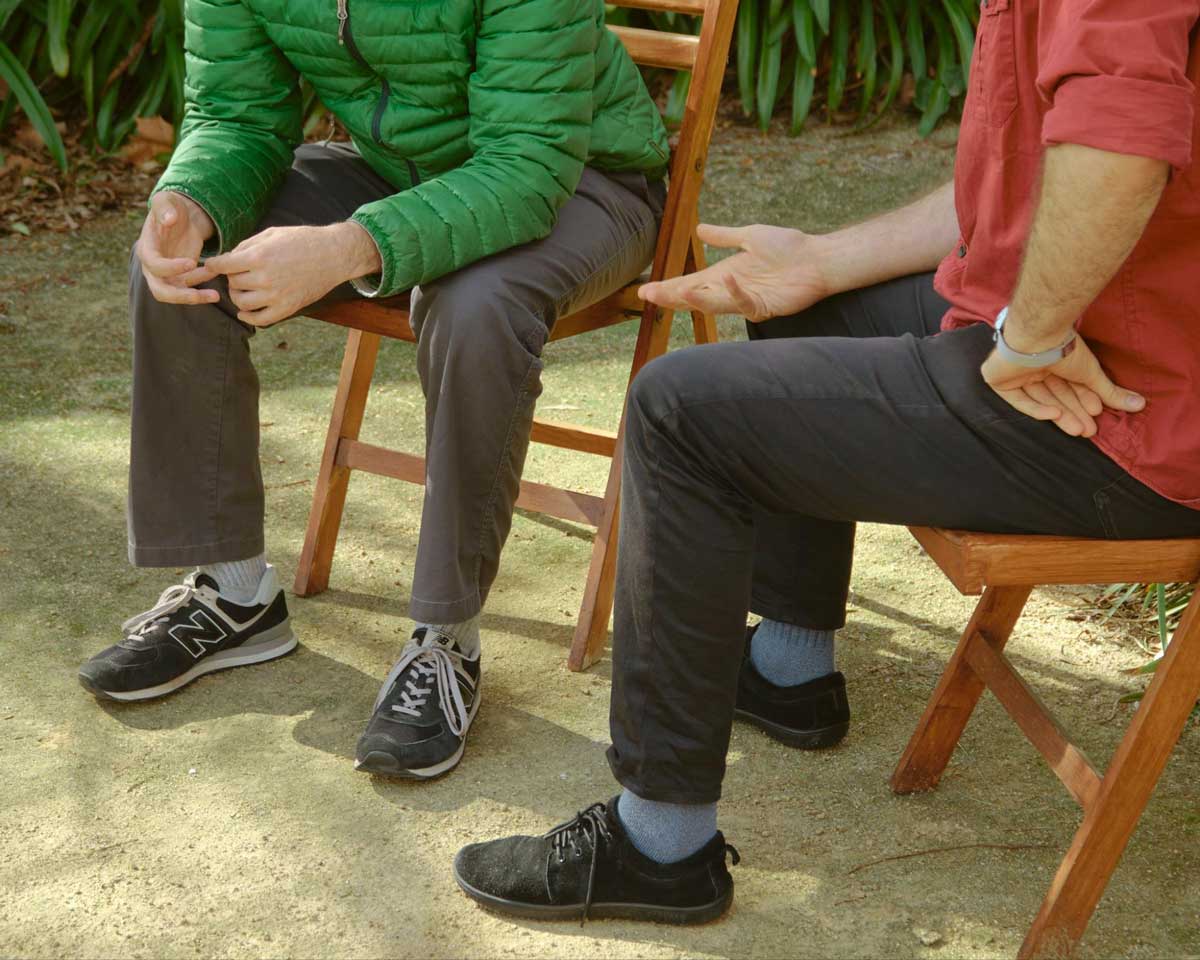
Talking to a mate

If you see a mate who is clearly struggling – for instance, because they’ve just been sentenced or had their parole knocked back – the first thing you’re likely to ask is if he or she is ok, and that leaves them with a lot of “wiggle room” to simply say, “Yeah, I’m fine.”

A better approach is to ask where their head is at. This acknowledges and validates the impact of their situation, without judgement but with encouragement to speak freely. Then you can start to address their concerns and, where you feel it necessary, offer them alternative, more constructive perspectives. Share your coping strategies, ideas that helped you to pull on through.

You may help to arrest your mate’s slide into mental chaos. But, if your buddy is clearly struggling, also have the social courage to ask if they have had suicidal thoughts. If so, encourage them to seek help, because seeking help is a sign of great strength, bravery, wisdom and responsibility.

When your thoughts are not your own

When it comes to battling depression, often your thoughts are not your own. These thoughts are an inevitable result of being emotionally overwhelmed (in the case of reactive or situational depression) or as a result of imbalances of neurotransmitters in the brain (in the case of clinical depression).

Sometimes, as a result of the pressures and trauma of imprisonment, incarcerated people struggle against both forms of depression.

In both these cases, people tend to believe they are thinking rationally and men in particular privilege logic and reason and assume that suicidal feelings are real and true and to be acted on. This is one of the reasons why men account for 75 per cent of suicides in Australia.

But, if people can realise that their own mind is playing tricks on them, they have a shot at overriding the powerful urge to end their own lives.

Types of depression

There are two types of depression: reactive/situational and clinical/biological. Reactive depression comes about as a result of being (subjectively) overwhelmed by life challenges. Relief can either come from reducing the number and severity of stressors or by increasing coping mechanisms.

It’s people going through clinical depression who are most at risk of suicidal ideation. Two key characteristics of clinical depression are:

  1. Low mood feels like it’s permanent. The emotional pain feels like it is not survivable.
  2. There doesn’t have to be a reason to be depressed. Depression can come on at any time, for no reason.

If you are experiencing clinical depression rather than reactive/situational depression, it’s likely you would greatly benefit from going on antidepressants or other medications.

Managing expectations of treatment

It is essential for people with clinical depression who are suicidal to get medical help. They are first aid mental health patients with a life-threatening condition. They also need to manage their expectations, because “getting fixed” in the context of clinical depression or suicidality is not like getting a Land Cruiser serviced.

Getting well needs to be looked at as a project, more like restoring an old Land Cruiser. Getting better might require several visits to the doctor and many visits to a therapist. This is because antidepressant medications take time to start working, and it may be necessary to try several meds before finding one that works for you. It takes patience.

Because of this, it is essential for those undergoing medical treatment to be mightily lion-hearted about monitoring their moods, and at all times realising that the thoughts of sure and imminent doom they have are not a reflection of reality. This is the most dangerous phase (80 per cent of men who seek help for their depression at least once go on to end their lives) because, tragically, the delay in starting medications or seeing results from therapy leaves people in a very vulnerable state, sitting there thinking that nothing works.

Increase connection, decrease hopelessness

Depressed and suicidal people need above all to forget the notion that talking about their emotions won’t solve anything. That’s not the point. The point is to increase their human connections first and foremost. The experience of suicidal thinking is typically one of extreme isolation and despair, and these two factors feed off each other.

The more isolated a person is, stuck on their own with dark thoughts, the deeper into despair they are likely to fall. But social connection is immensely psychologically nourishing, and in many cases it’s essential for survival.

It may not immediately make the feelings go away, but it takes away the focused intensity and fixation on suicide.

Talking to a mate

If you see a mate who is clearly struggling – for instance, because they’ve just been sentenced or had their parole knocked back – the first thing you’re likely to ask is if he or she is ok, and that leaves them with a lot of “wiggle room” to simply say, “Yeah, I’m fine.”

A better approach is to ask where their head is at. This acknowledges and validates the impact of their situation, without judgement but with encouragement to speak freely. Then you can start to address their concerns and, where you feel it necessary, offer them alternative, more constructive perspectives. Share your coping strategies, ideas that helped you to pull on through.

You may help to arrest your mate’s slide into mental chaos. But, if your buddy is clearly struggling, also have the social courage to ask if they have had suicidal thoughts. If so, encourage them to seek help, because seeking help is a sign of great strength, bravery, wisdom and responsibility.

Leave a Comment

Thank you! Your submission has been received!
Oops! Something went wrong while submitting the form.
0 Comments
Author Name
Comment Time

Lorem ipsum dolor sit amet, consectetur adipiscing elit. Suspendisse varius enim in eros elementum tristique. Duis cursus, mi quis viverra ornare, eros dolor interdum nulla, ut commodo diam libero vitae erat. Aenean faucibus nibh et justo cursus id rutrum lorem imperdiet. Nunc ut sem vitae risus tristique posuere. uis cursus, mi quis viverra ornare, eros dolor interdum nulla, ut commodo diam libero vitae erat. Aenean faucibus nibh et justo cursus id rutrum lorem imperdiet. Nunc ut sem vitae risus tristique posuere.

Ask the Doctor: High Blood Pressure

By Harley Stiebel

Blood pressure can be thought of as the speed of the blood whizzing around your blood vessels (arteries). This is affected by two things: your heart and your arteries.

Health

ISSUE NO. 17

2 MIN READ

Brett’s Story: It’s Never Too Late to Get Treated

By Brett

For a long time, I thought hepatitis C (hep C) was just something I’d have to live with. But it doesn’t have to be that way.

Health

ISSUE NO. 17

3 MIN READ

Discover Your Strength!

By About Time

This is your chance to focus on yourself, take control of your fitness, and to empower your journey one step at a time.

Health

ISSUE NO. 16

2 MIN READ

Treating Hep C: My Story

By Simon

I was incarcerated during COVID. I was transferred to Brisbane Correctional Centre for 1 week and then moved to Woodford Correctional Centre for 4 years.

Health

ISSUE NO. 16

2 MIN READ

Newsletter

Be the first to learn about our monthly stories, plus new initiatives and live events

You've successfully registered!
Something went wrong when we tried to register your details. Please try again.

Support Australia's First National Prison Newspaper

A place for news and education, expression and hope

Help keep the momentum going. All donations will be vital in providing an essential resource for people in prison and their loved ones.

All donations of $2 or more are tax deductible. If you would like to pay directly into our bank account to avoid the processing fee, please contact donate@abouttime.org.au. ABN 67 667 331 106.

It's
About Time.

A place for news and education, expression and hope.

Help us get About Time off the ground. All donations are tax deductible and will be vital in providing an essential resource for people in prison and their loved ones.

Donate Here

Newsletter

Be the first to learn about our monthly stories, plus new initiatives and live events

You've successfully registered!
Something went wrong when we tried to register your details. Please try again.