Mental Health in Solitary Confinement
Advice from someone who has done it
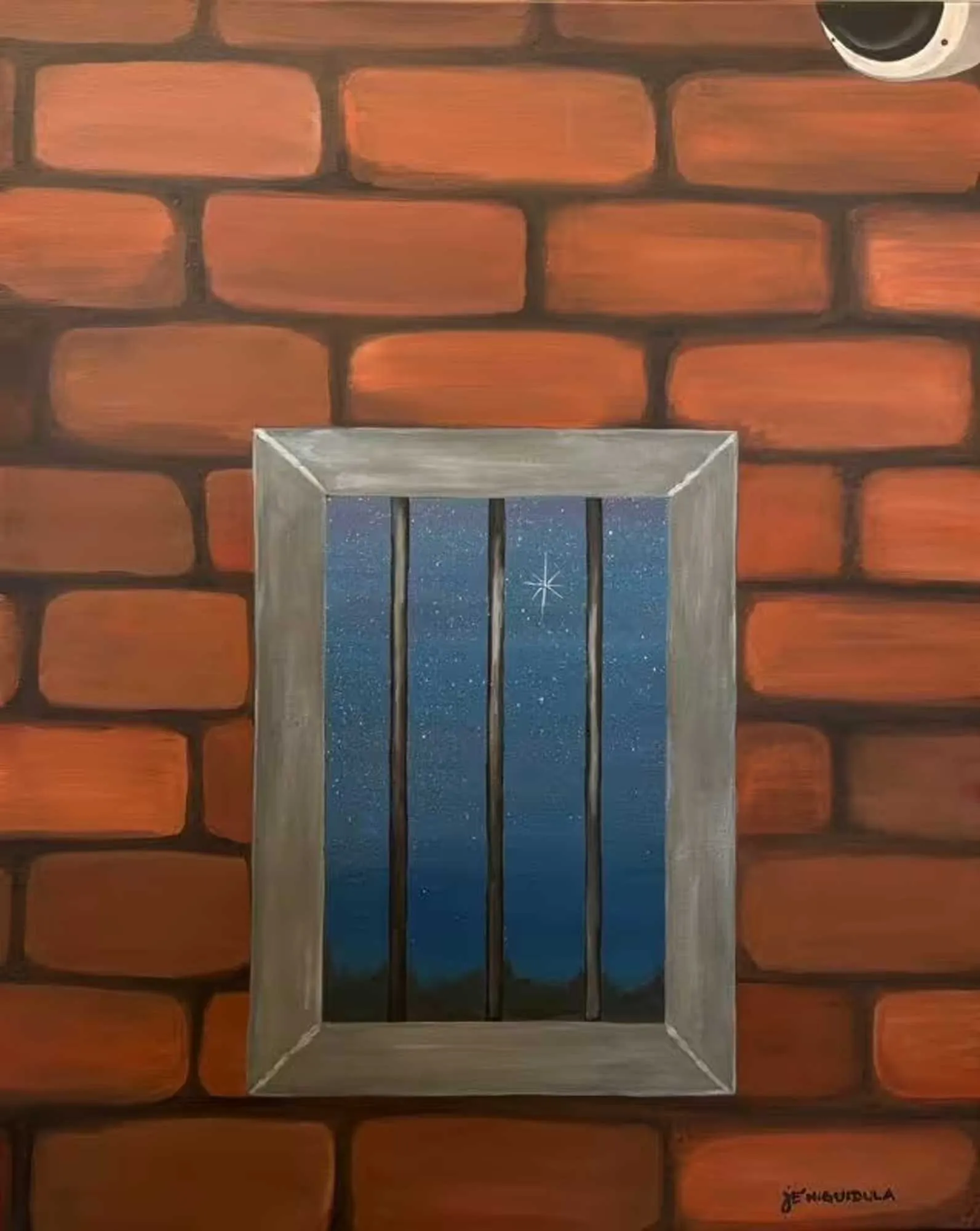
‘Hope’ by Jenny, available to purchase through Boom Gate Gallery


Your browser window currently does not have enough height, or is zoomed in too far to view our website content correctly. Once the window reaches the minimum required height or zoom percentage, the content will display automatically.
Alternatively, you can learn more via the links below.
Solitary confinement is unfortunately all too common in Australian prisons. Often also called ‘segregation’, ‘isolation’ or ‘lockdown’, it means confining people to their cells for 22 to 24 hours a day, and allowed only minimal meaningful interaction with others.
Solitary is terrible for mental health, and shouldn’t happen. But it’s happening. For me, the most important part of enduring it was keeping my mind active. But how do you do that? Is a hard question to answer as we are all different people with different concerns, issues, problems.
I spent two years in solitary confinement and I had to get creative. This is what I did, and some of the other things other people did that were in there. Some may work for you, some won’t. It is about finding your skill/talent and what you like or not. It also depends a lot on what the prison allows you to have in your cell. Ask the officers if they can print off colouring pages, puzzles, origami sheets. Ask if your family or friends can send some in. The chaplain and prison educators can also help in some prisons. Make this a part of your case management. Call it meaningful engagement or mental health strengthening. Make it one of your goals.
Other things you can do in your cell:
Keeping your mind active is very important when you are in solitary confinement as the affects can cause harmful reactions, thoughts, feelings and behaviours and these can be misidentified as trouble making. I know it is hard, and sometimes you feel slow and have an inability to think or feel like doing anything, but try something new, try something you never thought about before. This will keep your brain active and may help with minimising or removing the harmful reactions, thoughts, feelings and behaviours.
It is ok to feel spaced out and feel like doing nothing, but this is where your mental health could decline even further. So push yourself and your mind even if it is just for five or ten mins a day. Try something new and weird and wacky. Whatever makes you laugh may make it a little less monotonous. Even skipping around your cell, act like there is lava on the floor and you need to stretch your body which is also good for your physical health with ultimately helps your mental health as well.
Remember – it is only you in the cell, so no one to see if you think you look silly! It is very important to look after your mental health whilst in solitary confinement. The longer you are in there, the more outlandish things you might need to do to keep your mind active.
Thinking of you all. Keep busy and keep those minds active as best as possible.
Solitary confinement is unfortunately all too common in Australian prisons. Often also called ‘segregation’, ‘isolation’ or ‘lockdown’, it means confining people to their cells for 22 to 24 hours a day, and allowed only minimal meaningful interaction with others.
Solitary is terrible for mental health, and shouldn’t happen. But it’s happening. For me, the most important part of enduring it was keeping my mind active. But how do you do that? Is a hard question to answer as we are all different people with different concerns, issues, problems.
I spent two years in solitary confinement and I had to get creative. This is what I did, and some of the other things other people did that were in there. Some may work for you, some won’t. It is about finding your skill/talent and what you like or not. It also depends a lot on what the prison allows you to have in your cell. Ask the officers if they can print off colouring pages, puzzles, origami sheets. Ask if your family or friends can send some in. The chaplain and prison educators can also help in some prisons. Make this a part of your case management. Call it meaningful engagement or mental health strengthening. Make it one of your goals.
Other things you can do in your cell:
Keeping your mind active is very important when you are in solitary confinement as the affects can cause harmful reactions, thoughts, feelings and behaviours and these can be misidentified as trouble making. I know it is hard, and sometimes you feel slow and have an inability to think or feel like doing anything, but try something new, try something you never thought about before. This will keep your brain active and may help with minimising or removing the harmful reactions, thoughts, feelings and behaviours.
It is ok to feel spaced out and feel like doing nothing, but this is where your mental health could decline even further. So push yourself and your mind even if it is just for five or ten mins a day. Try something new and weird and wacky. Whatever makes you laugh may make it a little less monotonous. Even skipping around your cell, act like there is lava on the floor and you need to stretch your body which is also good for your physical health with ultimately helps your mental health as well.
Remember – it is only you in the cell, so no one to see if you think you look silly! It is very important to look after your mental health whilst in solitary confinement. The longer you are in there, the more outlandish things you might need to do to keep your mind active.
Thinking of you all. Keep busy and keep those minds active as best as possible.
Determined to make positive changes in life? It can start with digestion!
Stress is an unavoidable part of life, but within a prison environment it is often increased by uncertainty, loss of freedom, separation from loved ones, conflict, boredom, and concerns about the future.
Complete the entire circuit above, then repeat it a second time to hit the full rep count. Good luck!
There comes a moment in every person’s life when they are forced to face themselves. Not the version they show to others, but the deeper, more honest truth underneath.