Ask the Doctor: Nutrition
Your health questions answered!
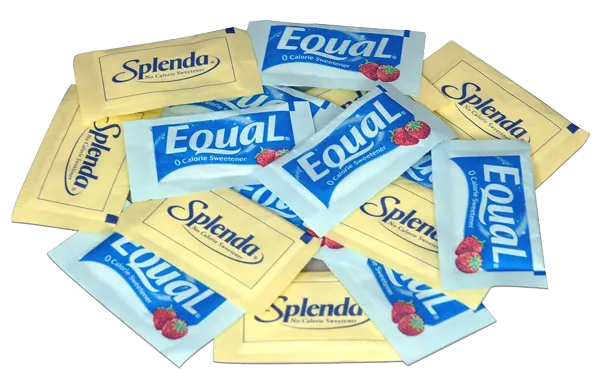
Artificial Sweeteners – Splenda & Equal by Bukowsky18


Your browser window currently does not have enough height, or is zoomed in too far to view our website content correctly. Once the window reaches the minimum required height or zoom percentage, the content will display automatically.
Alternatively, you can learn more via the links below.
Hello! I’m Harley, a doctor working in Victoria. Welcome back to Ask the Doctor!
We received some questions regarding artificial sweeteners and the grocery buy-up list, so today we are talking about nutrition.
Artificial sweeteners are chemicals that our mouths perceive as sweet, but when they enter our digestive tract they release little or no energy. Energy in the body is generally referred to as calories. For example, 1 gram of sugar produces 4 calories, while 1 gram of stevia (a common sweetener) produces 0 calories.
This is because stevia is not able to be broken down by our digestive tract – it just passes straight through. This is why sometimes when you eat too much artificial sweetener it can have a diarrhoeal effect.
There are some artificial sweeteners (i.e. aspartame) which can be broken down in our bodies and therefore do produce energy. However, these sweeteners are 200–300x sweeter than sugar, so only a very very small amount is needed. And this very, very small amount basically has no calories.
Great question, Harley. Why thank you!
This is a classic advertising industry trick that has made us all scared of “chemicals”. But, really, everything we drink and eat is made of chemicals. Our body is made of chemicals, the air we breath, the water we drink, an apple, a banana – all of these things are chemicals, put together in different ways.
So, if someone asks you if chemicals are bad, the answer is always that it depends which chemicals.
To date, there is NO concrete evidence that artificial sweeteners are harmful to humans.
There have been many research studies, and, while some of them have suggested a link to cancer, the general consensus at present is that consuming artificial sweeteners in moderation is NOT harmful to human health. This of course may change in the future.
An important thing to think about is what the alternative is if you choose to avoid artificial sweeteners. If you drink refined sugar beverages instead, this can lead to obesity, and obesity IS strongly linked with cancer. Stick to water, tea or coffee is my advice.
I have been provided the list for NSW. This may differ between states.
As a general rule when thinking about our diets, I really like the advice of US food journalist Michael Pollan. He says, “Don’t eat anything with more than five ingredients or ingredients you can’t pronounce.”
Of course, this is a bit difficult to apply straight off the buy-up list but something you can work on over time.
Here’s another annoying take for you. Looking at this list, I generally don’t think there’s anything you must avoid altogether. The things I would try limit to once a week are chocolates, biscuits, chips and sugary drinks – this includes fruit juice. Any highly processed foods are not things you should be having every day. But, hey, we’re all human. If a scotch finger (or two) a day makes you happy then go for it! I would just try to have smaller portions of your main meals to balance out the high calorie snacks.
Thanks for reading this month’s article!
Join us next month for a discussion of the BIG C – Cancer.
Please write to About Time with any questions you have or suggestions for future topics. Trust me, nothing is off limits – most of my day is spent asking whether people have opened their bowels or farted.
I never expected to walk into prison carrying hepatitis C, and I definitely didn’t expect to walk out with a purpose. But that’s how my story goes – messy, painful, and somehow still full of hope.
Sleep is one of the most important parts of our physical and psychological health.
Determined to make positive changes in life? It can start with digestion!
Stress is an unavoidable part of life, but within a prison environment it is often increased by uncertainty, loss of freedom, separation from loved ones, conflict, boredom, and concerns about the future.