‘You’re Cured!’: Struggle to Strength with Hep C
Mike’s story of beating Hep C from prison


Your browser window currently does not have enough height, or is zoomed in too far to view our website content correctly. Once the window reaches the minimum required height or zoom percentage, the content will display automatically.
Alternatively, you can learn more via the links below.
Most days inside had been pretty much the same for me. I used to draw a lot, but my real passion was photography… and that was a lot harder to do inside prison. My routine was all about survival – just getting by. My world felt small. I made a few mates, which helped, but most days still felt identical. Little changed.
Except for me.
Everything shifted when I finally started taking hep C seriously. Maybe it was the posters on the walls, or the flyers lying around, or the videos we could watch… or maybe it was my mates talking about how well their treatment was going. Thinking back, it was probably all of it. A thought took hold: “I’d shared injecting equipment – could hep C be affecting me?”
I decided to put in a bluey to see the nurse and find out. But as I sat waiting, doubt really hit me. “What if I did have it? What if treatment was painful? Was it even worth the trouble?” Then the nurse called me in, and I remembered that fear wasn’t going to get me the truth – only action would.
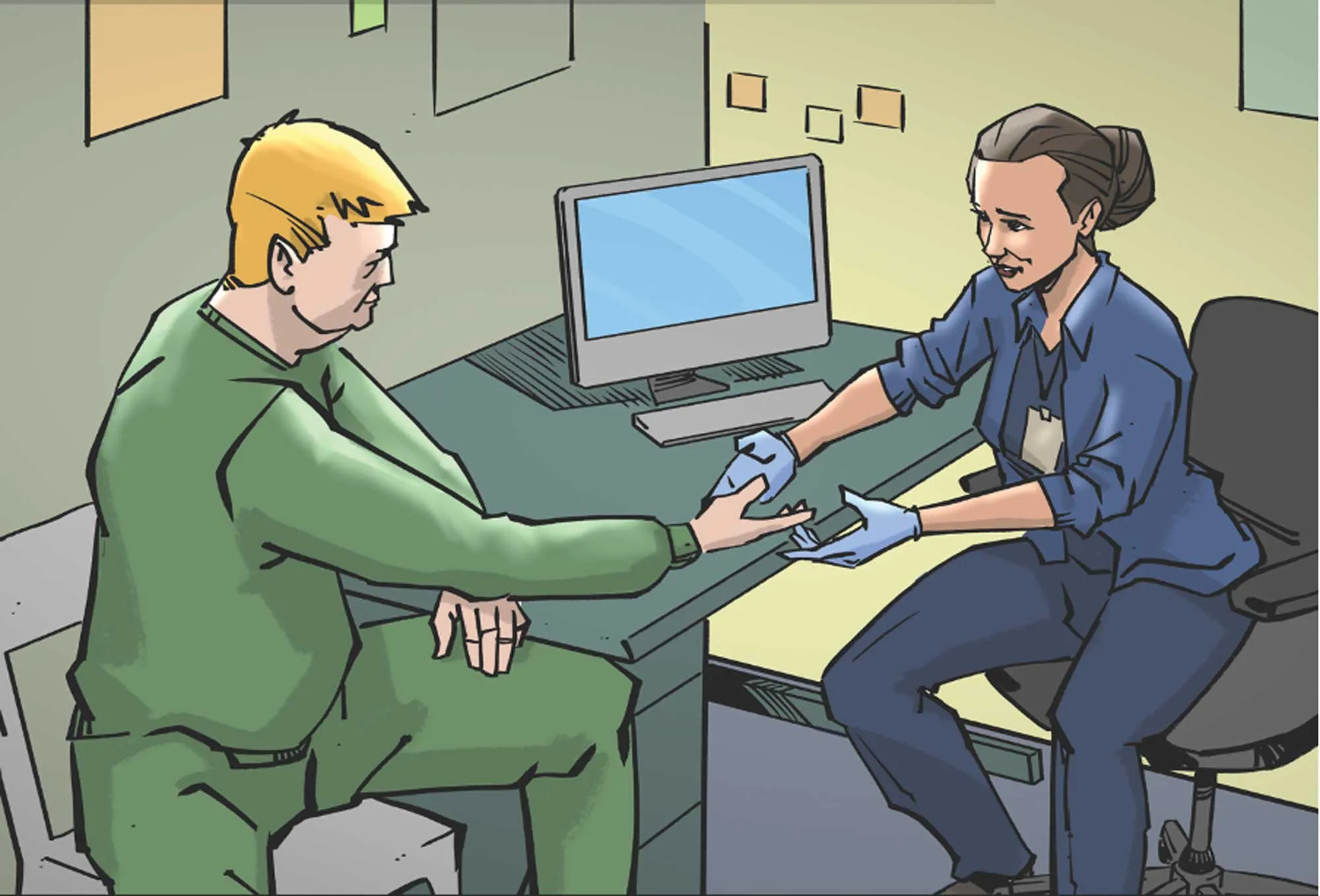
The nurse was great – patient, kind, and she explained everything in plain language. She told me the test only involved a tiny pinprick of blood from my finger. No needles in the arm. It really was painless. My mates kept encouraging me, stoked that I’d taken the first step.
About a week later, the nurse told me I had tested positive for hep C. Strangely, I didn’t feel sad. I felt determined.
“How soon can I start treatment?” I asked. And so, after a chat with the nurse, I began. Just pills daily, no injections, little to no side effects for me. It was easy to stick to the routine inside. Life in prison is nothing but routine. Some fellas dismissed the treatment as pointless, but my mates’ support meant a lot to me.
A few weeks later, I was halfway through treatment and feeling more energised and sharper. The brain fog had lifted – but then I was released from prison, right in the middle of my treatment. My routine disappeared overnight.
Suddenly I was out in the world again: distractions everywhere, challenges everywhere. But my nurse had found me a doctor on the outside. Now it was up to me. Freedom was overwhelming. Catching up with old friends felt good. Money was tight. Sometimes I thought about not finishing treatment.
But I remembered the nurse’s advice, the posters, my mates’ encouragement. No way was I going to let hep C stand in the way of a second chance. I had too much to live for – starting with my photography. So, I made up my mind to keep going with treatment.
Four weeks after finishing, I went back to my new doctor for the follow up test to see if the virus was gone. Even though I’d been feeling good, I still worried it had all been in my head – that the treatment hadn’t worked.
But then the doctor looked at me and said, “You’re cured.”
It felt like a huge weight had been lifted. I’d beaten the virus – and the doubts I’d carried before and during treatment. I felt healthier than I had in years, stronger, and ready to help others. Now I share my story in my community, showing how information, small steps, and a little courage changed my life.
I never expected to walk into prison carrying hepatitis C, and I definitely didn’t expect to walk out with a purpose. But that’s how my story goes – messy, painful, and somehow still full of hope.
Sleep is one of the most important parts of our physical and psychological health.
Determined to make positive changes in life? It can start with digestion!
Stress is an unavoidable part of life, but within a prison environment it is often increased by uncertainty, loss of freedom, separation from loved ones, conflict, boredom, and concerns about the future.