Treating Hep C: My Story


Your browser window currently does not have enough height, or is zoomed in too far to view our website content correctly. Once the window reaches the minimum required height or zoom percentage, the content will display automatically.
Alternatively, you can learn more via the links below.
I was incarcerated during COVID. I was transferred to Brisbane Correctional Centre for 1 week and then moved to Woodford Correctional Centre for 4 years. It was a difficult time and, in my own words, I was treated like shit for 4 years.
From the start, I wasn’t able to access doctors in the medical centre or mental health staff and everything was difficult. I wanted to focus on my health. I was told by officers to put in a medical form but was not provided any assistance in completing the form. Comments such as “don’t ask me about filling in forms … ask your friends” were what I got.
It’s difficult navigating systems when you are naive to the system! I saw that many people in prison including long termers, whites and those who identify as Aboriginal and Torres Strait Islanders can’t read and write. I felt people were singled out, made to feel uncomfortable and made to be seen as “a user”. In my opinion, the general population on the outside think prisoners are scum.
Fortunately, I made the most of my time inside and, being self-motivated, I focused on upskilling to relieve the boredom, working my way up to a senior position in the industries sewing unit.

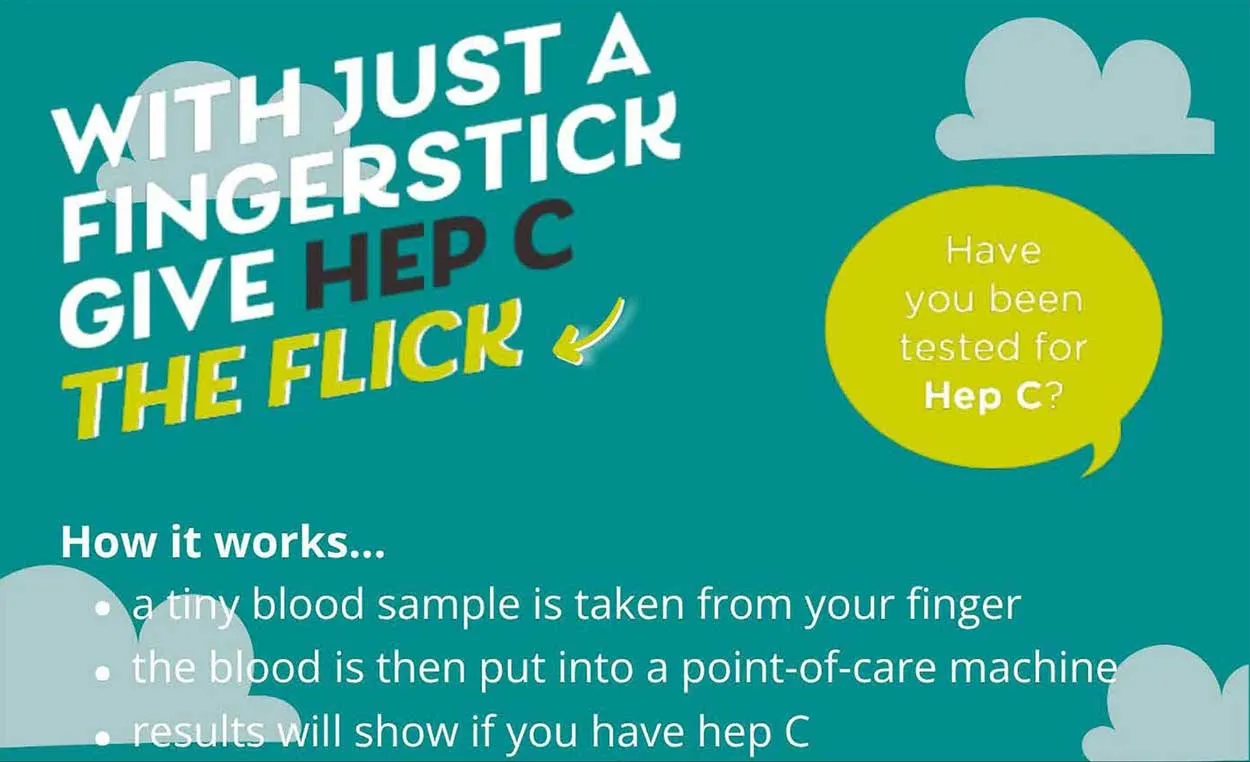
I have a history of hep C and had been on old treatment in the past. However, I was not surprised when I was once again diagnosed as hep C positive during a Kombi Clinic high-intensity testing campaign at my Brisbane prison. During this fingerstick testing process, I was given a purple card for the hep C prison transition worker from QuIHN (Queensland Injectors Health Network). After my diagnosis, I started hep C treatment for a few days but was given a suspended sentence and discharged without my hep C medication.

I was determined to finish my Hep C medication and was motivated enough to ring the hep C prison transition worker straight away following my discharge to tell her I was at home and without my pills. With the working partnerships between different organisations involved in hep C care in Queensland prisons, she was able to communicate with my previous prison nurse and arrange to pick up my hep C medication from the prison.

The hep C prison transition worker then delivered the pills to my home in Queensland, where I completed my full course without missing a single tablet. She has been in regular touch with me and, to help me further, was able to make an active referral to QuIHN counselling service where I continue to this day. Fortunately, I am also linked in with Alcohol and Other Drug Services at Princess Alexandra Hospital for my opioid antagonist therapy and have been assisted by a fabulous social worker. I had a post-treatment test with QuIHN now and I was thrilled with my negative result. This was awesome news and I was both relieved and happy to be cured of hep C.
Ongoing, I see my GP every 6 months for a hep C test. I am currently completing a Certificate 4 in Mental Health and am looking to the future to help people who are homeless. I also want to volunteer and work with “my people”. I spoke about establishing a “Brothers on the Inside” support group, and I’m sure with my passion I will be successful.
For all my mates, I always say, “Don’t wait and get tested for hep C today.” Things are possible and help is out there.
Determined to make positive changes in life? It can start with digestion!
Stress is an unavoidable part of life, but within a prison environment it is often increased by uncertainty, loss of freedom, separation from loved ones, conflict, boredom, and concerns about the future.
Complete the entire circuit above, then repeat it a second time to hit the full rep count. Good luck!
There comes a moment in every person’s life when they are forced to face themselves. Not the version they show to others, but the deeper, more honest truth underneath.