‘We Don’t See You as Numbers’: The First Nations Stories Behind Facing the Numbers
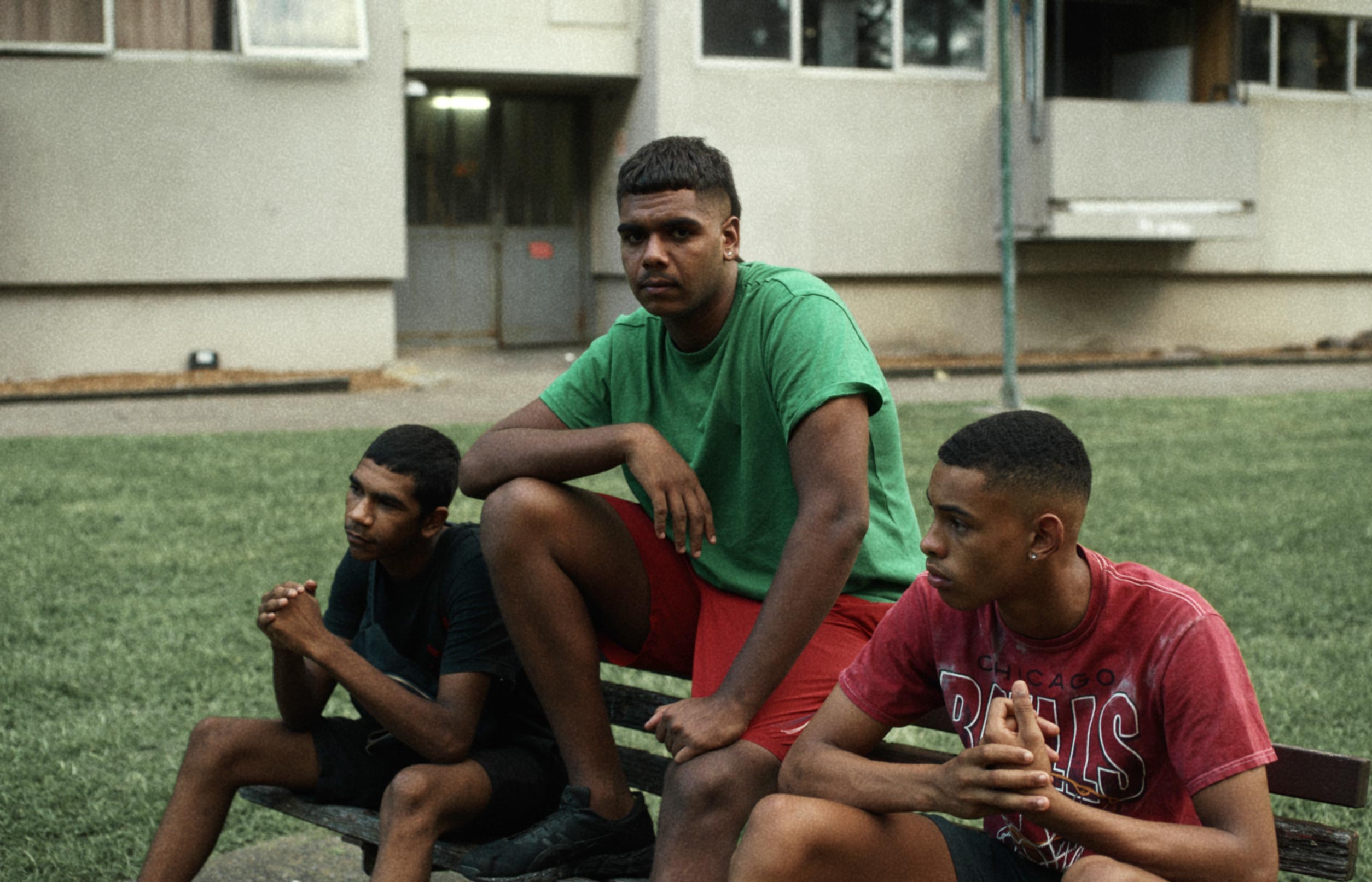
Matthew “Bubba” Coe as Matthew Coe, Facing the Numbers, 2026, Kieran Satour and Tyson Perkins, GARUWA


Your browser window currently does not have enough height, or is zoomed in too far to view our website content correctly. Once the window reaches the minimum required height or zoom percentage, the content will display automatically.
Alternatively, you can learn more via the links below.
Facing the Numbers is a new film that explores the injustices First Nations people face in Australia’s legal system.
Grounded in truth-telling, the film showcases the remarkable strength and resilience of First Nations people who are still here protecting Country, culture and community, despite what the numbers may say.
Facing the Numbers recently premiered at Melbourne International Film Festival and will air on NITV at 8pm on Sunday 15 November.
About Time sat down with writer, director and executive producer Kieran Satour to talk about the film.
Kieran is a Gurindji, Pertame and Worimi filmmaker who makes films to create opportunities for healing and truth-telling. He draws inspiration from his ancestral heritage to produce documentaries that hold depth, sensitivity and meaning, and celebrate the beauty, strength and resilience of First Nations peoples in the face of colonisation.
Kieran: Facing the Numbers is the personal testimonies of First Nations people that have had experiences with systems of oppression here in Australia. It’s a hybrid documentary series; we’ve got an anthology of five different stories which make up the larger feature film. It was really a way to help people platform their stories in a different way to perhaps the way that these types of stories and these types of issues have been told in the past.
Kieran: In terms of the way that we represented people’s stories, I think dealing with some of the more traumatic, violent and aggressive events and reinterpreting them through movement, dance and music. I think they’re some of the strongest creative interpretations of those vicious moments.
Kieran: I think it can be. The thing that we lose sight of, especially in extractive industries approaching storytelling, is that storytelling can actually be really traumatic. I think that’s really important when you’re approaching storytelling in some of these contexts, you need to be cognisant of that…and that needs to define the way that you approach storytelling.
So, I think for us with Facing the Numbers, it was always going to be a really fine line and I’m not saying that we got it right all the time….going into the making of these films and doing it in close collaboration with the storytellers and their families was the way that we’ve alleviated some of those issues of re-traumatising people.
Kieran: When we’re talking about some of the bigger issues that we’re facing in this country and all over the world, numbers and statistics are thrown around, and that allows people to switch off from the fact that there is a person behind every one of those numbers. I think we lose sight of that.
The act of turning someone into a number is an act of dehumanisation, and what it means is that people that are exposed to those numbers and can switch off the fact that that’s a person.
Stories are a way to be able to present a different way of being that’s based in humanity and care.
That’s the crux of the film and why we wanted to present these stories in this way.
Kieran: I just saw 3% perform a couple of nights ago, and rapper Nooky said what they wanted to do for their first tour was a tour of prisons and they were able to do a tour down in Victorian prisons. His sentiment was is that we haven’t forgotten about all the Mob that are locked up. They’re still in our hearts and in our minds and I really want to echo that message, and just say we don’t see you Mob inside as numbers, as statistics, and we haven’t forgotten about you just because you’re locked up.
We were talking about what impacts we wanted this film to have, and the primary impact goal that we spoke about was abolition. One thing the film talks about is the police, state organisations and state policies like the Stolen Generations that have led to the cycles of trauma and incarceration that our Mob are facing. I just want people to know that we see that. We understand that. We know that. These places are continuing to perpetuate those cycles of our Mob being institutionalised and we’re out here trying to figure out ways that we can help change what’s happening in this country.
Kieran: It’s airing on NITV, please watch it. These are five different peoples’ and families’ stories. We weren’t in a position where we could tell everyone’s story unfortunately, but we’re hoping that these stories do resonate with Mob and are somewhat representative of what our people are facing across the country. We hope that you find some strength and pride in these stories and can connect with them. So please tune in. Talk to people about it. Get the word out there. And tell us what you think.
His message is simple but powerful: no matter how difficult life gets, we can choose to be kind, be grateful, and find joy.
Set in the period following ‘The Great War’ (World War I), Wicked Little Letters is a comedic re-telling of true events that took place in Littlehampton, England.
Dream Scenario is a deliciously quirky film by Director, Kristoffer Borgli. The audience is taken on an unexpected journey which travails the terrain between the conscious and subconscious mind.
Stuck with free-to-air TV? Here are some great shows to help time fly by.
Call me a grumpy old Baby Boomer, but I can’t understand young people. Or more specifically, young Queensland males. Literally.
Place Scotch Fingers into a large container and use a peanut butter jar (lid part) to crush the biscuits. Add plum jam for a richer flavour.