Shantaram: To Hell and Back


Your browser window currently does not have enough height, or is zoomed in too far to view our website content correctly. Once the window reaches the minimum required height or zoom percentage, the content will display automatically.
Alternatively, you can learn more via the links below.
Although a prison sentence has taken time away from the life I once had, it has also given me time to read hundreds of books. Usually I have three going at the same time; a fiction (action/adventure or thriller), a non-fiction (memoir or legal) and a spiritual or self help guide (everything from Anthony Robbins to Zen Buddhism).
One for entertainment, one to learn from, and one to ponder on. In 50 years of reading, I have never come across a book that transverses these categories…until I read Shantaram.
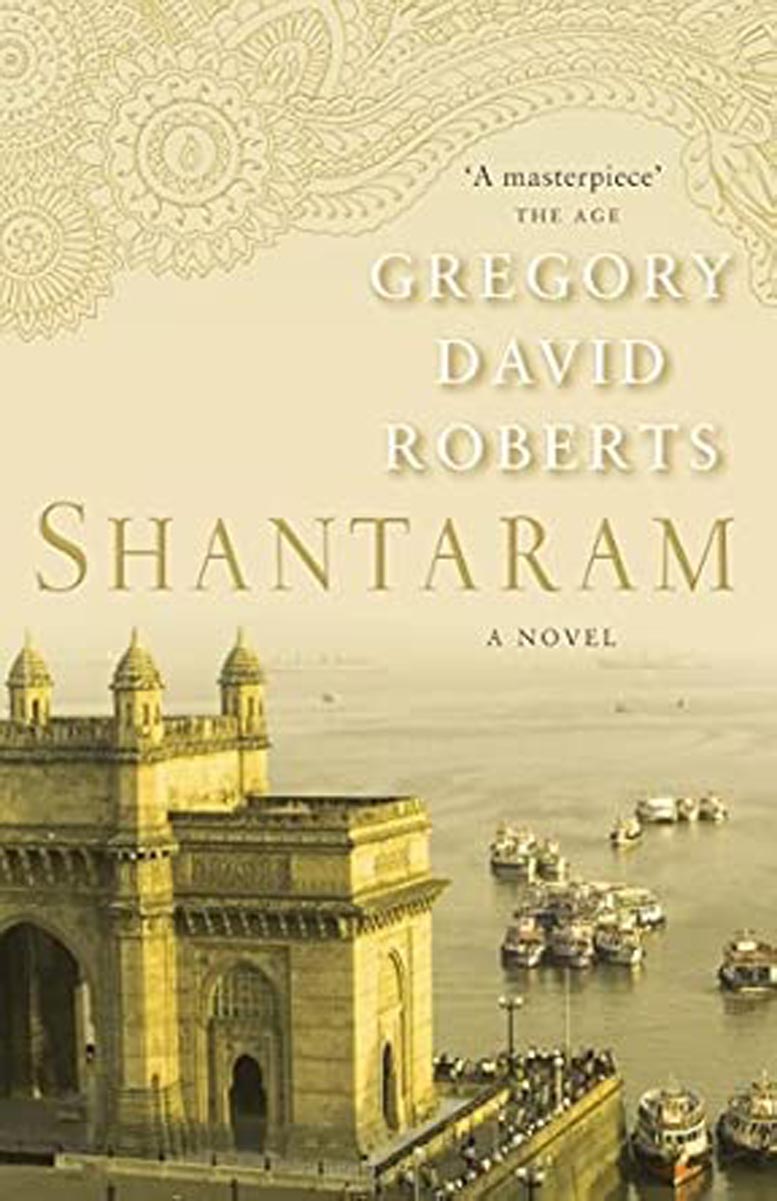
Gregory David Roberts broke the mould when he released his masterpiece in 2003. Weighing in at 933 pages, Shantaram is the super-heavyweight champion of the literary world. Roberts has created an epic story that stands tall on its merits, pulling from a pool of knowledge that can only be gained from first-hand experiences of being a drug addict, armed robber, prisoner, escapee, fugitive, fighter, lover, drug trafficker, slum doctor, father, philanthropist and most of all, survivor.
Roberts has gone to hell and come back with anecdotes to share like this one:
“The only victory that really counts in prison, an old timer in an Australian jail once said to me, is survival. But survival means more than simply being alive. It’s not just the body that must survive a jail term: the spirit, and the will, and the heart have to make it through as well.”
One of the ‘truths’ of the book is the story surrounding being given the name ‘Shantaram’ by his best friend’s mother (roughly translated it means ‘Man of God’s Peace’) in a journey to India’s heartland. He is far too humble to call himself that name, instead using it for his book, screenplay he created from the book and the mini-series that resulted from the wave of worldwide success of Shantaram.
I’m yet to see any type of film that I’ve enjoyed more than the book it’s based on, so I’m looking forward to being disappointed by watching Shantaram when I get out of prison. Beat the best book ever! Yeah, nah.
Roberts would have been collecting stories, visualising or even writing Shantaram in the decade that the story is set: the 80s. A glorious era before social media, mobile phones and political correctness.
In Shantaram, Lindsay (Lin or Linbaba) is a loveable rogue that’s intelligent, kind-hearted, generous, thoughtful and unbreakable. Roberts has made it easy for us to fall in love with his main character, by writing Lindsay from his heart, using lived experiences from the time capsule of the 80s.
Roberts' marriage broke down and he lost custody of his daughter. Spiralling into depression and a heroin addiction, he resorted to crime to fund his drug use, namely robbing banks – with class.
Wearing a three piece suit, speaking politely and stealing from institutions with insurance, Roberts became known as the ‘Gentleman Bandit’ before being sent to Pentridge Prison for armed robbery in the late 70s. In 1980 he escaped and ran away to India.
Roberts' run as a fugitive ended in 1990. He was captured in Frankfurt and extradited to Melbourne where he spent another six years in prison – two of those were in solitary. Legend has it that he escaped again, but it dawned on him that life on the run wasn’t conducive to his desire to retire as a criminal, so he found a way to smuggle himself back in.
It was this second stint in a Melbourne prison where Roberts began writing Shantaram, with early manuscripts being destroyed – twice. Thankfully he persisted and the novel was first printed in 2003.
Rave reviews and good publicity helped it to become a best seller that required two reprints that year. I was in my early 30s around that time, and remember watching a 60 Minutes story on Roberts. It featured news reports and footage of him robbing banks, with dramatised accounts of him escaping Pentridge Prison, finding his way to India, and becoming a triage doctor in the slums of Bombay.
At the time I was too caught up in life to read anything other than bills and invoices, but I pledged to myself that one day, I’m going to read that book.
How on Earth could I have possibly predicted that 23 years later, I would be stuck in a wheelchair facing the rest of my days in prison for a crime that I can’t remember committing, listening to a mate (Dan) asking if there is anything he can bring in for me.
“Actually, there is something,” I said as I watched the seconds get closer to cut off the call.
“A book. Don’t go buy anything… just something collecting dust that you think I might enjoy!” Tick tock, I watched the clock count down as Dan’s cogs turned. “Maaate, have I got the book for you! My next door neighbour handed it on to me about 10 years ago, he reckoned it was the best thing he’d read.”
The 30 second warning rudely cut through our conversation, but one word stood clear: “Shantaram.”
“Hey, if that’s the one written by a bloke that busted out of Pentridge… then I’m in!”
During the visit I told Dan how fate made me wait for more than two decades to read Shantaram.
“That makes sense. I couldn’t imagine a better time to receive what the book has to give you. Let’s change the subject, I don’t wanna spoil it for you.”
I’ve been trying to do the same here, but I’ve already spoilt the surprise about the book’s size. The officer that delivered my hardback copy faked getting a crook back from handing it on.
“It’s a big ass book bro, in some prisons they don’t let ‘em in” said the big Kiwi.
I got Dan to email details about the author and the book for this review, and softcover copies are available if being big and hard is an issue. Fortunately it’s not a hard read, but it’s a very rich story that is written in five parts, and I recommend using the space between them for a break.
I powered through and when it ended I was left disappointed as it just didn’t land for me. A good steak needs to rest after grilling, a good wine needs to breathe upon opening, and a good read should be paused between parts.
Fortunately, Roberts released a sequel in 2014, so I’m really looking forward to once again spending time with his beloved characters, without rushing it!
We’re Bull Press. We make games – conversational tabletop games – for a prison environment. Most of us have spent time in prison, and we’re based in the USA.
A new art exhibition in Melbourne calls attention to Indigenous incarceration in Australia. It’s on from April to July 2025 at Heide Museum of Modern Art in Melbourne.
As 3CR marks 50 years of radical radio, Beyond the Bars enters its 25th year of broadcasting live inside Victorian prisons.
The Wasp is a gripping psychological thriller that keeps the viewer in suspense until the very last moment.
The book is about learning how to use your time, not do your time.
Facing the Numbers is a new film that explores the injustices First Nations people face in Australia’s legal system.
Call me a grumpy old Baby Boomer, but I can’t understand young people. Or more specifically, young Queensland males. Literally.