Voices From Prison Lockdowns
People in prison around the country reveal the impact of being repeatedly and unexpectedly locked in their cell.
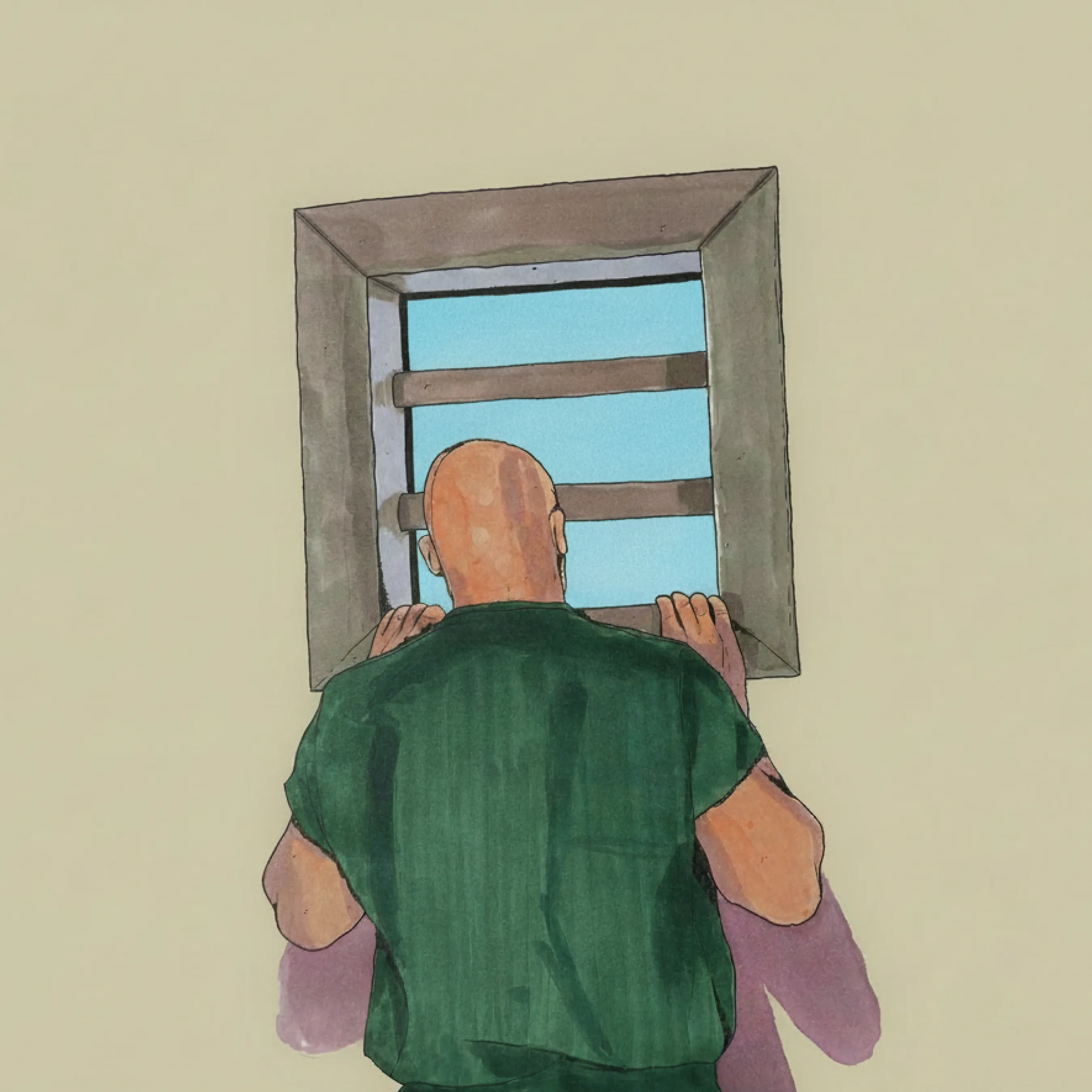
Australia is in the midst of an epidemic of prison lockdowns.
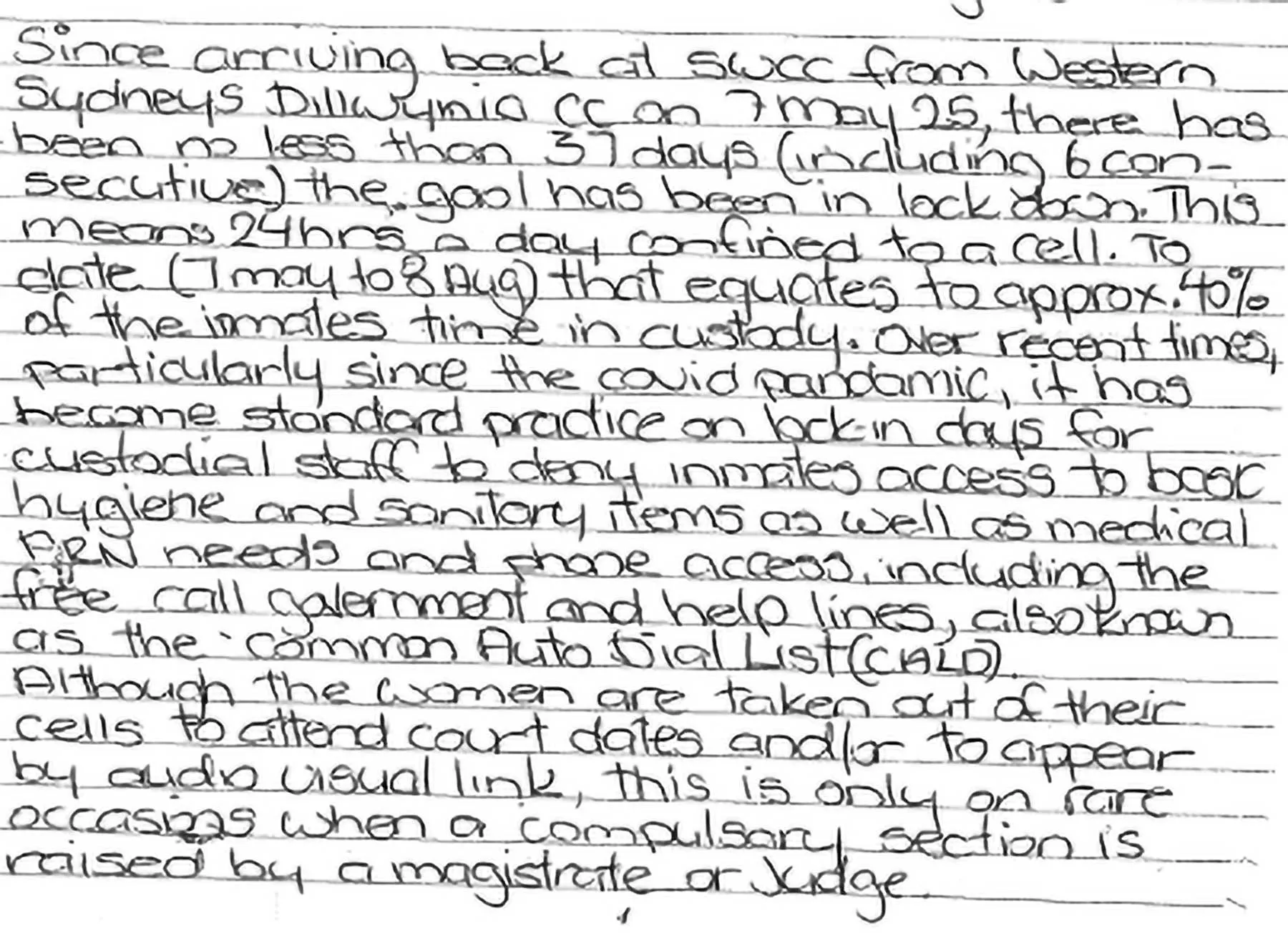
Lockdowns see incarcerated people confined to their cells or units for long periods of time with little to no access to open air, phone calls or visits, and even healthcare and legal assistance.
The lockdowns are usually due to staffing shortages.
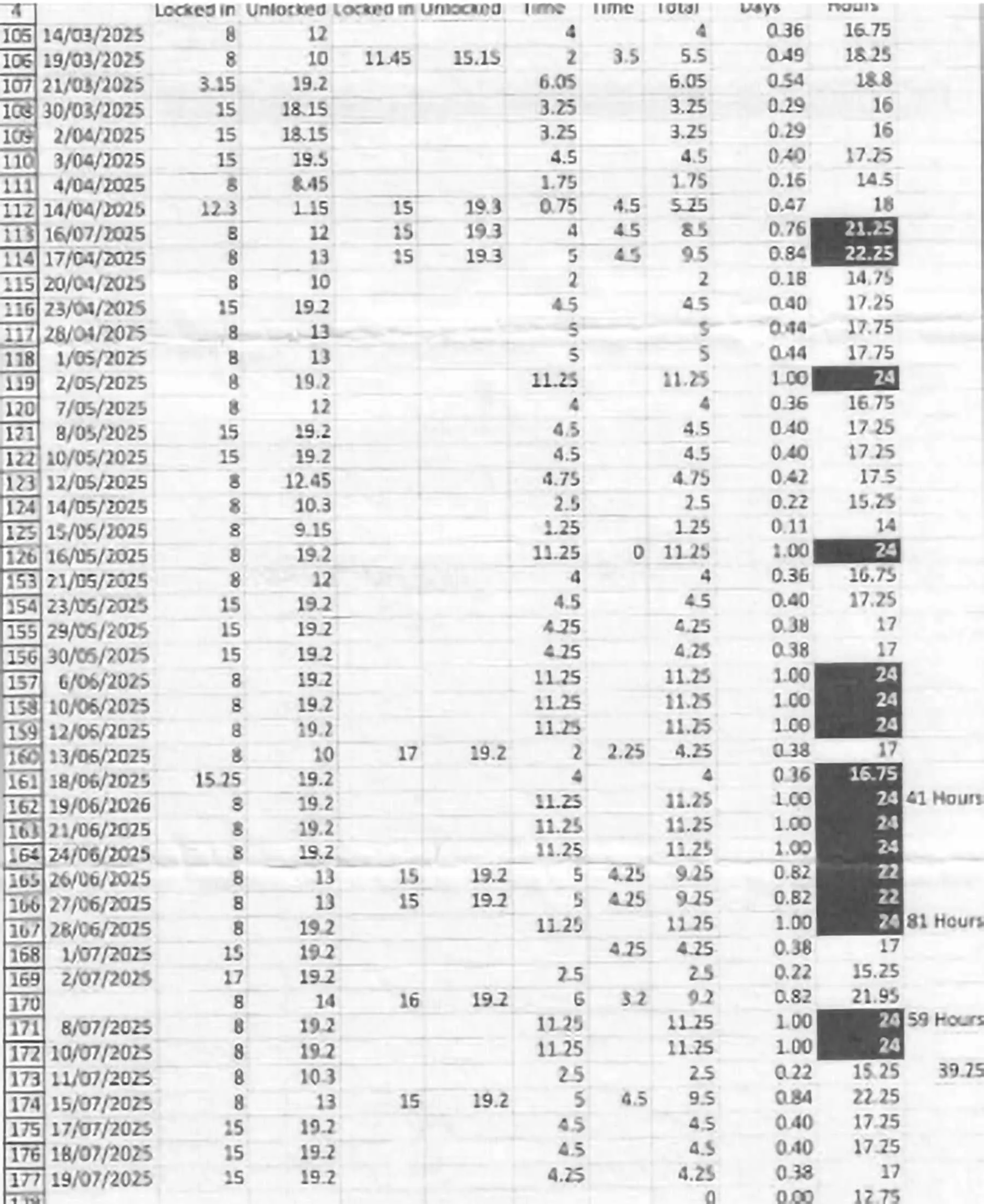
There is often little or no warning that these lockdowns are going to happen, leaving many people in virtual solitary confinement for hours or days.
News about prison lockdowns hit the mainstream last year, driven by whistleblowing from people in prison and formerly incarcerated people.
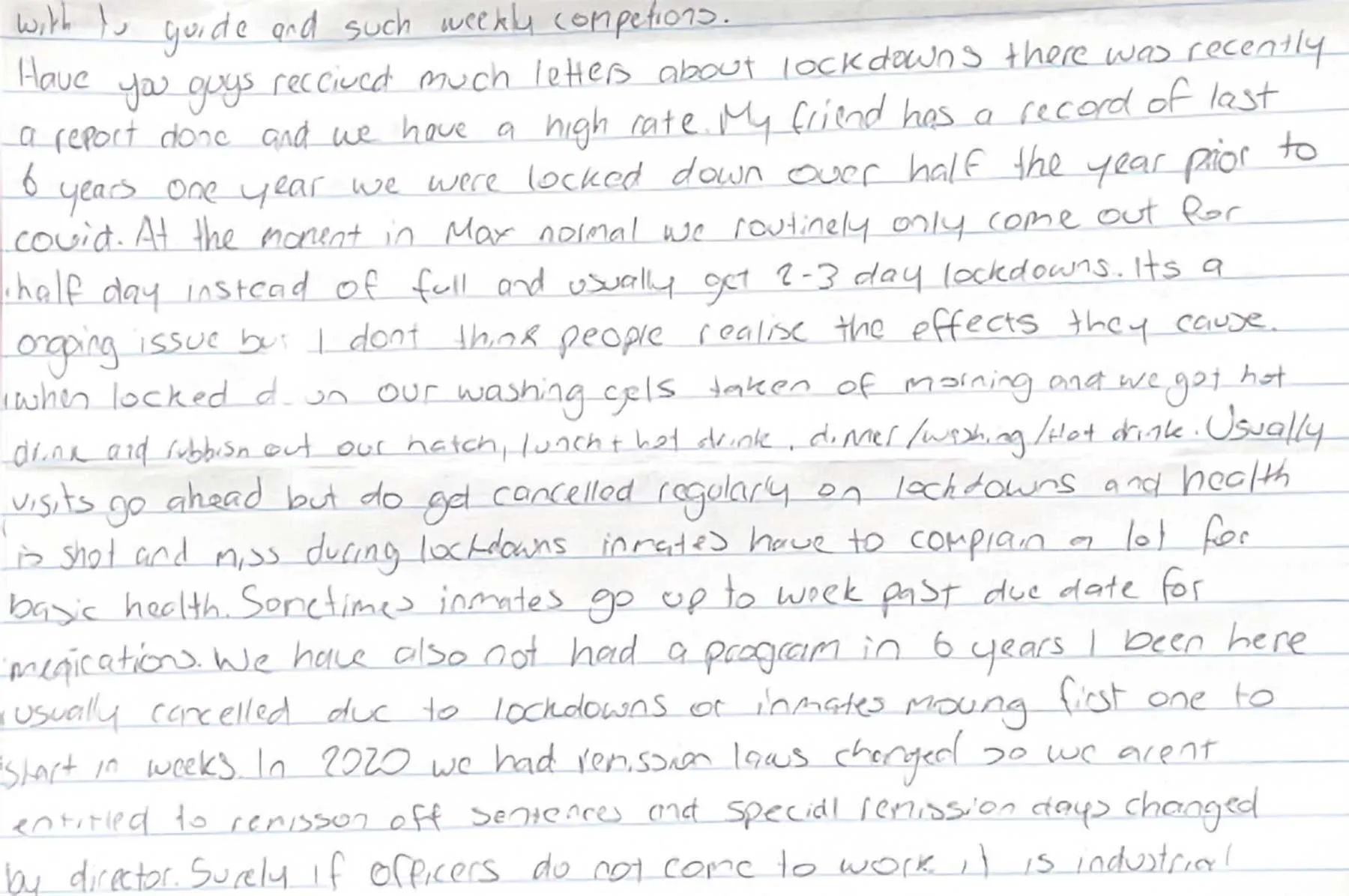
Many kept detailed calendars and notes of the lockdowns, information on missed legal calls and medical appointments and other consequences of them.
Nearly every week we receive a letter from someone in prison describing the devastating impact these lockdowns are having on people on the inside.
Here are their stories.
Australia is in the midst of an epidemic of prison lockdowns.
Lockdowns see incarcerated people confined to their cells or units for long periods of time with little to no access to open air, phone calls or visits, and even healthcare and legal assistance.
The lockdowns are usually due to staffing shortages.
There is often little or no warning that these lockdowns are going to happen, leaving many people in virtual solitary confinement for hours or days.
News about prison lockdowns hit the mainstream last year, driven by whistleblowing from people in prison and formerly incarcerated people.
Many kept detailed calendars and notes of the lockdowns, information on missed legal calls and medical appointments and other consequences of them.
Nearly every week we receive a letter from someone in prison describing the devastating impact these lockdowns are having on people on the inside.
Here are their stories.
Chris, writing from a prison in NSW
In the past we used to get remissions for the lock-ins. One day would amount to two-to-three days off our sentence. The lock-ins are impacting our mental health.
We didn’t have an hour out of our cell per day. I’ve been told it’s all administrative issues, but why should we be given extra punishment for the officers not coming to work or lack of employees? I think we deserve some time off.
Dolas, writing from a prison in QLD
Since 2020, 20-hour lockdowns have slowly been implemented in nearly every prison across Queensland besides the low-security prisons and privileged accommodation areas like residential.
Twenty-hour lockdowns are when prisoners are locked away in their cells for 20 hours of the day and are out for only four of them. Some days you don’t even get to be out for the entire four hours as prison codes, staff training and buy-up days affect the amount of time we get to spend outside of our cells.
Some days I feel there’s just not enough time to train, cook lunch or dinner and get on the phone in the four hours I have due to waiting in line for the cookers or phones, so sacrificing a task out of the daily routine becomes quite common.
Personally, the biggest thing I have trouble with is sticking to a routine. Having a routine that works well with your cellmate is very important to prolong a good relationship during your sentence. Having a compatible cellmate is absolutely critical.
Chris, writing from a prison in NSW
In the past we used to get remissions for the lock-ins. One day would amount to two-to-three days off our sentence. The lock-ins are impacting our mental health.
We didn’t have an hour out of our cell per day. I’ve been told it’s all administrative issues, but why should we be given extra punishment for the officers not coming to work or lack of employees? I think we deserve some time off.
Dolas, writing from a prison in QLD
Since 2020, 20-hour lockdowns have slowly been implemented in nearly every prison across Queensland besides the low-security prisons and privileged accommodation areas like residential.
Twenty-hour lockdowns are when prisoners are locked away in their cells for 20 hours of the day and are out for only four of them. Some days you don’t even get to be out for the entire four hours as prison codes, staff training and buy-up days affect the amount of time we get to spend outside of our cells.
Some days I feel there’s just not enough time to train, cook lunch or dinner and get on the phone in the four hours I have due to waiting in line for the cookers or phones, so sacrificing a task out of the daily routine becomes quite common.
Personally, the biggest thing I have trouble with is sticking to a routine. Having a routine that works well with your cellmate is very important to prolong a good relationship during your sentence. Having a compatible cellmate is absolutely critical.
Georgia, writing from a prison in VIC
Locked down for the third time this week, sixth time this past fortnight, with ‘Bird of Prey’ playing on Rage, the shitty fuzzy speakers on the shitty fuzzy TV barely able to conjure up something that resembles bass.
The guy in the video is zooming through the air like I used to - up and down, round and round, while I look up at the sky, my playground, through bars.
Here I am, pondering the sky’s infinity from a 3 x 3.5m cell, where I’ve been locked for over 16 hours at a time with no warning multiple times this week. Through a hole in my heavy metal door, I’m offered cold toast which was cooked in a toaster that a pigeon ate from yesterday. With bread that is almost definitely mouldy.
David, writing from a prison in WA
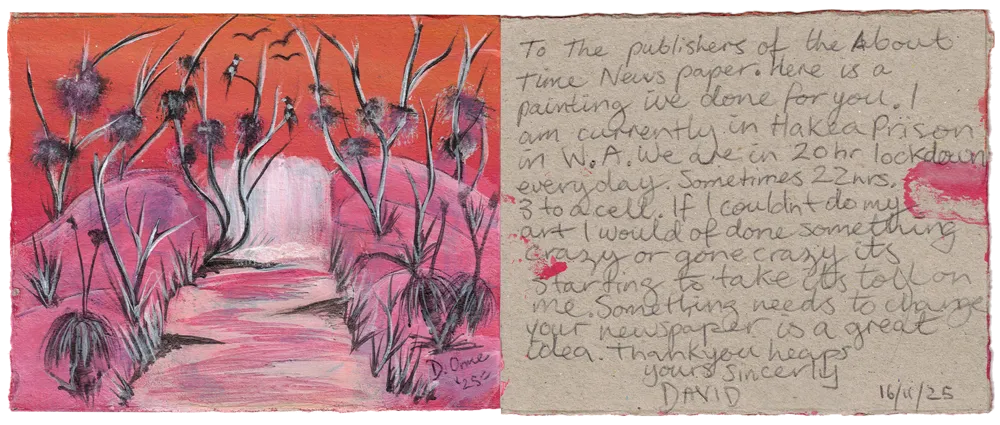
I am currently in Hakea Prison in WA. We are in 20hr lockdown everyday. Sometimes 22hrs. Three to a cell.
If I couldn’t do my art I would have done something crazy or gone crazy, it’s starting to take its toll on me. Something needs to change.
Albany Prisoners, writing from a prison in WA
A lot of boys are struggling mentally because we are always getting locked in or locked down.
We have no support here! No mental health officers for prisoners to talk to and it's hard to get employment within the jail. It's becoming more and more often that they just lock us down, then wonder why a lot of positive people with strong mindsets are changing in a negative way!
Prison is meant to help people become better people but at the moment it's breaking us all slowly but surely. The prisons have no support. Courses and AOD programs are full and people are sleeping on the floor. Something needs to change.
Bray, writing from a prison in NSW
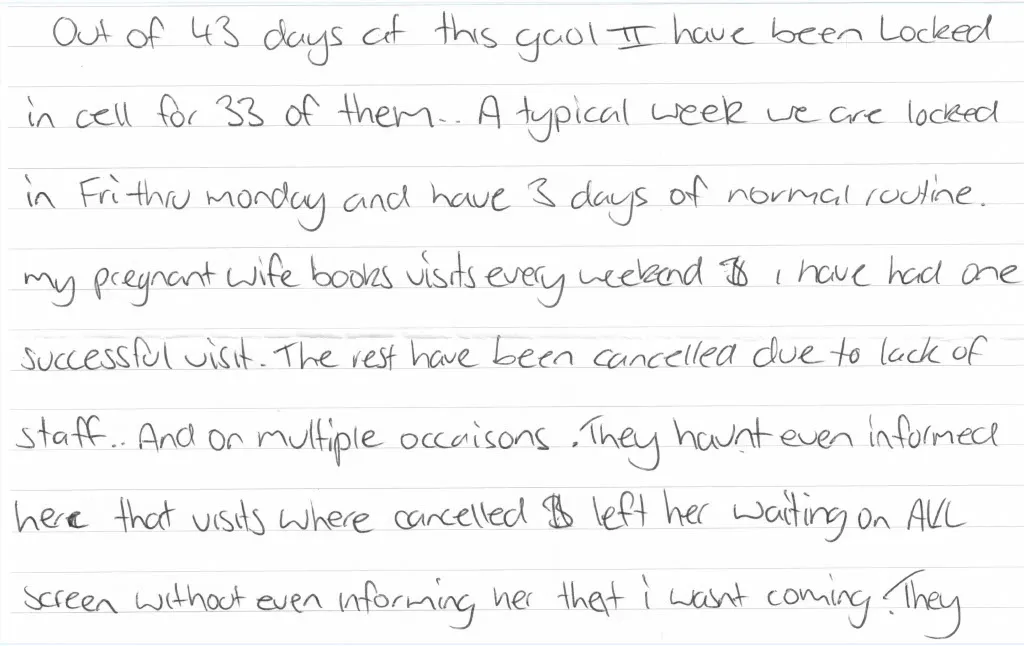
Out of 43 days at this gaol I have been locked in my cell for 33 of them. A typical week we are locked in Friday through Monday, and have three days of normal routine.
My pregnant wife books visits every weekend and I have had one successful visit. The rest have been cancelled due to lack of staff, and on multiple occasions they haven't even informed her that visits were cancelled and left her waiting on the AVL screen without even informing her that I wasn't coming.
My hope is that my letter will help you see how bad NSW centres actually are.
Darren, writing from a prison in TAS
I've been in prison for 14 years now, and lockdowns have always been a feature of prison life, but I have noticed that over the years they have gotten worse and worse.
I don't cope with them well at all, especially the long stretches of 10 days or more. I just haven't gotten used to them. I write letters, read and use the PlayStation, but by day three of lockdowns I'm usually badly depressed to the point of absolute despair and live out the remaining days of lockdowns in abject hopelessness. It's pretty miserable.
Jarod, writing from a prison in TAS
Currently we are into our sixth straight day in lockdown. From 11.30am Sunday till now 6.38 pm Saturday – that's 151 hours in a cell. That has to be against human rights law.
That's inhumane. Animals at the point spend more time in fresh air. Something honestly needs to be done about this. Thanks for listening, and hopefully no-one else is going through this.
Brady, writing from a prison in TAS
Since 2019 the lockdowns have been so bad to the point that we don't even get our entitled one hour walk.
There was a time where we were locked down for almost three weeks with no phone calls, and the officers in the unit didn't even do our washing for five days. This hasn't just been one time, there have been more than 15 times.
It's wrong on so many levels. Our human rights haven't been met at all. The lockdowns are getting worse and worse. Changes need to happen, not in a few years – now. We need help – someone needs to help us by standing by our side.
Georgia, writing from a prison in VIC
Locked down for the third time this week, sixth time this past fortnight, with ‘Bird of Prey’ playing on Rage, the shitty fuzzy speakers on the shitty fuzzy TV barely able to conjure up something that resembles bass.
The guy in the video is zooming through the air like I used to - up and down, round and round, while I look up at the sky, my playground, through bars.
Here I am, pondering the sky’s infinity from a 3 x 3.5m cell, where I’ve been locked for over 16 hours at a time with no warning multiple times this week. Through a hole in my heavy metal door, I’m offered cold toast which was cooked in a toaster that a pigeon ate from yesterday. With bread that is almost definitely mouldy.
David, writing from a prison in WA
I am currently in Hakea Prison in WA. We are in 20hr lockdown everyday. Sometimes 22hrs. Three to a cell.
If I couldn’t do my art I would have done something crazy or gone crazy, it’s starting to take its toll on me. Something needs to change.
Albany Prisoners, writing from a prison in WA
A lot of boys are struggling mentally because we are always getting locked in or locked down.
We have no support here! No mental health officers for prisoners to talk to and it's hard to get employment within the jail. It's becoming more and more often that they just lock us down, then wonder why a lot of positive people with strong mindsets are changing in a negative way!
Prison is meant to help people become better people but at the moment it's breaking us all slowly but surely. The prisons have no support. Courses and AOD programs are full and people are sleeping on the floor. Something needs to change.
Bray, writing from a prison in NSW
Out of 43 days at this gaol I have been locked in my cell for 33 of them. A typical week we are locked in Friday through Monday, and have three days of normal routine.
My pregnant wife books visits every weekend and I have had one successful visit. The rest have been cancelled due to lack of staff, and on multiple occasions they haven't even informed her that visits were cancelled and left her waiting on the AVL screen without even informing her that I wasn't coming.
My hope is that my letter will help you see how bad NSW centres actually are.
Darren, writing from a prison in TAS
I've been in prison for 14 years now, and lockdowns have always been a feature of prison life, but I have noticed that over the years they have gotten worse and worse.
I don't cope with them well at all, especially the long stretches of 10 days or more. I just haven't gotten used to them. I write letters, read and use the PlayStation, but by day three of lockdowns I'm usually badly depressed to the point of absolute despair and live out the remaining days of lockdowns in abject hopelessness. It's pretty miserable.
Jarod, writing from a prison in TAS
Currently we are into our sixth straight day in lockdown. From 11.30am Sunday till now 6.38 pm Saturday – that's 151 hours in a cell. That has to be against human rights law.
That's inhumane. Animals at the point spend more time in fresh air. Something honestly needs to be done about this. Thanks for listening, and hopefully no-one else is going through this.
Brady, writing from a prison in TAS
Since 2019 the lockdowns have been so bad to the point that we don't even get our entitled one hour walk.
There was a time where we were locked down for almost three weeks with no phone calls, and the officers in the unit didn't even do our washing for five days. This hasn't just been one time, there have been more than 15 times.
It's wrong on so many levels. Our human rights haven't been met at all. The lockdowns are getting worse and worse. Changes need to happen, not in a few years – now. We need help – someone needs to help us by standing by our side.
After decades of campaigning, the state will scrap an offence punishable by up to a year in prison, shifting the response to poverty and homelessness away from policing.
Victoria Police now have the power to secretly access the financial records of anyone as part of investigations of all crimes under a last-minute amendment passed by Parliament quietly last week.
Including a man being unlawfully kept in prison for months after his release date in SA, the findings from the Capricornia Inspection in QLD, upcoming inspections in WA and more.
The NSW government has detailed a new statewide mental health emergency response model centred on paramedics responding to people who are in crisis in some cases, instead of police.


