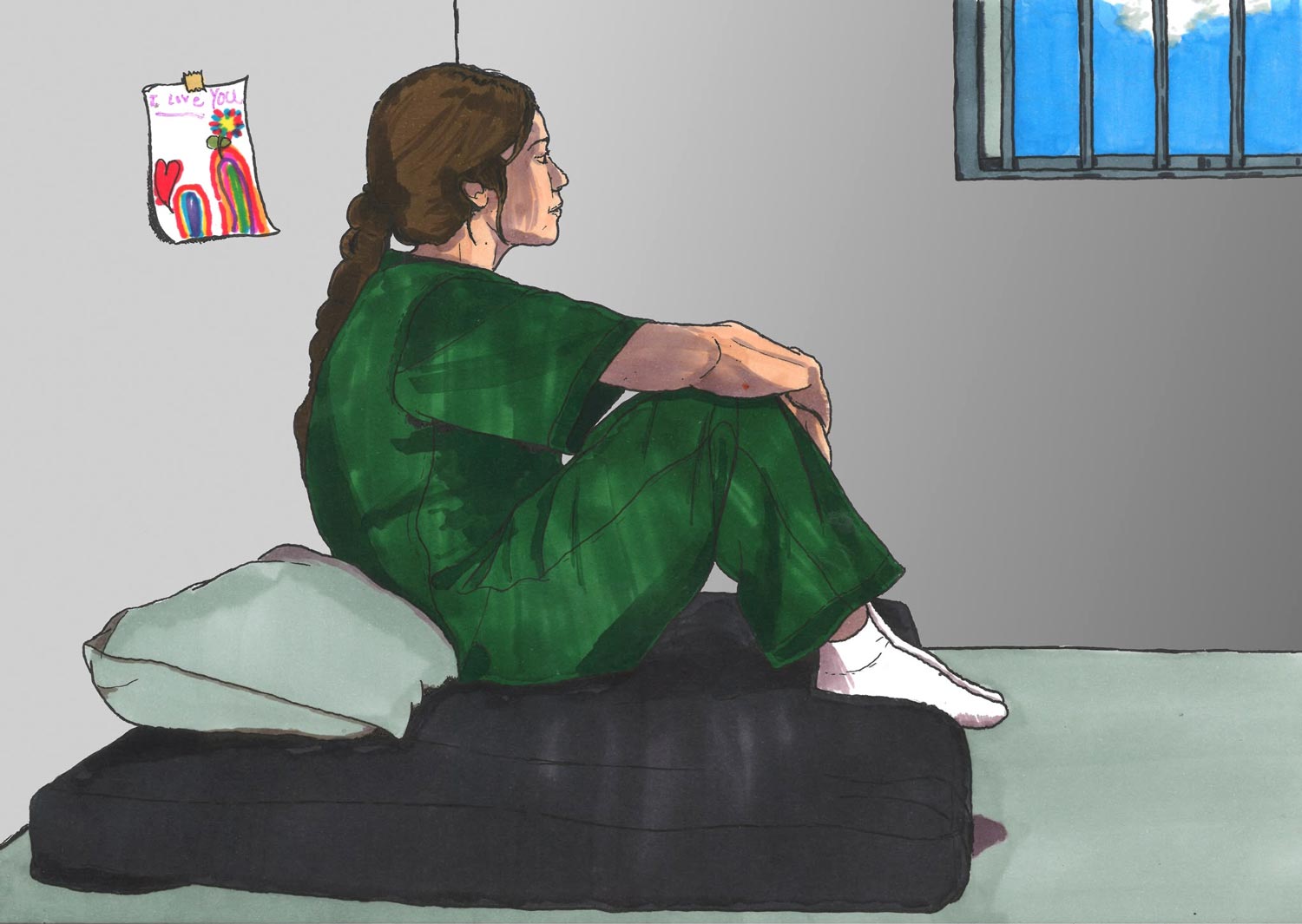
The prison environment does not lend itself to a good night’s sleep.
There is now a wealth of research into the impact of poor sleep on our physical and mental health, and into sleep issues in prisons.
Several studies have looked at how the routines and conditions within prisons are preventing people from getting proper sleep and creating more dangerous environments within these centres.
Experts and advocates are pushing for small changes to be made to improve sleeping conditions for people in prison, for their benefit and the safety of the facility.
There are a wide range of factors that make sleeping in prison extremely difficult.
These include regular counts throughout the night that can involve officers shining torches into cells, uncomfortable bedding, stress and overcrowding. A number of prison watchdogs have raised concerns about overcrowded cells and the fact that many people are sleeping on mattresses on the floors of cells, right next to the toilet.
Emily Cooper, who was incarcerated in Queensland, said that these factors combine to make a good night’s sleep nearly impossible.
“One person is on the floor next to the toilet, the other person literally has to step on their bed to get to the toilet,” Cooper told About Time.
If someone is placed in an observation cell due to poor mental health, lights are often left on throughout the night, something that is “possibly the worst thing for mental health deterioration”, she said.
Jason Ellis is a sleep expert and a Professor of Sleep Science at Northumbria University in the United Kingdom. He said that loss of control over your sleeping conditions can create difficulties.
“This loss can be in the form of sharing a room with someone we didn’t choose to, through to having little or no control over the sleep environment or the timing of it,” Ellis told About Time.
A lack of proper sleep over a long period of time can have a negative impact on your health in a number of ways. “It’ll make you more impulsive, increase irritability and increase risk-taking,” Andrew Vakulin, a senior researcher at FHMRI Sleep Health, told About Time.
Not getting enough sleep can make it harder to make decisions and make you more likely to take risks, Ellis said. “We know that poor sleep can make people more impulsive, and in a prison environment that adds an additional layer of potential challenge,” he said.
“Studies have shown we are more likely to engage in risky behaviour and aggression if we have not slept well.”
Little research has been done in Australia on sleeping in prison, but it has been investigated overseas. A recent study by the University of Texas and the Prison and Jail Innovation Lab on the “nightmare” of sleeping in prison looked at how the routine conditions in prisons were “systematically disrupting sleep”.
It found that sleep issues led to major impacts on health, behaviour and safety in prisons.
A separate study found that many people in US prisons are getting far less than the minimum of seven hours each night that is commonly recommended by health experts.
Through interviews with 39 formerly incarcerated people, the study found that people were getting four to six hours of sleep each night, with regular interruptions.
The study found that these sleep issues were greatly improved after the individuals were given treatment, including eye masks and earplugs, and rearranging the cells.
Some prisons around the world have made small changes to improve this situation, such as changing when and how counts are done, providing better mattresses and bedding, turning down lights during the night and providing more activities during the day.
In Norwegian prisons, many incarcerated people are provided with proper sleeping spaces, with their cells having proper beds and bedding, windows that let in natural light, climate control and regular changing of the bedding.
In Denmark, changes have been made to give people more control over the lighting in their cells.
In the United Kingdom, one prison gives women who are neurodivergent weighted blankets, noise-cancelling ear plugs, sleep masks and other sensory aids.
Vakulin said that consistency and routine are keys to a good night of sleep. “You want to go to bed and wake up at a similar time period that lines up with the body clock,” he said.
“Try to create an environment that’s conducive to sleep, with a regular routine that allows enough opportunity to have sleep. And if you think you have a sleep disorder like insomnia, seek clinical advice.”
Ellis said that people in prison should be provided with earplugs and eye masks, and that efforts should be made to keep cells cool, dark and quiet.
“Managing noise and light at night would certainly be helpful and simple additions like earplugs and eye masks being available could be quite beneficial,” Ellis said.
Conditions in prison and lockdowns often force people to use their bed for much more than just sleeping, something which can make getting to sleep more difficult.
“Only use the bed to sleep, and if that is impossible, designate one part of the bed as a sleep environment and the other part as a daytime environment,” Ellis said.
It found that sleep issues led to major impacts on health, behaviour and safety in prisons.
A separate study found that many people in US prisons are getting far less than the minimum of seven hours each night that is commonly recommended by health experts.
Through interviews with 39 formerly incarcerated people, the study found that people were getting four to six hours of sleep each night, with regular interruptions.
The study found that these sleep issues were greatly improved after the individuals were given treatment, including eye masks and earplugs, and rearranging the cells.
Some prisons around the world have made small changes to improve this situation, such as changing when and how counts are done, providing better mattresses and bedding, turning down lights during the night and providing more activities during the day.
In Norwegian prisons, many incarcerated people are provided with proper sleeping spaces, with their cells having proper beds and bedding, windows that let in natural light, climate control and regular changing of the bedding.
In Denmark, changes have been made to give people more control over the lighting in their cells.
In the United Kingdom, one prison gives women who are neurodivergent weighted blankets, noise-cancelling ear plugs, sleep masks and other sensory aids.
Vakulin said that consistency and routine are keys to a good night of sleep. “You want to go to bed and wake up at a similar time period that lines up with the body clock,” he said.
“Try to create an environment that’s conducive to sleep, with a regular routine that allows enough opportunity to have sleep. And if you think you have a sleep disorder like insomnia, seek clinical advice.”
Ellis said that people in prison should be provided with earplugs and eye masks, and that efforts should be made to keep cells cool, dark and quiet.
“Managing noise and light at night would certainly be helpful and simple additions like earplugs and eye masks being available could be quite beneficial,” Ellis said.
Conditions in prison and lockdowns often force people to use their bed for much more than just sleeping, something which can make getting to sleep more difficult.
“Only use the bed to sleep, and if that is impossible, designate one part of the bed as a sleep environment and the other part as a daytime environment,” Ellis said.


