

Watch Houses Are Now Prisons: Inside the Hidden Crisis in Police Cells
When Stephen* was taken to a police watch house in Mildura, his clothes were removed and he was given a used pair of boxer shorts with holes in them. For several days, he says, he remained without clothes and his blood pressure medication – until his partner was able to deliver them.
Stephen, aged 56, was held in the watch house for 19 days, despite police regulations recommending no more than three days in these cells, as they are designed only for short-term detention. During this time, Stephen said he was given reheated food and he often shared this two-bed cell with three others.
Stephen says he was allowed one five-minute phone call a week, but in one of the weeks of his detention he wasn’t permitted even that. His only outdoor space was tiny and cramped. After almost three weeks, he was finally transferred to a prison.
In several Australian jurisdictions, police watch houses have become quasi-prison cells, as punitive crackdowns on bail and other “tough on crime” measures have filled jails across the country.
The ACT has a legislated maximum period of 36 hours that someone can be held at a police watch house before being transferred to a prison. In NSW, there is a seven-day limit on being held in a police station or court cell complex. Queensland has a 21-day limit but then allows someone to be held for longer until they can be “conveniently” transferred to a prison.
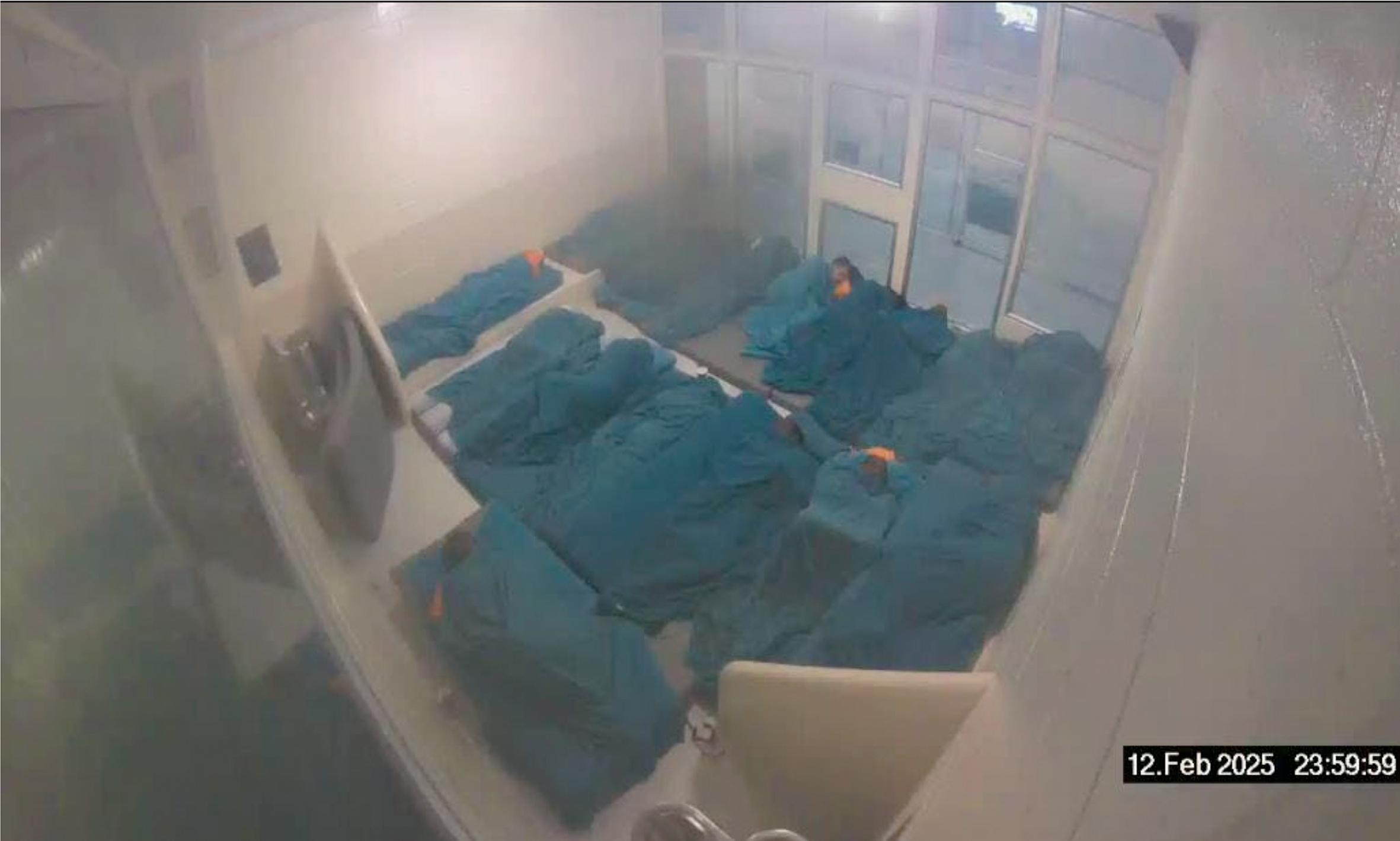
Regulators have flagged acute overcrowding in watch houses, with exposed toilets, often shared by several cellmates, and more than a dozen people sleeping on mattresses on the floor in the same cell. Lawyers struggle to contact clients held there, loved ones are unable to visit, access to open air is often severely restricted and medical staff are scarce.
There have been several recent deaths in police cells – exactly how many is difficult to establish as the relevant data is not collected – and legal and human rights organisations say that without urgent reforms, there will be more.
When Kumanjayi Dempsey, a 44-year-old First Nations woman, was found unresponsive at Tennant Creek police watch house at the end of last year, no medical staff were on duty. This was despite a coronial recommendation more than a decade ago that nurses be present 24/7 at watch houses in the Northern Territory. Dempsey had been arrested on Christmas Day and held in the watch house for two days before experiencing what police have described as a “medical episode”.
In mid July, a 55-year-old man died in the Brisbane watch house, after being held for three days. According to the Queensland Police Service, the man said he was feeling unwell on July 20 and was assessed by nursing staff. He became unresponsive and shortly after was declared dead.
A Victorian court recently heard that a trans woman attempted suicide after 20 days in a police watch house. The woman didn’t receive her hormone replacement therapy and medication for 10 days, the court heard, and had no access to fresh air, sunlight, a phone or support programs.
It was only after attempting suicide that the woman was moved to a prison, the court heard.
Raagini Vijaykumar, a principal managing lawyer with the Victorian Aboriginal Legal Service, says conditions in watch houses have worsened over the past year. From mid 2025, VALS started to get regular phone calls about watch houses on its Custody Notification Service, which provides wellbeing checks for First Nations people taken into custody. The calls were about detainees who weren’t receiving their prescription medications or withdrawal packs, and who were being kept in full isolation with no access to fresh air.
This year VALS sought an emergency injunction on behalf of a client who had been held in “abhorrent conditions” in police cells for 26 days. He was on remand, meaning he had not been found guilty of a crime, and was taken to a prison just hours before his case was due to be heard.
In another case, a Victorian court heard that a man had spent 21 days on remand in a police station cell. It was only after VALS also filed court action that he was moved to a prison, and he was then released on bail.
VALS has now submitted 11 complaints to the Independent Broad-based Anti-corruption Commission (IBAC) about their clients’ treatment in police cells. The submissions include allegations that their clients are regularly denied medical treatment and contact with family and legal representatives, have been dismissed as “acting” when injured, and are sleeping in “inhumane conditions”.
A number of people tell me they have had trouble accessing their prescribed medications while held in watch houses.
Sarah’s partner was detained in Victoria for 23 days. Sarah* says he wasn’t given his medication for several days and didn’t even get soap for the first two weeks. At one point he was taken to hospital, but Sarah says she wasn’t told.
“I was calling daily asking if he was okay and for updates, and each time they told me he was fine,” she says. “Never once did they mention he wasn’t even there.”
Criminal defence lawyer at Victorian firm MCD Lawyers Mark Martoccia says a client with schizophrenia was remanded and held in a watch house without his medication. The man developed a rash on his leg because he was unable to wash any of his clothes, and eventually an ambulance had to be called.
Martoccia is among lawyers who have reported being unable to speak to their clients; sometimes they are not even being told where their clients are.
He says his clients are being held in disgraceful conditions and that he is struggling to contact them. “It seems like it’s getting worse rather than getting better,” he says. “We’re having to ring around just to find out where a particular person is.” On average, he says, his clients are held for two weeks in Victorian watch houses.
The Victorian auditor-general is currently investigating whether Victoria Police and the Department of Justice and Community Safety is managing prison and police cell capacity in the state to support human rights and the efficient function of the justice system. This year’s state budget allocated $10 million for the maintenance of police watch houses and to improve the standard of healthcare they provide.
The Victorian parliament recently passed a Greens amendment outlawing the practice of “decanting”, whereby people are moved between police cells to avoid breaching the maximum stay period. The amendment establishes a clear limit of 14 days and makes it clear that transferring someone to a different watch house does not reset this time. This rule will not come into effect until September 2028.
A spokesperson for Victoria Police said they are working closely with Corrections Victoria to “support the timely transfer of prisoners into the correctional system”.
“Corrections Victoria has implemented a range of measures to increase capacity and improve prisoner movements, while longer-term prison capacity investments continue to come online,” the spokesperson says. “Victoria Police and Corrections Victoria will continue working together on practical measures to relieve pressure across the custodial system while longer-term capacity initiatives are progressed.”
The spokesperson adds that people held in police custody are allowed to keep their clothing where appropriate and that family members or friends in the community are able to bring them alternative clothing. There is a dedicated custodial health service responsible for healthcare in the police cells, the spokesperson says, and its policy states that people must be given a reasonable opportunity to contact a lawyer and have friends and family visit them.
Acting as quasi-prison guards is not something police officers want to do, either.
The Queensland Police Service in particular has objected strongly to the practice of holding people in watch houses, and has pushed for change from the state government.
The QPS also provides the most transparency when it comes to watch houses, publishing daily data on the number of people held. No other state or territory provides public data like this, and none revealed figures when asked. South Australia Police said there were no sentenced or remanded people being held in watch houses in the state, while Tasmania Police said people are rarely held for longer than one night.
According to QPS data, in Queensland alone, typically more than 500 people each night are being held in police watch houses. As of October 23, the total was 577 adults and children, more than a third of whom were First Nations. In the Cairns police watch house, there were 12 children, including one boy who had been held for 15 days.
In early July, the Queensland Civil and Administrative Tribunal ordered the state government to apologise to three boys detained in that Cairns facility in 2021 and 2022, for breaching their human rights.
QCAT found that in these police cells, the boys had no access to natural light, had to use the toilet in front of other children and a CCTV camera, were insulted by officers, had their sleep inhibited and were not allowed a change of clothes.
Under state legislation, Queensland Corrective Services has 21 days to transfer prisoners out of watch houses. The state’s police force maintains that no one should be held for more than three days. Despite this, more than one in five people processed in a watch house in 2024 was held for longer than that, according to a QPS investigation into watch houses last year.
The longer someone is held in one of these facilities, the more likely they are to self-harm and not comply with directions, according to QPS. “Watch houses are simply not environments that are designed for lengthy prison stays, and there are serious implications and risks associated with this fact being routinely overlooked,” the QPS report said.
The report raises a litany of concerns around these facilities: the continuing presence of ligature points; an inability to separate women from men, and adults from children; a lack of privacy regarding showers and toilets; poor temperature control and ventilation; and lights remaining constantly on.
Similar conclusions have been reached in the Northern Territory, where watch houses are also increasingly doubling as extra prisons, as the Country Liberal Party government’s punitive new laws see the incarcerated population skyrocket.
A report by the territory’s ombudsman, tabled in parliament in late 2025, found people were being held in watch houses in “extremely poor conditions” that were “unreasonable and oppressive”. It detailed severe overcrowding, exposed toilets, drinking water positioned above a toilet, no fresh air, poor sleeping conditions and limited chances to see family and loved ones. Images included in the report show up to 17 people sleeping on mattresses in the same police cell.
“No prisoner, regardless of their offence, should be held in such conditions,” the report said.
The North Australian Aboriginal Justice Agency (NAAJA) says this confirmed what the organisation has been hearing for months.
The conditions in these cells should “alarm us all”, says Human Rights Law Centre senior lawyer Sohini Mehta.
“Police watch houses are increasingly being treated by governments across the country as de facto prison cells to cage people,” Mehta says. “The barbaric conditions in police cells are a direct result of a government-manufactured incarceration crisis leading to more people being pipelined into prison cells.”
Mehta has called on governments across the country to urgently act on the use of police watch houses as de facto prisons.
“A responsible government would not leave people to languish in police watch house cells for weeks and months on end,” she said. “State and federal governments must step up to the plate, prioritise people and their human rights and stop the pipeline of people into prison cells.”
* Names have been changed.
This story is published in collaboration with The Saturday Paper.
Queensland prison authorities will no longer be required to consider and act in a way that is compatible with human rights when making decisions that affect people in prison, under legislation the state government has introduced to Parliament.
Including a report released into youth education in Tasmania, a review into transfer of children to adult prisons in VIC and more.
An arrest warrant gives police authority to arrest a person. But what happens when that person is believed to be inside somebody else’s home?
Including a new strategy to reduce recidivism in SA, a proposed mandatory sentencing for certain breaches of bail in QLD, body-worn cameras coming to max-security prisons in WA and more.


