Staying Connected to Culture in Prison
The Teelack program is bringing people into prison to deliver lectures and help First Nations people connect with their culture.
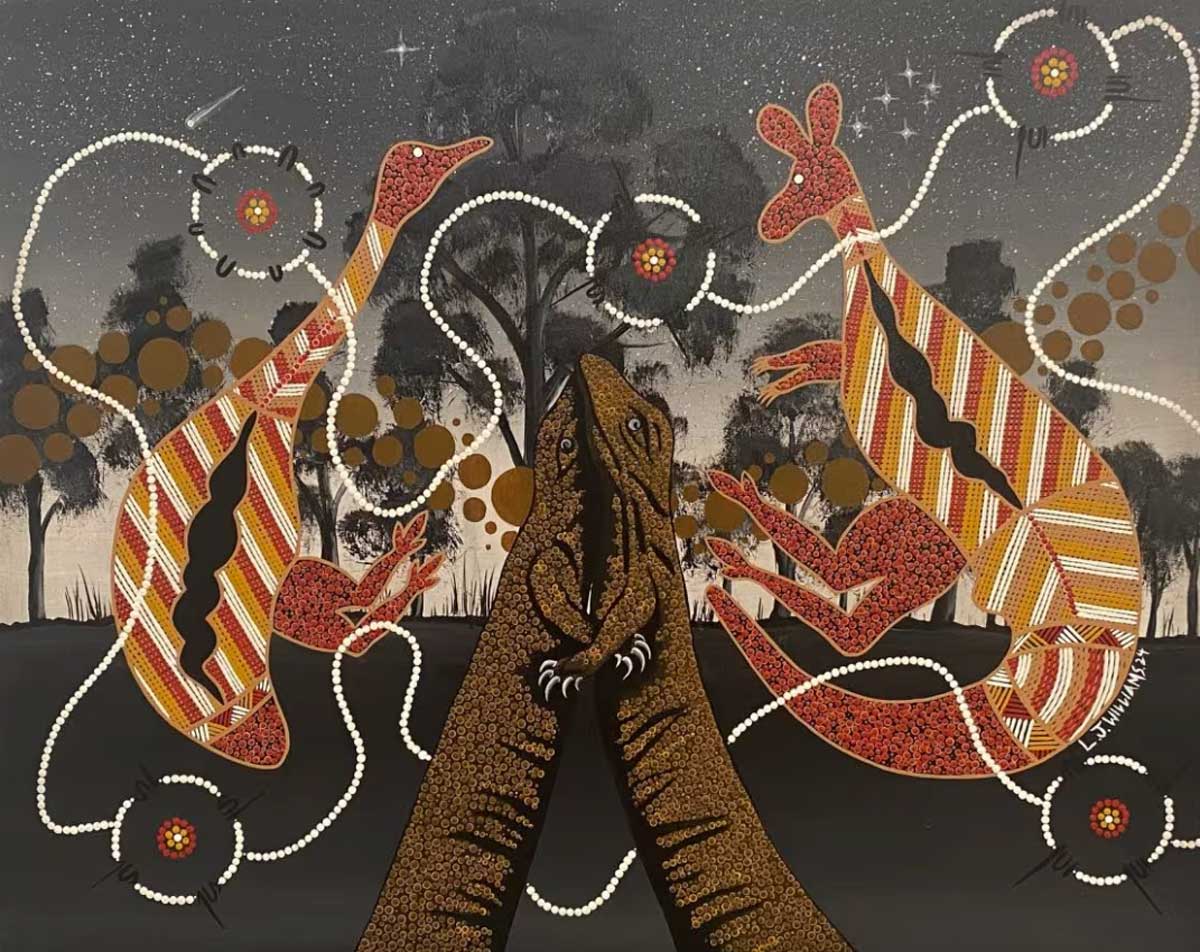
"Goanna Dreaming” by Leslie, available to purchase at Boom Gate Gallery


Your browser window currently does not have enough height, or is zoomed in too far to view our website content correctly. Once the window reaches the minimum required height or zoom percentage, the content will display automatically.
Alternatively, you can learn more via the links below.
Hello About Time readers,
We have been inspired to talk about the legal system that makes us the most incarcerated culture in this country.
So we decided that we would write in and talk about the cultural rights of Aboriginal and Torres Strait peoples, including the right to enjoy and maintain and control, protect and develop their identity and cultural heritage language and kinship ties.
We are the most incarcerated people in the country. We are trying to find the reasons why the legal system is doing this.
We are seeking to understand why this legal system is locking up children as young as 10 years old, when they should be providing them with cultural guidance and connection with their land and waters.
The effect of long-term jail terms impacts on cultural connection to culture and your mob.
In regards to this we have developed a program we are running here for us Aboriginal prisoners in partnership with Federation University and Corrections as part of the Mungul Dhal program. We have called this Teelack.
The word Teelack means Good Country in native tongue. We have created this course here because we know there are a lot of Aboriginal prisoners that are reaching out for connection to culture and wanting to learn more of who they are and how critical it is to stay connected to mob’s own country.
We are learning about how important our connection to culture is, and the way we have done this is by getting a bunch of different people in and giving us lectures. The lectures also include Aboriginal and non-Aboriginal speakers. We also invite non-Aboriginal prisoners.
Not only do we get to learn about a whole different range of topics regarding culture, health and life skills; we also invite Corrections staff so they can learn about this as well.
It was a great turn out when we had our first guest speaker in, who was a historian named Fred Cahir. He has a number of books he has written on Aboriginal history. What a very informative speaker he is.
We learnt that Hopkins Correctional Centre is based at the head of the Hopkins River. We also learnt that the nearby Langi Guruant mountain depicts the Eel Dreaming story, as well as the Ka Ka Muurrup Spirit.
There were pictures shown in Fred’s lecture of the Eel Dreaming story and how damaged it has become. This presented a challenge to inmates on how to become more involved in the ongoing maintenance of cultural heritage and environmental works in the Hopkins basin.
Discussions with the Traditional Owners, Corrections and inmates are in the planning stages of looking into it in the immediate future.
We also learnt about Aboriginal heroes and the things that made them heroes.
A lot of people don’t know or have never heard of these heroes. This lecture series aims to inform the inmates and staff about the true history in this country, potentially finding the reasons behind why we are the most incarcerated peoples in this country.
I will be talking about that a little more in the next article. Now I just want to say to all you brothers and sisters out there, stay Black and Deadly and be proud of who you are and stay strong.
Thank you.
Regards,
The Brothers
Most of the art featured at Boom Gate Gallery is made at Long Bay Gaol, with some coming from other prisons in NSW.
You’ve probably heard of AFL legends Adam Goodes and Michael O’Loughlin. But what you might not know, is that they also started their own charity called the GO Foundation.
NAAJA has a 50-year history of serving Aboriginal Territorians as they navigate the justice system.
Tracy was one of many women released from prison straight into homelessness. Thanks to the Homeward Sisters program, Tracy was able to secure priority housing that meets her needs.