Celebrating NAIDOC Week!
To celebrate NAIDOC week, we’re showcasing First Nations art submissions. We acknowledge the fierce First Nations people and Elders across the country advocating for justice.


Your browser window currently does not have enough height, or is zoomed in too far to view our website content correctly. Once the window reaches the minimum required height or zoom percentage, the content will display automatically.
Alternatively, you can learn more via the links below.
Thelma is a Palawa woman with family ties to Cape Barren Island off the north-east coast of Tasmania. She grew up in Swan Hill, a small town on the Murray River in the Loddon Mallee region. Most of Thelma’s work is inspired by her totem, the Tasmanian Emu. A former graffiti artist, she first started creating work with The Torch in 2016 and has developed a unique painting style using bold, often primary coloured backgrounds with 2D depictions of emus. Thelma has a dedicated practice and has recently been exploring incorporating landscapes into her scenes. She loves connecting with her culture including researching the practice of muttonbirding, a traditional hunting method for Aboriginal Tasmanians.
Thelma has exhibited in many groups exhibitions since 2016. She was the recipient of The Torch’s Dennis Thorpe Award in 2020 and in 2021 exhibited at Dark Mofo, in The Tench curated by Theia Connell.
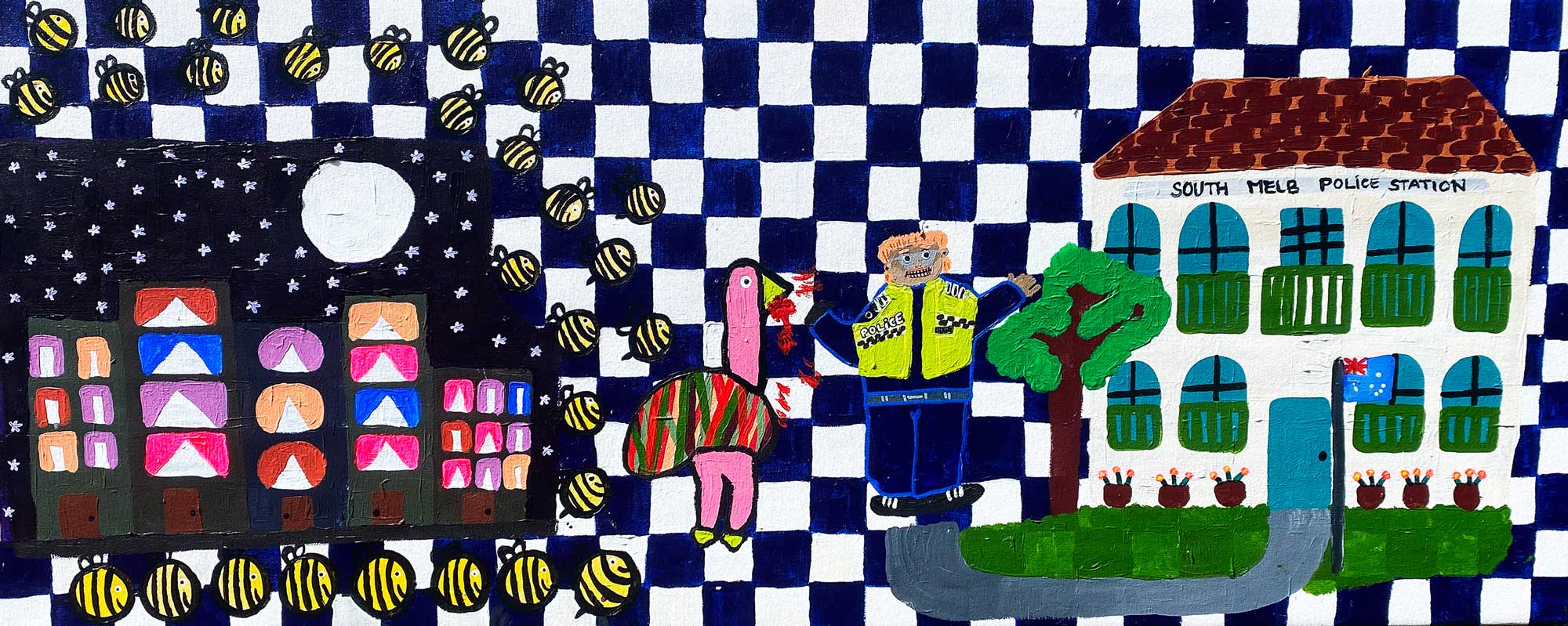
“There was a day when everything shifted. The cops came, and I felt it – the weight pressing me down, in my body and in my spirit. What they did – it wasn’t right. I feel that truth deep in my bones. Then they told me I couldn’t talk about it.
But this painting holds my story - the one I’m not allowed to speak about, even though it’s burning to be told.
It shows the fear and the helplessness that I felt that day. Sure, the bruises healed. But the anger, the pain, the crushing injustice? Those are still with me, sharp as ever.
My painting is not just about pain – it’s about my strength about fighting to be heard. This isn’t just my story. It’s all of us – our sisters, beaten down by a system that wasn’t made for us, that doesn’t even want us. My painting carries the weight of my ancestors. And through it, I speak loud and clear. My painting is truth.”
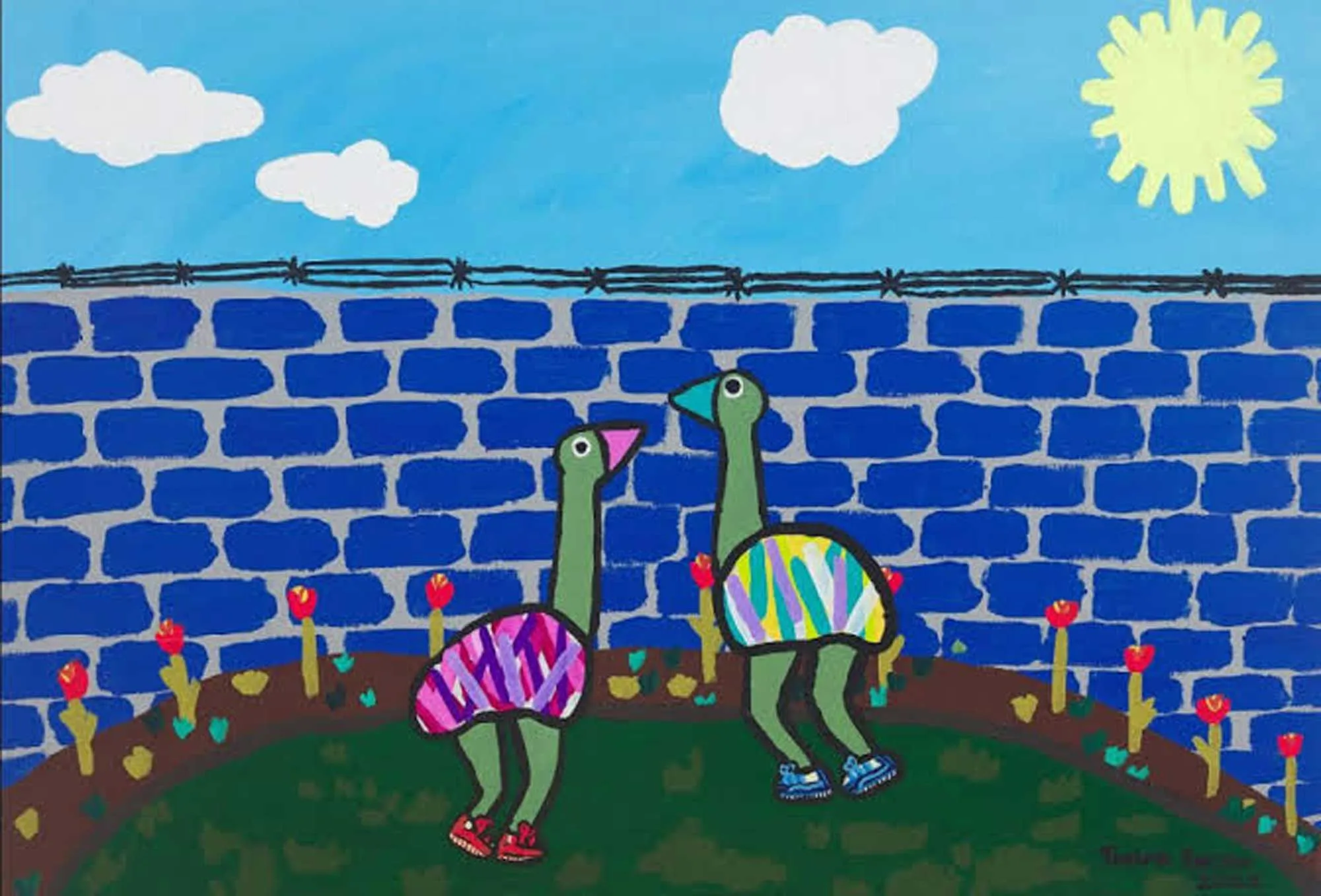
“Cutting laps jail… that’s what this painting is about. Stacey and I use to cut laps of the jail. To kill time and exercise and to talk about all our problems and hopes and dreams.”
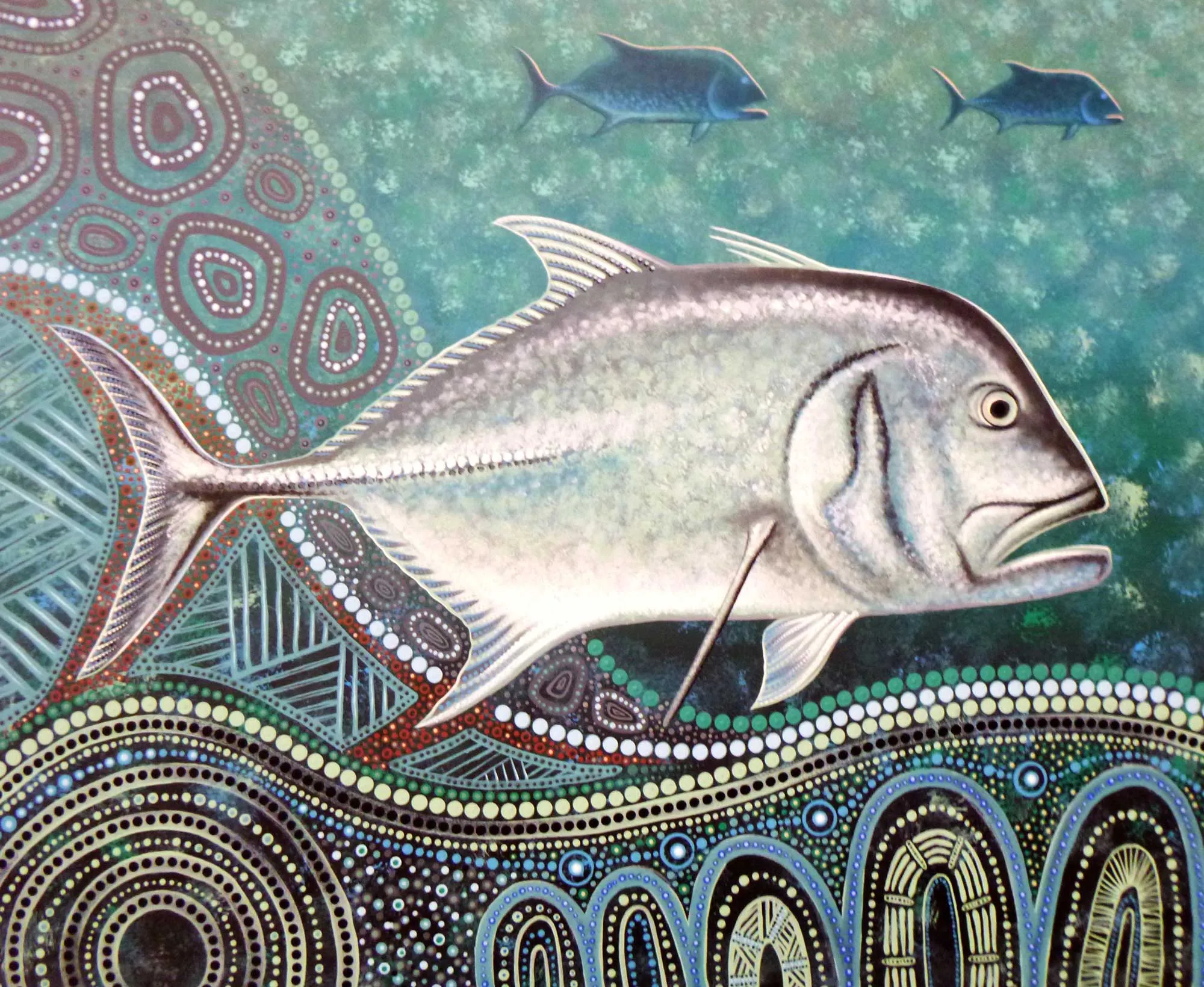
Water themes are calming to me. Painting fish helps to transport me mentally to a time and place in my life before substance abuse became a profound part of my life experience.
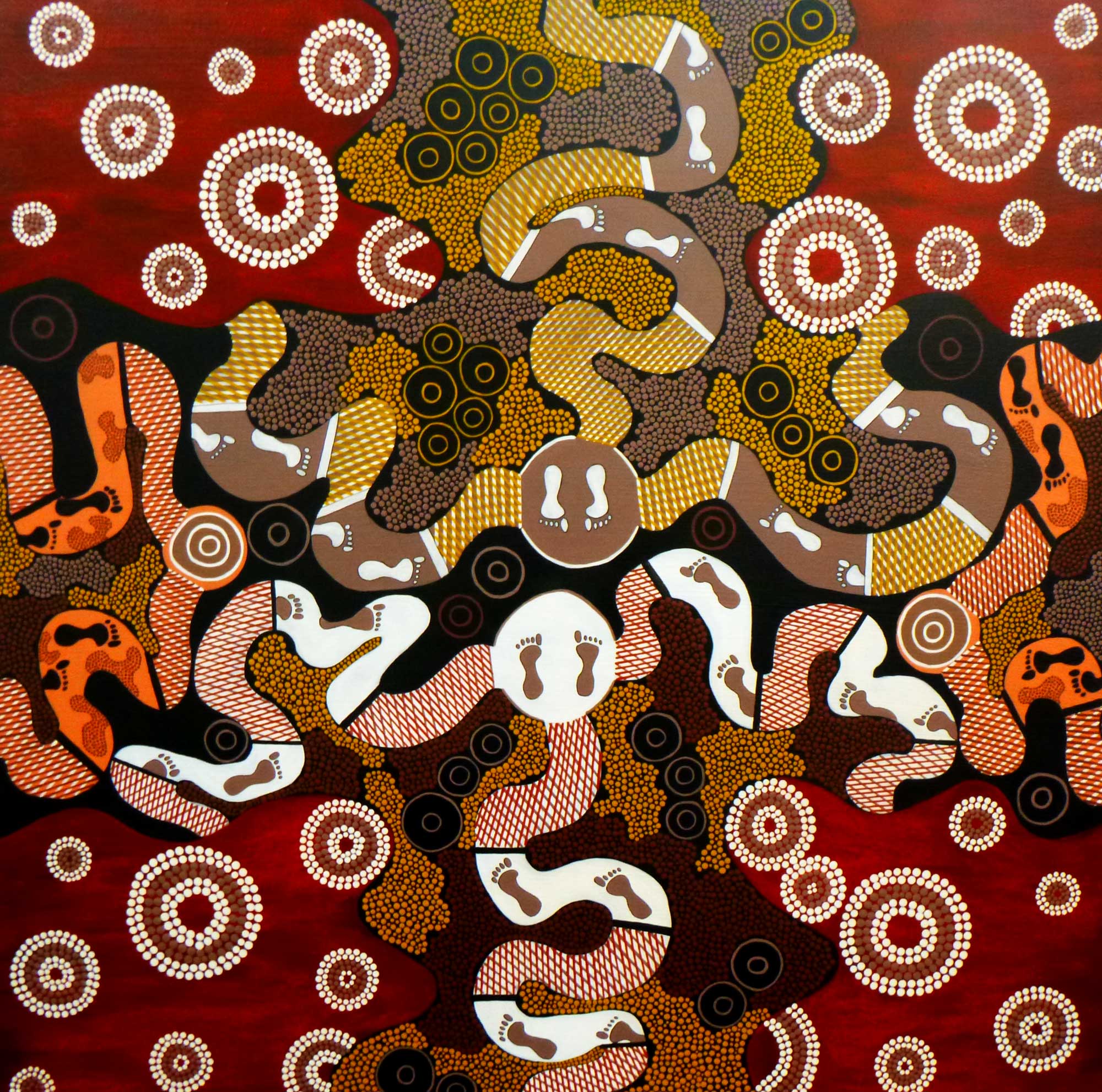
It is about all the paths we take in life and the different roads people go down to eventually make it to the centre of stability. It represents resilience in all of us and the many different places we may find ourselves in life. Be it rocky and windy or safe and sound; we all have resilience within us to make it through life’s journey.
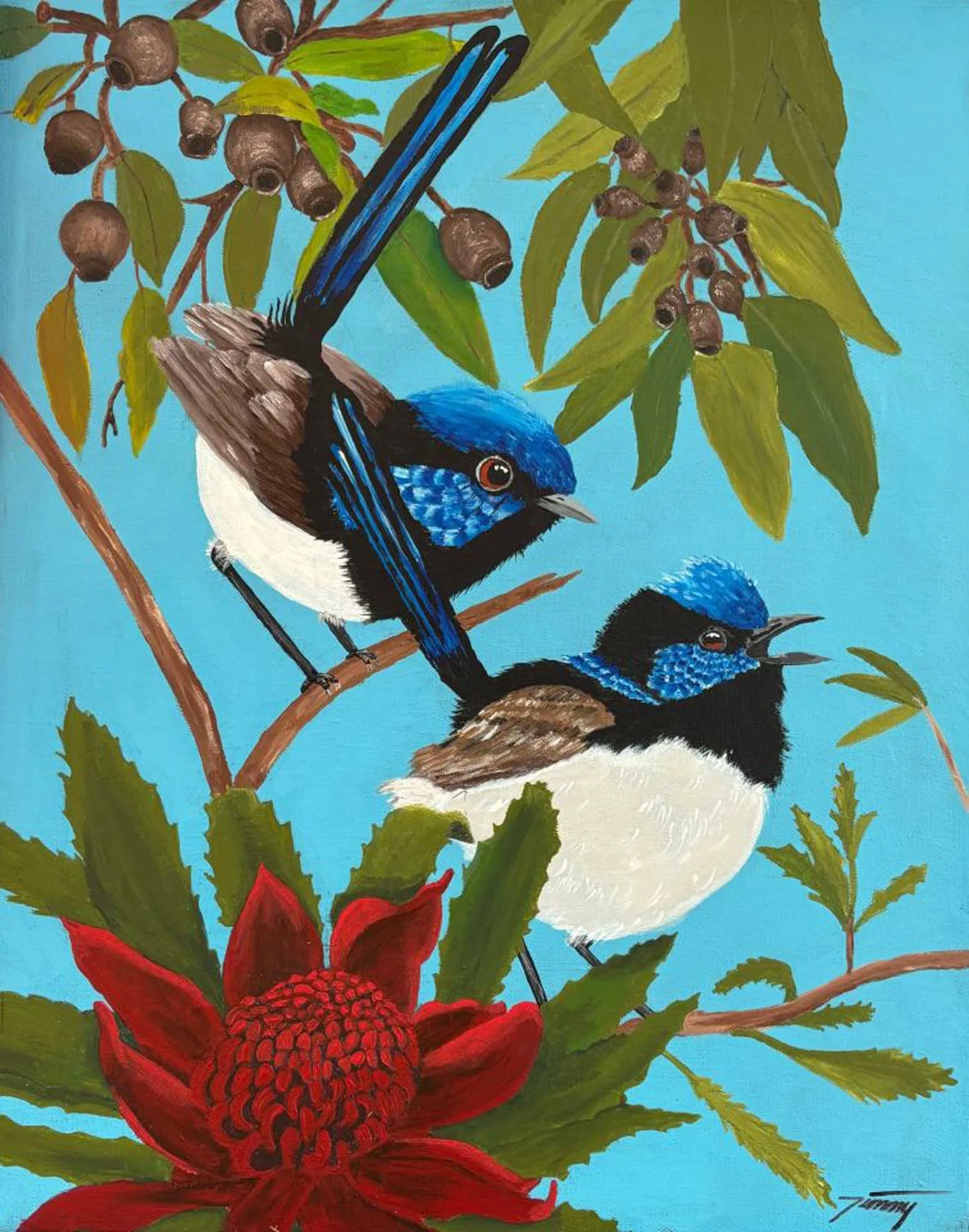
The painting represents kinship and relationships.
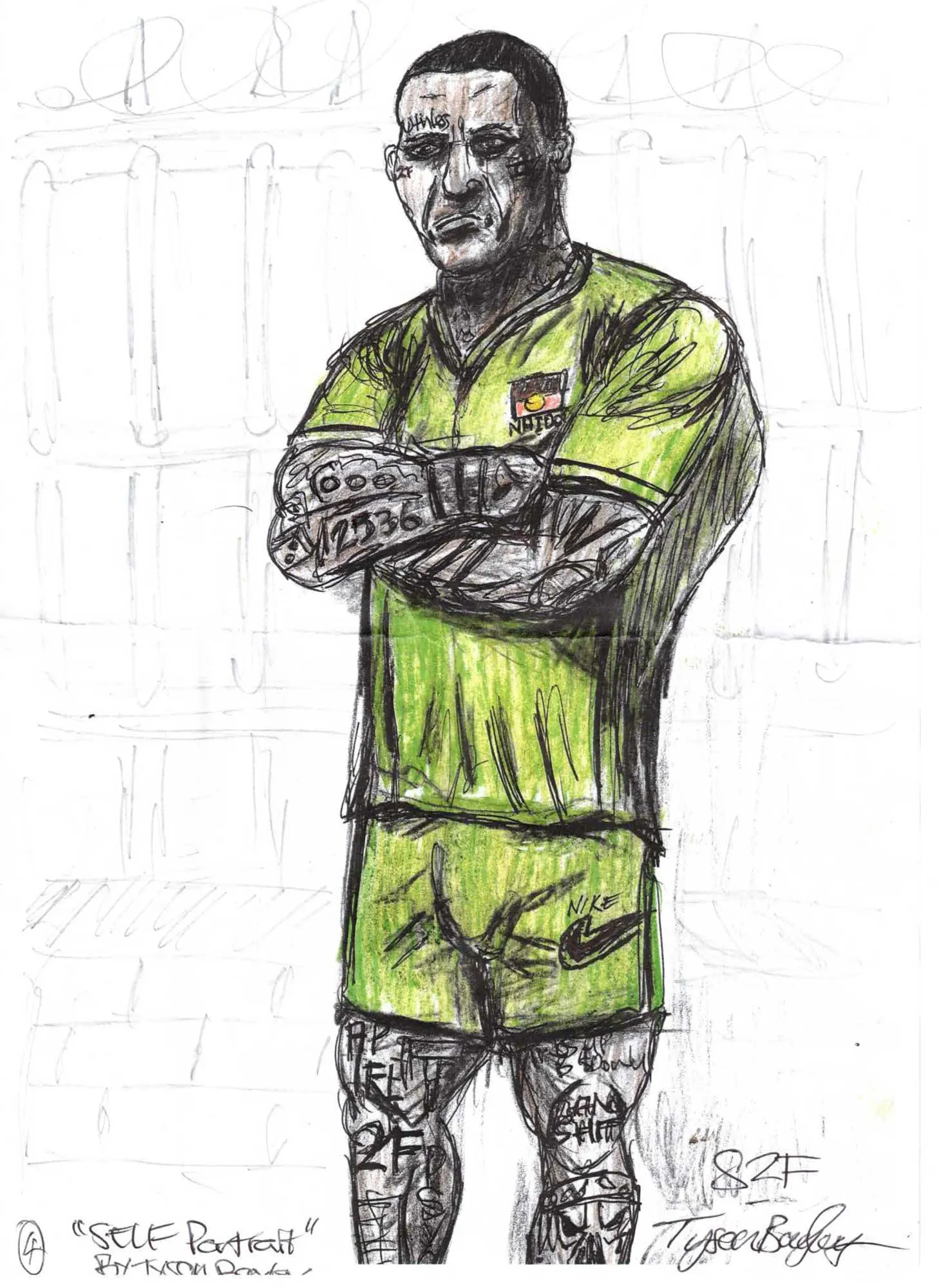
Tyson draws from a prison in NSW.
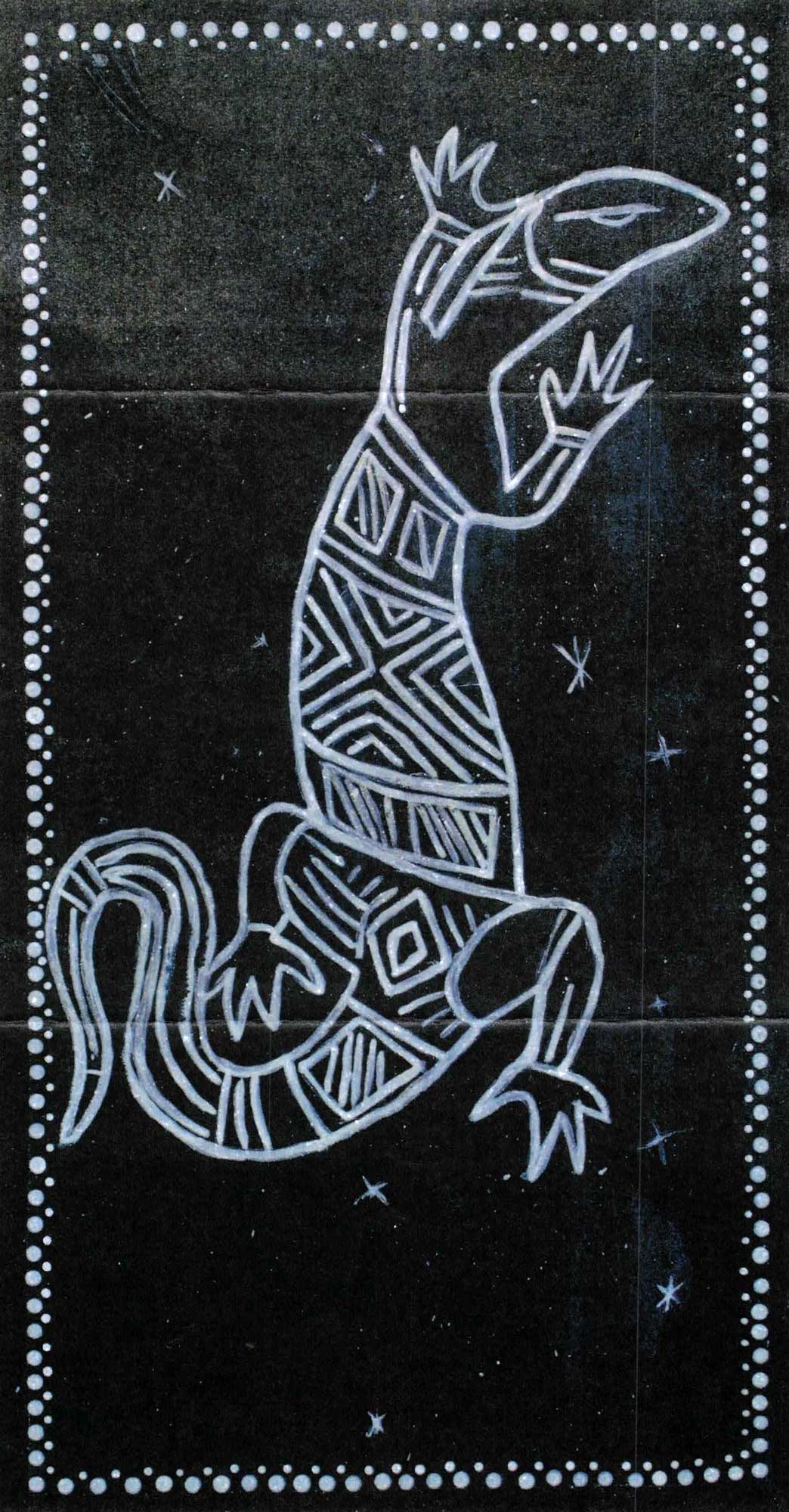
This is my take on the Goanna (guggaa) in the stars that is part of my mob’s stories.
Thelma is a Palawa woman with family ties to Cape Barren Island off the north-east coast of Tasmania. She grew up in Swan Hill, a small town on the Murray River in the Loddon Mallee region. Most of Thelma’s work is inspired by her totem, the Tasmanian Emu. A former graffiti artist, she first started creating work with The Torch in 2016 and has developed a unique painting style using bold, often primary coloured backgrounds with 2D depictions of emus. Thelma has a dedicated practice and has recently been exploring incorporating landscapes into her scenes. She loves connecting with her culture including researching the practice of muttonbirding, a traditional hunting method for Aboriginal Tasmanians.
Thelma has exhibited in many groups exhibitions since 2016. She was the recipient of The Torch’s Dennis Thorpe Award in 2020 and in 2021 exhibited at Dark Mofo, in The Tench curated by Theia Connell.
“There was a day when everything shifted. The cops came, and I felt it – the weight pressing me down, in my body and in my spirit. What they did – it wasn’t right. I feel that truth deep in my bones. Then they told me I couldn’t talk about it.
But this painting holds my story - the one I’m not allowed to speak about, even though it’s burning to be told.
It shows the fear and the helplessness that I felt that day. Sure, the bruises healed. But the anger, the pain, the crushing injustice? Those are still with me, sharp as ever.
My painting is not just about pain – it’s about my strength about fighting to be heard. This isn’t just my story. It’s all of us – our sisters, beaten down by a system that wasn’t made for us, that doesn’t even want us. My painting carries the weight of my ancestors. And through it, I speak loud and clear. My painting is truth.”
“Cutting laps jail… that’s what this painting is about. Stacey and I use to cut laps of the jail. To kill time and exercise and to talk about all our problems and hopes and dreams.”
Water themes are calming to me. Painting fish helps to transport me mentally to a time and place in my life before substance abuse became a profound part of my life experience.
It is about all the paths we take in life and the different roads people go down to eventually make it to the centre of stability. It represents resilience in all of us and the many different places we may find ourselves in life. Be it rocky and windy or safe and sound; we all have resilience within us to make it through life’s journey.
The painting represents kinship and relationships.
Tyson draws from a prison in NSW.
This is my take on the Goanna (guggaa) in the stars that is part of my mob’s stories.
Most of the art featured at Boom Gate Gallery is made at Long Bay Gaol, with some coming from other prisons in NSW.
You’ve probably heard of AFL legends Adam Goodes and Michael O’Loughlin. But what you might not know, is that they also started their own charity called the GO Foundation.
NAAJA has a 50-year history of serving Aboriginal Territorians as they navigate the justice system.
Tracy was one of many women released from prison straight into homelessness. Thanks to the Homeward Sisters program, Tracy was able to secure priority housing that meets her needs.