What You Need to Know About OPCAT
The UN treaty that aims to prevent human rights abuses in prisons

Mathias Reding


Your browser window currently does not have enough height, or is zoomed in too far to view our website content correctly. Once the window reaches the minimum required height or zoom percentage, the content will display automatically.
Alternatively, you can learn more via the links below.

When people are imprisoned, they lose their freedom, but they do not lose all of their human rights. International human rights law makes this very clear. Also, in some Australian states and territories, like Victoria and the ACT, there is human rights legislation that prohibits the torture and ill-treatment of imprisoned people.
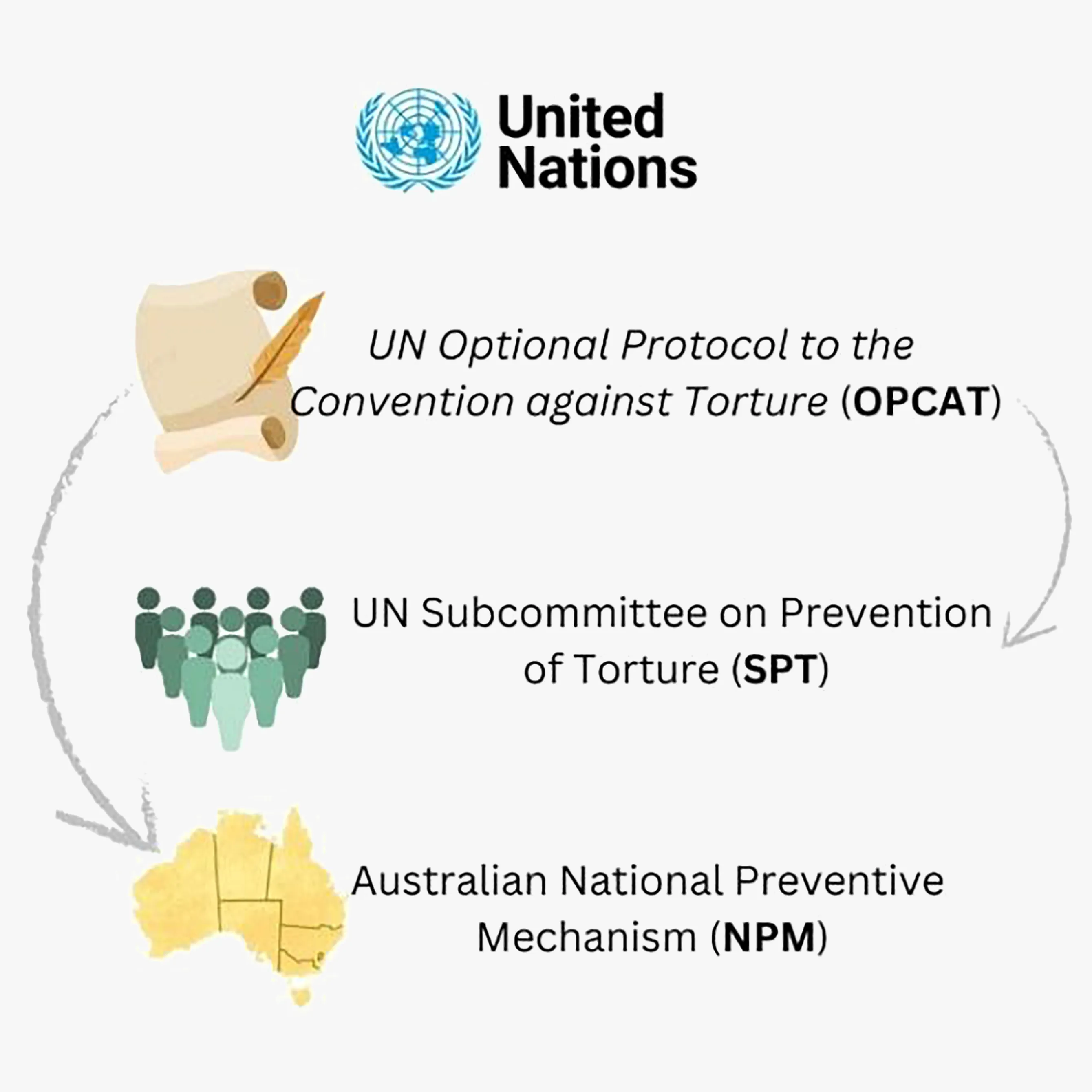
The United Nations Optional Protocol to the Convention against Torture and other Cruel, Inhuman or Degrading Treatment or Punishment (OPCAT).
OPCAT is an international human rights treaty that aims to prevent torture and ill-treatment of detained people.
The OPCAT intends to achieve this through regular visits by external organisations to see how things are going in prison and how they can be improved. The idea is also that if a prison knows that external, independent people will be coming to visit, they will be less likely to treat people in prison badly. It’s about monitoring of prisons.
There are both ‘international’ and ‘local’ oversight organisations that can enter prisons under this treaty. The international body is made up of independent experts from around the world, and is called the UN Subcommittee on Prevention of Torture (or SPT). The local organisation (or organisations) is called the National Preventive Mechanism (or NPM).
Countries like Australia can voluntarily sign up to the treaty. If countries sign up to the treaty, they must then do certain things. In 2017, Australia committed to meet the human rights obligations outlined in the OPCAT. Today, 94 countries have signed onto OPCAT.
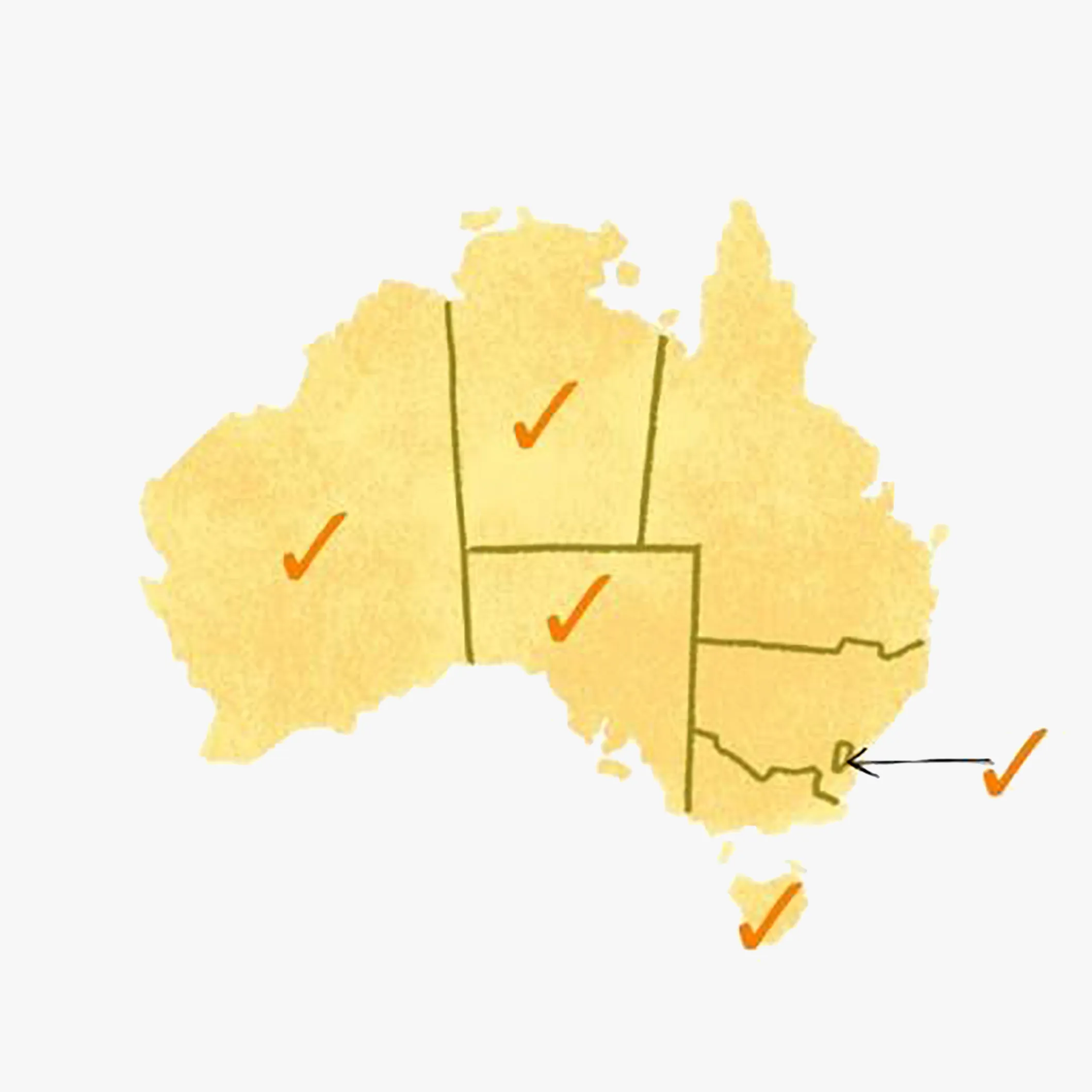
As Australia has signed up to the OPCAT, it is obligated to create a local body – the Australian NPM. The Australian Government delayed doing this, and then asked the UN for more time. The delayed, extended deadline to have a fully up and running oversight body across the whole country was January 2023. There is still no working oversight body, however there is slow progress towards one.
The Australian NPM would be divided up into parts at state and territory levels, as well as the national level. The Australian, ACT, Tasmanian, South Australian, Western Australian and the Northern Territory Governments have ‘nominated’ some organisations to be part of the Australian oversight body. However, most of the bodies that have been chosen do not have enough funding or do not have the necessary legal powers and protections to do the OPCAT work effectively. The Victorian, NSW and Queensland governments have not yet chosen their NPM bodies.

If signed up to the treaty, a country needs to allow the UN Subcommittee on the Prevention of Torture to visit all places of detention. The UN visited Australia in October 2022, but had difficulties accessing prisons and detention centres. Because of this, it decided to suspend its visit. Then, in February 2023, it officially ended its visit. This is only the second time the UN body has ever terminated a visit, in any country.
By regularly visiting places of detention like prisons, an NPM aims to prevent ill-treatment. Unlike many other bodies, such as complaints bodies or courts, it does not advocate for individual people or respond to complaints/incidents.
It aims to identify systemic issues and makes recommendations to prison management and governments on how to prevent ill-treatment before it happens.


The OPCAT is an international human rights treaty, and so the NPM will look at a prison through the rules and standards in international human rights laws. For example, an NPM will rely on the rules in the UN Standard Minimum Rules for the Treatment of Prisoners (also known as the Nelson Mandela Rules) and the UN Rules for the Treatment of Women Prisoners and Non-custodial Measures for Women Offenders (the Bangkok Rules).
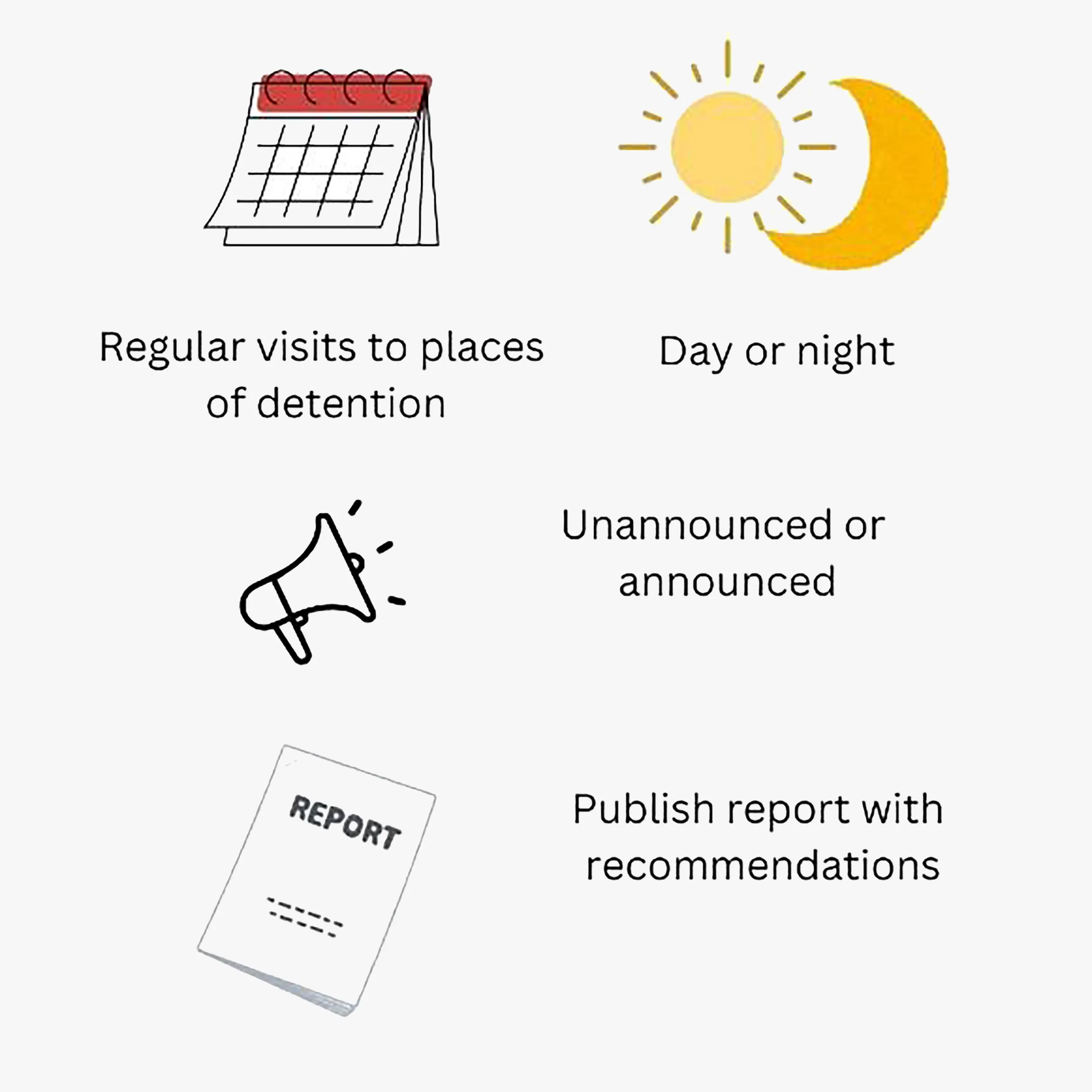
An NPM should be able to regularly visit places of detention, during the day or night, on both weekdays and weekends. It should have the power to enter a prison for both announced and unannounced visits. It should be able to publish its reports, including its findings and recommendations.
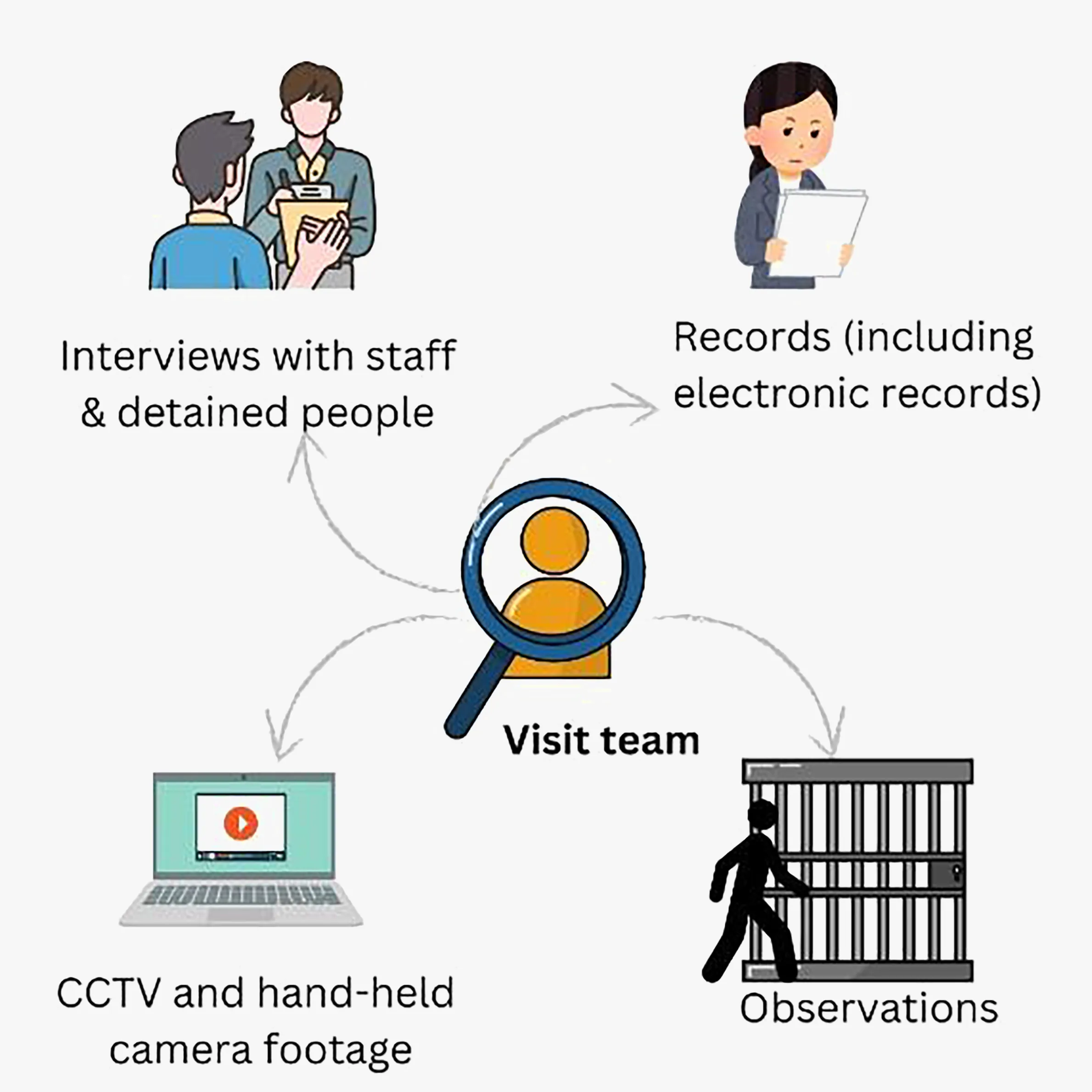
An NPM should have access to all places of detention, including private and public prisons (as well as all sections of the prison). It should also have access to all information and records regarding treatment of detained people and conditions of detention (e.g. all video footage from CCTV and hand-held cameras, and electronic systems and files). An NPM will also make its own observations during its visit to the prison (e.g. whether the prison is clean, how staff speak to detained people).

Importantly, an NPM must be able to have private interviews with all detained people, staff and contractors.
And the OPCAT prohibits any sanctions or punishment against a person or organisation for communicating/sharing any information with the NPM, regardless of whether the information they provided was true or false.

OPCAT can benefit everyone – detained people, their families, staff working in prisons, prison management and governments.
Evidence shows that regular visits to prisons by NPMs can strengthen protections for detained people.
Expert feedback from the NPM bodies provides useful guidance to prison management and governments on how to prevent ill-treatment from occurring in the first place.
Many people and organisations have been advocating for full implementation of OPCAT in Australia. Hopefully governments across the country will work together to find a way forward.
Unfortunately (at least for now) OPCAT remains a missing piece of the puzzle.
The OPCAT is an international human rights treaty, and so the NPM will look at a prison through the rules and standards in international human rights laws. For example, an NPM will rely on the rules in the UN Standard Minimum Rules for the Treatment of Prisoners (also known as the Nelson Mandela Rules) and the UN Rules for the Treatment of Women Prisoners and Non-custodial Measures for Women Offenders (the Bangkok Rules).
An NPM should be able to regularly visit places of detention, during the day or night, on both weekdays and weekends. It should have the power to enter a prison for both announced and unannounced visits. It should be able to publish its reports, including its findings and recommendations.
An NPM should have access to all places of detention, including private and public prisons (as well as all sections of the prison). It should also have access to all information and records regarding treatment of detained people and conditions of detention (e.g. all video footage from CCTV and hand-held cameras, and electronic systems and files). An NPM will also make its own observations during its visit to the prison (e.g. whether the prison is clean, how staff speak to detained people).
Importantly, an NPM must be able to have private interviews with all detained people, staff and contractors.
And the OPCAT prohibits any sanctions or punishment against a person or organisation for communicating/sharing any information with the NPM, regardless of whether the information they provided was true or false.
OPCAT can benefit everyone – detained people, their families, staff working in prisons, prison management and governments.
Evidence shows that regular visits to prisons by NPMs can strengthen protections for detained people.
Expert feedback from the NPM bodies provides useful guidance to prison management and governments on how to prevent ill-treatment from occurring in the first place.
Many people and organisations have been advocating for full implementation of OPCAT in Australia. Hopefully governments across the country will work together to find a way forward.
Unfortunately (at least for now) OPCAT remains a missing piece of the puzzle.
Australia has two sources of law: legislation and common law. Legislation is made by parliaments and is available in documents called acts. Common law is made by judges in court decisions and covers areas that have not been legislated.
You got this letter to say that your visa has been cancelled due to your offending. This means you no longer hold a visa.
Would I be forced to drop my appeal just to get to minimum security? Is this fair? My parole is due November 12 but I can’t see how I can get it.
Your security classification impacts which prison you are placed in and the level of security that is imposed on you.
The law, like other professions, has its own language. It helps keep all the lawyers huddled around some special stuff and keep the rest of us outside.
On 1 April 2026, the Australian Parliament passed new laws which will change the way Commonwealth parole works.
People in prison can apply to transfer from a prison in one state or territory to another, generally for welfare reasons to be closer to family, community supports, or rehabilitation opportunities.
Inspectors and ombudsmen regularly go to prisons and publish reports on what they find and what they think needs to be improved. They also complete reports on issues such as access to healthcare or the use of segregation.