All About Churchill
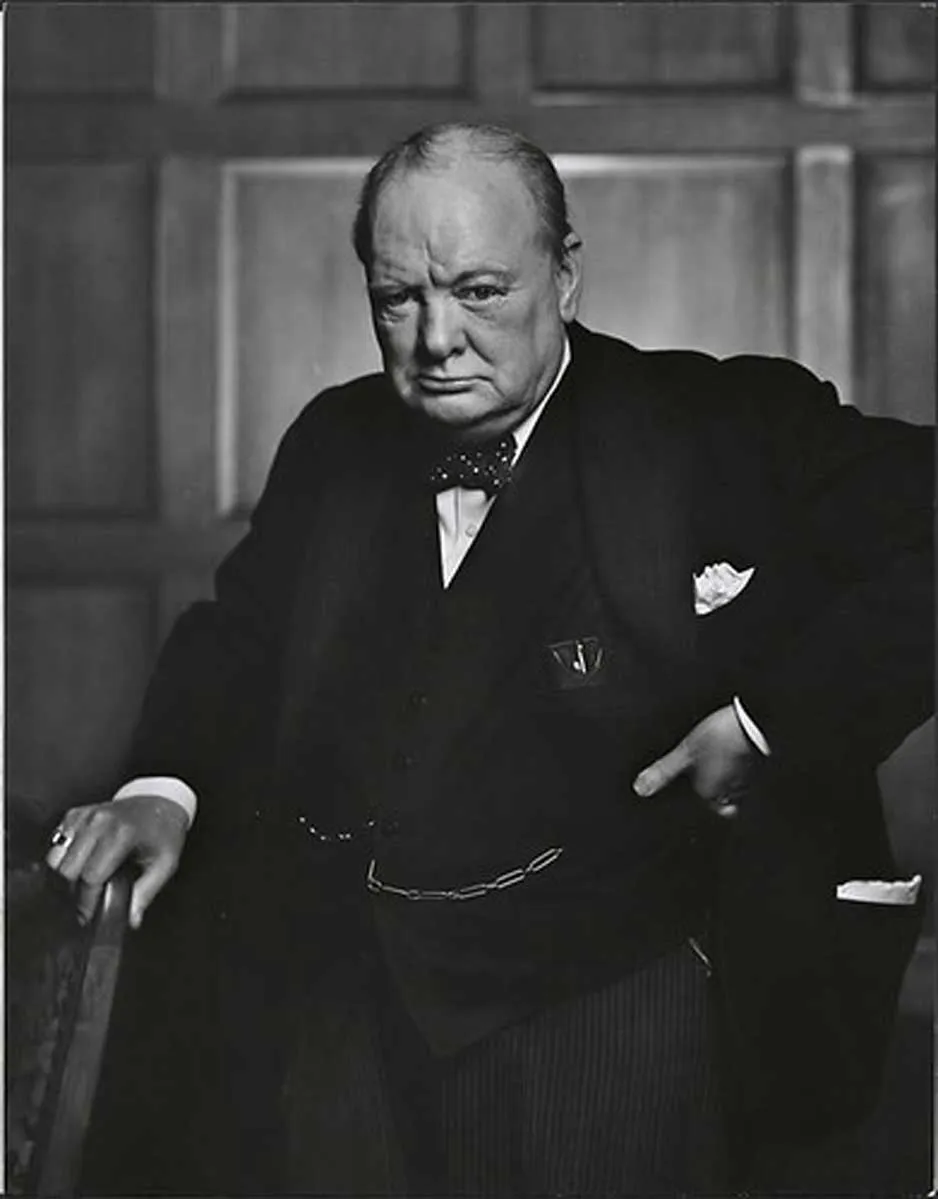
Sir Winston Churchill by BiblioArchives LibraryArchives


Your browser window currently does not have enough height, or is zoomed in too far to view our website content correctly. Once the window reaches the minimum required height or zoom percentage, the content will display automatically.
Alternatively, you can learn more via the links below.
If I could interview someone dead or alive, I would like to interview Winston Churchill, Britain’s wartime (WWII) leader. On the the face of it, this would be seen as a very curious choice for an Australian, as Churchill was the architect of the Gallipoli campaign in the First World War, a catastrophe costing many allied lives.
Despite the cost of many Australian lives in the Dardanelles campaign, I view Churchill in a much broader light. He, more than any other leader, saved the world from what would have been a dark age which Adolf Hitler and the Nazis threatened in the 1930s and 1940s. Following Hitler’s ascendance to power in 1933, Churchill was the lone voice warning of the dire consequences for not only Europe but for the world of the emerging evil that Nazism represented. He was dismissed as an aging war monger not only in Britain but throughout the world. The world was paralysed with appeasement.
His capacity for prescient world predictions was uncanny. As a 17-year-old student at Harrow in 1891, he predicted: “I can see vast changes coming over a now peaceful world: great upheavals, terrible struggles, wars such as one cannot imagine; and I tell you London will be in danger – London will be attacked, and I shall be very prominent in the defence of London … I see further ahead than you do. I see into the future. The country will be subjected somehow to a tremendous invasion … but I tell you I shall be in command of the defences of London and I shall save London and England from disaster.” It would be almost 50 years later, in 1940, when he indeed would lead Britain in its survival in the Battle of Britain. Britain and the Commonwealth, which includes Australia, stood alone against the Nazis in 1940.
Shortly after World War Two, having led his nation through its darkest moments, Churchill on a speaking tour of the USA was warning the world of the Iron Curtain that was falling across eastern Europe, where another evil empire threatened – Joseph Stalin’s Soviet Union. Yet again he was dismissed as an old war monger, but he was ahead of a naive world to the emerging threat, the Cold War.
He understood people better than most, and I think this was due to him being a student of history all his life. I think he believed history offered insights which are not governed by scientific rules – they require a human instinct in reconstructing experiences of the past, in providing illumination on events and people, that can be related to contemporary situations.
We have a leader of the West today (Trump) who wants to make deals with the devil (Putin). Churchill would turn in his grave at such weakness and folly!
Origami is the Japanese art of paper folding. It allows you to turn a flat piece of paper into nearly anything you can think of, like an animal, flower or a hat.
If you drive from Melbourne to Sydney, you will travel through 10 different First Nations language groups. And there’s the same number between Melbourne and Adelaide.
“There is no happiness on earth equal to that of liberty regained” – more wisdom from Don Quixote
Astrology and the interpretation of the stars and planets have been around for millennia. First originating in ancient Mesopotamia, astrology began by using the stars to decipher messages from the gods.