Welcome to About Time

About Time is the national newspaper for Australian prisons and detention facilities

Your browser window currently does not have enough height, or is zoomed in too far to view our website content correctly. Once the window reaches the minimum required height or zoom percentage, the content will display automatically.

Alternatively, you can learn more via the links below.

Donations via GiveNow

Email

Instagram

LinkedIn

ISSUE NO. 14

September 2025

ISSUE NO. 14

+

Sections

September 2025

Donate Here

Health

Planking … Let’s Make it a Bit More Challenging!
By

Gary Bultitude

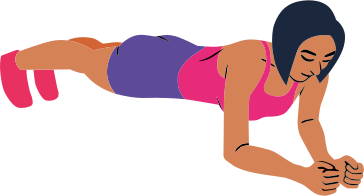
First, how to get into the plank position:

  1. Start by laying face-down on the floor.
  2. Place your elbows and forearms on the ground. Your elbows should be directly below your shoulders. Lift your body off the floor. Elbows and toes should be the only thing touching the floor.
  3. Align your body in a straight line from head to heels.
  4. Engage your core muscles by tightening your abdominal muscles. Imagine pulling your navel toward your spine.
  5. Position your feet hip width apart. Your weight should be distributed evenly between your elbows and your toes.

Once you’ve mastered the basic plank, how about some variations?

Plank risers

  1. Start in a plank, elbows under shoulders, body long and knees lifted.
  2. Lift your right elbow up and place your right hand on the floor, repeat with the left side.
  3. Reverse and come back down into a plank.

Note:

Try to keep your bum down and your back as flat as you can.

Complete:

5 starting with a right client and 5 with the left.

Plank side taps

  1. Start in the normal plank position.
  2. Walk your right leg out to the side and back again, repeat on the left.
  3. Move the legs away from the body – this will help to further engage the abs and obliques.

Note:

For more of a challenge, jump both feet out and in at the same (Plank Jacks).

Complete:

20 singles or 10 jacks.

Plank flies

  1. Start in the normal plank position, this time on your hands.
  2. Reach your right arm straight out in front of you, keeping your arm in line with your shoulder.
  3. Place your hand back under your shoulder and repeat on the left.

Note:

For more of a challenge, when lifting your right arm lift your leg foot up slightly (repeat on the other side).

Complete:

20 reps.

Reverse plank

Sit tall on the floor with your legs out in front of you. Place your hands behind with your fingertips pointed towards your feet.

Lift your bum off of the floor, forming a straight line from heels to shoulders.

Note:

Try to avoid dipping your back.

Complete:

Hold this for 15-30 seconds and repeat for 5 rounds.

Plank rotators

Start in the normal plank position, feet a few inches apart, and dip the body from side to side, allowing your hips to drop but maintaining a long spine.

Complete:

20 singles or 10 jacks.

With each of these exercises try not to hold your breath – keep your chin tucked and your neck natural to your spine.

First, how to get into the plank position:

  1. Start by laying face-down on the floor.
  2. Place your elbows and forearms on the ground. Your elbows should be directly below your shoulders. Lift your body off the floor. Elbows and toes should be the only thing touching the floor.
  3. Align your body in a straight line from head to heels.
  4. Engage your core muscles by tightening your abdominal muscles. Imagine pulling your navel toward your spine.
  5. Position your feet hip width apart. Your weight should be distributed evenly between your elbows and your toes.

Once you’ve mastered the basic plank, how about some variations?

Plank risers

  1. Start in a plank, elbows under shoulders, body long and knees lifted.
  2. Lift your right elbow up and place your right hand on the floor, repeat with the left side.
  3. Reverse and come back down into a plank.

Note:

Try to keep your bum down and your back as flat as you can.

Complete:

5 starting with a right client and 5 with the left.

Plank side taps

  1. Start in the normal plank position.
  2. Walk your right leg out to the side and back again, repeat on the left.
  3. Move the legs away from the body – this will help to further engage the abs and obliques.

Note:

For more of a challenge, jump both feet out and in at the same (Plank Jacks).

Complete:

20 singles or 10 jacks.

Plank flies

  1. Start in the normal plank position, this time on your hands.
  2. Reach your right arm straight out in front of you, keeping your arm in line with your shoulder.
  3. Place your hand back under your shoulder and repeat on the left.

Note:

For more of a challenge, when lifting your right arm lift your leg foot up slightly (repeat on the other side).

Complete:

20 reps.

Reverse plank

Sit tall on the floor with your legs out in front of you. Place your hands behind with your fingertips pointed towards your feet.

Lift your bum off of the floor, forming a straight line from heels to shoulders.

Note:

Try to avoid dipping your back.

Complete:

Hold this for 15-30 seconds and repeat for 5 rounds.

Plank rotators

Start in the normal plank position, feet a few inches apart, and dip the body from side to side, allowing your hips to drop but maintaining a long spine.

Complete:

20 singles or 10 jacks.

With each of these exercises try not to hold your breath – keep your chin tucked and your neck natural to your spine.

Ask the Doctor: Heart Attack

By Harley

A heart attack occurs when there is blockage in the heart’s own blood supply.

Health

ISSUE NO. 20

2 MIN READ

Why Do I Feel Lonely When I’m Surrounded by People?

By Annalise de Groot

Loneliness is a pervasive, all-encompassing state comprised of many unpleasant and distressing feelings. It is distinct from being alone, or from being socially isolated.

Health

ISSUE NO. 20

8 MIN READ

Yoga for Good Digestion

Reprinted with permission from Inside Time

Determined to make positive changes in life? It can start with digestion!

Health

ISSUE NO. 19

2 MIN READ

Ask the Doctor: Stroke

By Harley Stiebel

A stroke describes death to brain tissue caused by disrupted blood supply.

Health

ISSUE NO. 19

2 MIN READ