Welcome to About Time

About Time is the national newspaper for Australian prisons and detention facilities

Your browser window currently does not have enough height, or is zoomed in too far to view our website content correctly. Once the window reaches the minimum required height or zoom percentage, the content will display automatically.

Alternatively, you can learn more via the links below.

Donations via GiveNow

Email

Instagram

LinkedIn

Donate Here

Mob

The Strength Within: Part 1

An interview with Stacey Edwards and Marie Mitchell
By
VALS and Marie Mitchell

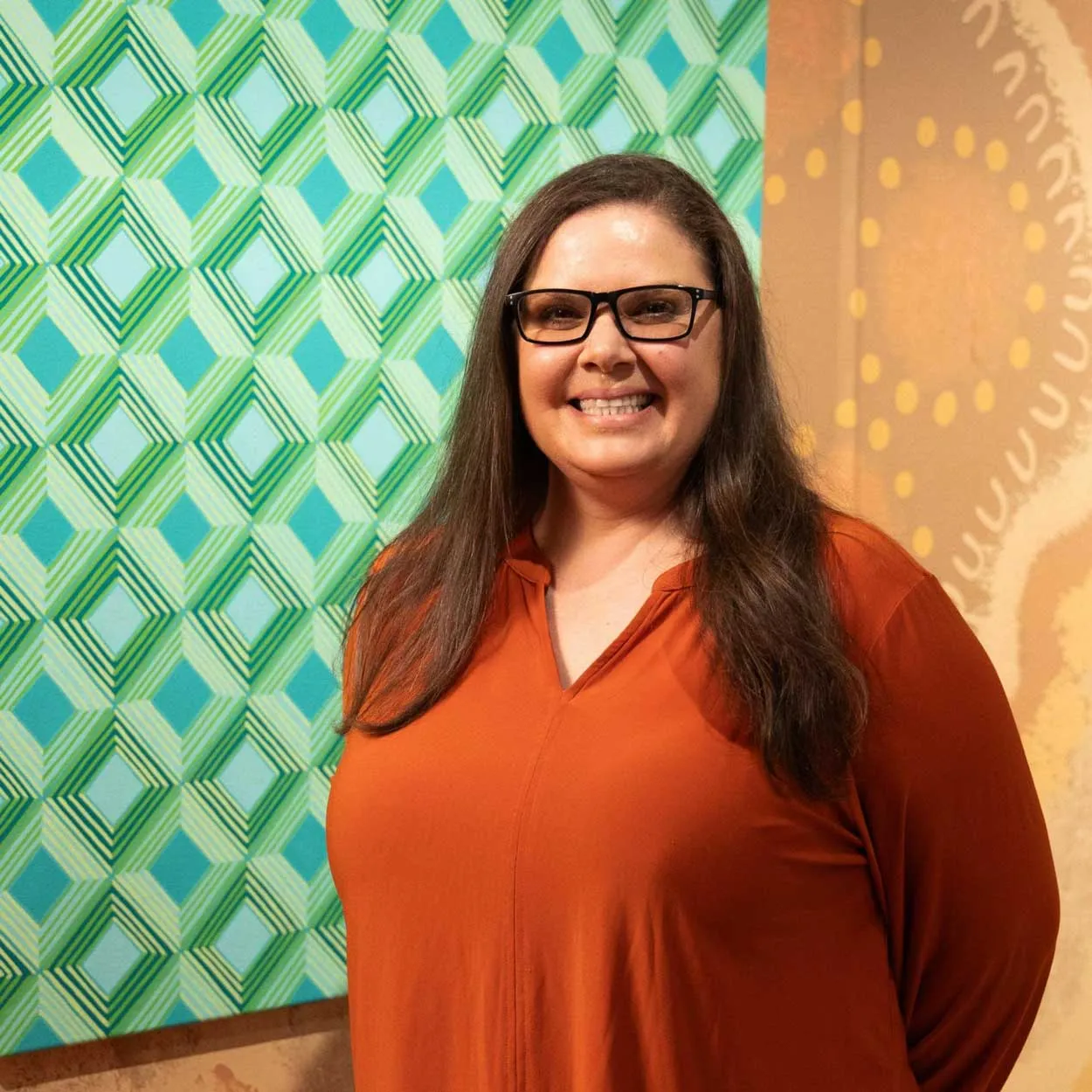
Stacey Edwards, in front of one of her paintings at The Torch

Stacey, could you please introduce yourself?

My name is Stacey Edwards, I grew up on Wemba Wemba Country and I identify as a Bun Wurrung, Boon Wurrung and Taungarung woman,
and I’ve spent seven years in the prison system.

You describe yourself as a grandchild of the Stolen Generations. How has this impacted your connection to your culture and influenced your work as an artist?

My grandfather was part of the Stolen Generation and his nine siblings were also. He thought that just because he lived in Melbourne that he was Wurundjeri.

When I worked at the Koorie Heritage Trust, about 15 years ago, I learned and identified the language groups that I do today and my signature style is diamond patterns that were traditionally used on our shields and possum skins.

Can you tell us about some of the challenges that you faced while you were in prison and how your art that you just touched on helped you express and navigate your experience?

I spent seven years in the prison system all together. I've been out of prison for 18 months now on parole and I still have nine months to go on parole. It took a lot for me to adjust with such a long remand period. I was on remand for two and a half years. It was hard accessing mental health care and medication, and it was hard adjusting – obviously realising that prison officers are not police officers and just the general routine of prison life.

I was really fortunate when it came to my art. We had a Koorie art class at the local TAFE and so we have a space dedicated to allow me to explore different styles and mediums.

Can you talk a little bit about your transition out of prison and what supports were or were not available to you?

VALS was there, obviously. It was the first organisation that I reconnected with when I left prison. And they were fantastic, transferring all my prison health records to their system and making sure that all my health issues were followed up and cared for.

The Torch program was obviously amazing. I did my community service here at The Torch which led to paid work, employment and now I’m permanent part-time at The Torch now.  

But I didn't have housing. That was probably the biggest challenge for women in prison as you can't get parole pending housing and you can't get housing pending parole.

I was really fortunate that with the money I saved up from selling my artwork through The Torch, I was able to put a deposit on a house when I left prison.

Wow. That's brilliant. The fact that you've been able to use your art to set yourself up in your own property – I applaud you in that. Next question – what do you think needs to change in the parole system to better support Aboriginal women especially around issues like family violence and housing?

There has to be a better understanding around family violence and how complex it is and, especially, they need to understand culturally as well how that affects us and how we integrate back into the community.

There's a lot of shame around family violence obviously and I didn't speak a lot about it for a long time because it was part of my court case so I didn't get help for it, but I'm getting professional help now which is fantastic. I get to see a psychiatrist every couple of weeks to talk about family violence and that's been really beneficial.

I think the biggest barrier with parole is how many restrictions have been put on me and the hardest thing to adjust to has probably been having a GPS monitor on my ankle.

What advice would you give to younger Aboriginal women who find themselves caught or engaged with the criminal justice system?

Some advice I gave women after I had spent a few years in the system was basically “yes, sir, no, sir, three bags full, sir”. Just do what you’re told and get on with it, it's the only way I was able to adjust the system.

Pick my battles, what was worth walking away from and what was worth standing my ground with. And use the Aboriginal Wellbeing Officers (AWOs) to your advantage 'cause they're a great support. I couldn't have done it without the AWOs at DPFC. Just keep your head down and work hard. Keep busy. Do all the programs and wake up every day another day gone.

Given you were in prison for seven years, what do you feel helped you most in prison to cope?

Art. When I did art and I painted, it felt like I wasn't in prison. So I would paint for hours and hours and hours on end if I could and just to escape prison life, block it all out. Art was my best ally in prison.

Stacey, could you please introduce yourself?

My name is Stacey Edwards, I grew up on Wemba Wemba Country and I identify as a Bun Wurrung, Boon Wurrung and Taungarung woman,
and I’ve spent seven years in the prison system.

You describe yourself as a grandchild of the Stolen Generations. How has this impacted your connection to your culture and influenced your work as an artist?

My grandfather was part of the Stolen Generation and his nine siblings were also. He thought that just because he lived in Melbourne that he was Wurundjeri.

When I worked at the Koorie Heritage Trust, about 15 years ago, I learned and identified the language groups that I do today and my signature style is diamond patterns that were traditionally used on our shields and possum skins.

Can you tell us about some of the challenges that you faced while you were in prison and how your art that you just touched on helped you express and navigate your experience?

I spent seven years in the prison system all together. I've been out of prison for 18 months now on parole and I still have nine months to go on parole. It took a lot for me to adjust with such a long remand period. I was on remand for two and a half years. It was hard accessing mental health care and medication, and it was hard adjusting – obviously realising that prison officers are not police officers and just the general routine of prison life.

I was really fortunate when it came to my art. We had a Koorie art class at the local TAFE and so we have a space dedicated to allow me to explore different styles and mediums.

Can you talk a little bit about your transition out of prison and what supports were or were not available to you?

VALS was there, obviously. It was the first organisation that I reconnected with when I left prison. And they were fantastic, transferring all my prison health records to their system and making sure that all my health issues were followed up and cared for.

The Torch program was obviously amazing. I did my community service here at The Torch which led to paid work, employment and now I’m permanent part-time at The Torch now.  

But I didn't have housing. That was probably the biggest challenge for women in prison as you can't get parole pending housing and you can't get housing pending parole.

I was really fortunate that with the money I saved up from selling my artwork through The Torch, I was able to put a deposit on a house when I left prison.

Wow. That's brilliant. The fact that you've been able to use your art to set yourself up in your own property – I applaud you in that. Next question – what do you think needs to change in the parole system to better support Aboriginal women especially around issues like family violence and housing?

There has to be a better understanding around family violence and how complex it is and, especially, they need to understand culturally as well how that affects us and how we integrate back into the community.

There's a lot of shame around family violence obviously and I didn't speak a lot about it for a long time because it was part of my court case so I didn't get help for it, but I'm getting professional help now which is fantastic. I get to see a psychiatrist every couple of weeks to talk about family violence and that's been really beneficial.

I think the biggest barrier with parole is how many restrictions have been put on me and the hardest thing to adjust to has probably been having a GPS monitor on my ankle.

What advice would you give to younger Aboriginal women who find themselves caught or engaged with the criminal justice system?

Some advice I gave women after I had spent a few years in the system was basically “yes, sir, no, sir, three bags full, sir”. Just do what you’re told and get on with it, it's the only way I was able to adjust the system.

Pick my battles, what was worth walking away from and what was worth standing my ground with. And use the Aboriginal Wellbeing Officers (AWOs) to your advantage 'cause they're a great support. I couldn't have done it without the AWOs at DPFC. Just keep your head down and work hard. Keep busy. Do all the programs and wake up every day another day gone.

Given you were in prison for seven years, what do you feel helped you most in prison to cope?

Art. When I did art and I painted, it felt like I wasn't in prison. So I would paint for hours and hours and hours on end if I could and just to escape prison life, block it all out. Art was my best ally in prison.

This
article
was originally printed in the
April 2025
edition of About Time.

How NAAJA is Walking With Mob Through the Justice System

By NAAJA

NAAJA has a 50-year history of serving Aboriginal Territorians as they navigate the justice system.

Mob

ISSUE NO. 25

3 MIN READ

‘It’s Changing Lives’: New Program Helping First Nations Women Find Housing After Prison

By Denham Sadler

Tracy was one of many women released from prison straight into homelessness. Thanks to the Homeward Sisters program, Tracy was able to secure priority housing that meets her needs.

Mob

ISSUE NO. 24

3 MIN READ

Roger Knox: The ‘Koori King of Country’ on Prison Stages

By Denham Sadler

First Nations music legend Roger Knox has played everywhere from huge music festivals in the USA to the Sydney Opera House. But he says the shows that mean the most to him are the ones he played in prisons around Australia.

Mob

ISSUE NO. 24

4 MIN READ

Celebrating NAIDOC Week!

By About Time

To celebrate NAIDOC week, we’re showcasing First Nations art submissions. We acknowledge the fierce First Nations people and Elders across the country advocating for justice.

Mob

ISSUE NO. 24

4 MIN READ