


Donate Here
•
Experiences
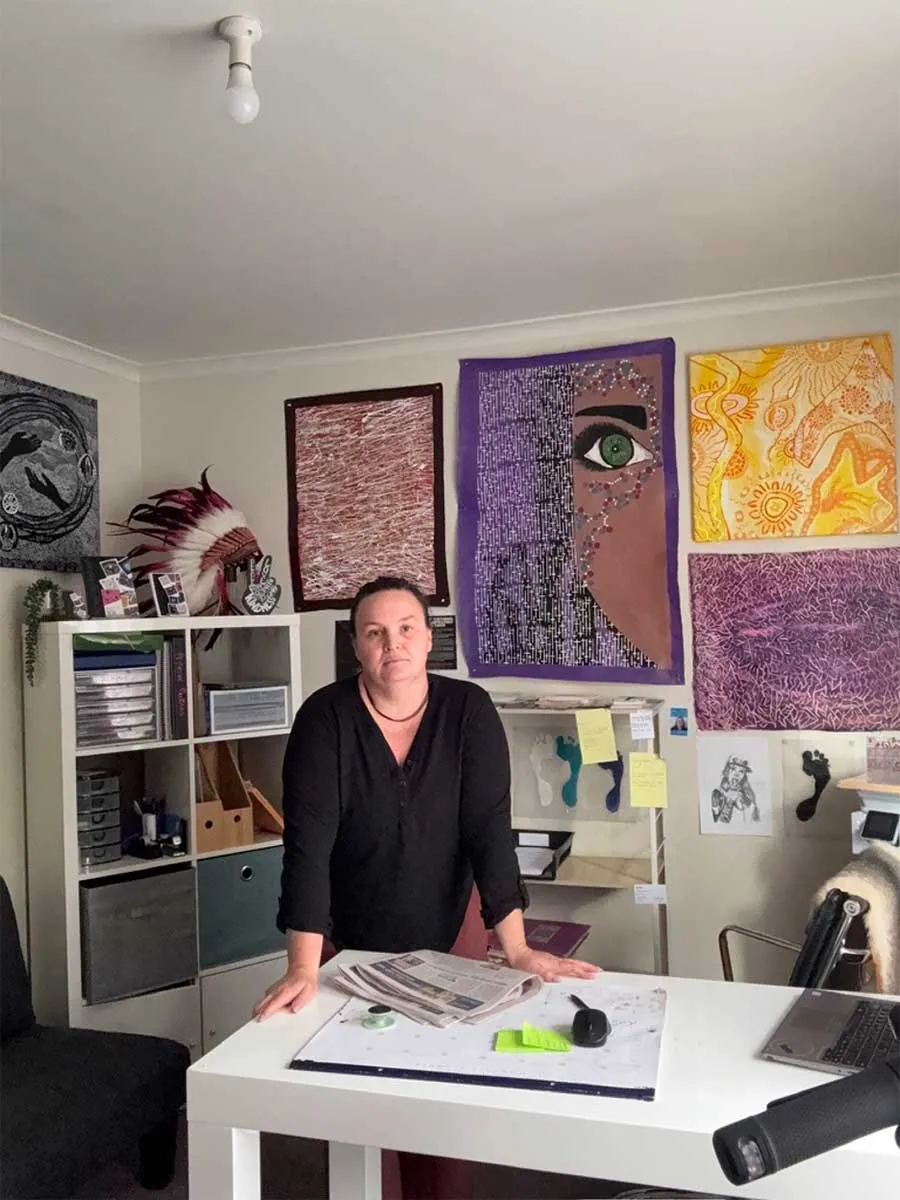
The handling of Aboriginal art and the ignorance around cultural significance by prisons in Victoria is appalling. This was my experience. It happened to me more than once, and no one was ever held accountable.
During cell searches in prison, prison officers damaged my art works on more than one occasion, ripping them off the wall, touching or moving wet pieces, sometimes it was on purpose. It felt like they wanted to get a reaction out of me to justify their behaviour.
I was released March 2025 after being incarcerated for just over three years. Before leaving prison, I sent a series of paintings to my family. When I collected the paintings, there were two missing. I contacted the Ombudsman to report the missing paintings; they took my complaint and told me they would contact the prison. After the Ombudsman did not reply for several months, I contacted them again. They explained their office was waiting on the prison to do their own investigation, and that the prison will contact me directly when they have concluded their investigation. I did not receive a letter from either the ombudsman of the prison to explain what was going on, and I needed to follow up to get information.
The Assistant Commissioner of Custodial Operations contacted me via email to inform me that the prison couldn’t locate the paintings, nor could they verify what happened to them. The Assistant Commissioner said: I can confirm that a thorough review has taken place, and I regret to advise that your paintings were not found. Unfortunately, despite all reasonable inquiries having been exhausted. The paintings have not been located and there is no further action available at this time. I appreciate you taking the time to write to the department and I apologise we have been unable to resolve this matter by locating the missing artwork.
There was no accountability for the fact they were lost. There was no mention of steps I could take or what I could do next. I was given no options and no explanation of any processes. The Ombudsman advised me there is nothing else they can do. So, they closed the file. I was left to figure it out
for myself.
I was angered by the prison’s failure, so I contacted the Arts Law Centre for advice. They told me I could get compensation for the lost artworks. I was given a Schedule 1.08.1 (7) Dame Phyllis Frost Centre – Lost Or Damaged Personal Property – Application For Prisoner from Dame Phyllis Frost Centre’s Local Operating Procedures. It’s the same form you would use in prison if you lost property. When I was released, I couldn’t access the form anywhere. It seems prison specific forms cannot be accessed when you leave the prison. There is a generic form on the Corrections Victoria website for lost property – however, I’m not sure if they will accept this.
There needs to be some specific cultural policy rather than just lost property policy. The loss runs deeper than paint and canvas. For Aboriginal people in prison, art is not just a hobby. it is cultural practice, a continuation of tradition. Each piece carries knowledge: of family, of place, of stories that colonial systems have sought to suppress. When prison officers damage work or lose pieces, they don’t just destroy property – they interrupt cultural connection. The missing paintings weren’t merely paintings. They were intended for family, for future generations, for the record of our survival as first peoples. Corrections Victoria’s inability to locate them, their casual framing of this as an administrative inconvenience rather than a cultural wound, reveals how little the system understands – or cares about – what it holds in its custody. This is why the absence of specific cultural policy matters. Without it, Aboriginal art in prisons is treated the same as a missing radio or a lost pair of shoes.
It was only in January 2026, 10 months after I was released, that Corrections Victoria reimbursed me for the lost paintings. They only paid me 70% of the amount they were valued at. I quoted them a very reasonable price for the compensation payment. The 70% reimbursement I eventually received was calculated as property compensation, not cultural restitution. No one had to account for the fact that these works were created under carceral conditions, that their very existence testified to cultural resilience, or that their disappearance continues a longer history of institutional theft of Aboriginal culture.
My tips: Send one artwork out at a time and name all of them. Take the officer’s name who took it, the date and time and tell a family member/friend these details so they can record it on file. Take more than one picture of the artwork, if you can, and record the sizes. Protect yourself and your works while you are
in prison.
I was angered by the prison’s failure, so I contacted the Arts Law Centre for advice. They told me I could get compensation for the lost artworks. I was given a Schedule 1.08.1 (7) Dame Phyllis Frost Centre – Lost Or Damaged Personal Property – Application For Prisoner from Dame Phyllis Frost Centre’s Local Operating Procedures. It’s the same form you would use in prison if you lost property. When I was released, I couldn’t access the form anywhere. It seems prison specific forms cannot be accessed when you leave the prison. There is a generic form on the Corrections Victoria website for lost property – however, I’m not sure if they will accept this.
There needs to be some specific cultural policy rather than just lost property policy. The loss runs deeper than paint and canvas. For Aboriginal people in prison, art is not just a hobby. it is cultural practice, a continuation of tradition. Each piece carries knowledge: of family, of place, of stories that colonial systems have sought to suppress. When prison officers damage work or lose pieces, they don’t just destroy property – they interrupt cultural connection. The missing paintings weren’t merely paintings. They were intended for family, for future generations, for the record of our survival as first peoples. Corrections Victoria’s inability to locate them, their casual framing of this as an administrative inconvenience rather than a cultural wound, reveals how little the system understands – or cares about – what it holds in its custody. This is why the absence of specific cultural policy matters. Without it, Aboriginal art in prisons is treated the same as a missing radio or a lost pair of shoes.
It was only in January 2026, 10 months after I was released, that Corrections Victoria reimbursed me for the lost paintings. They only paid me 70% of the amount they were valued at. I quoted them a very reasonable price for the compensation payment. The 70% reimbursement I eventually received was calculated as property compensation, not cultural restitution. No one had to account for the fact that these works were created under carceral conditions, that their very existence testified to cultural resilience, or that their disappearance continues a longer history of institutional theft of Aboriginal culture.
My tips: Send one artwork out at a time and name all of them. Take the officer’s name who took it, the date and time and tell a family member/friend these details so they can record it on file. Take more than one picture of the artwork, if you can, and record the sizes. Protect yourself and your works while you are
in prison.
Date Published
July 29, 2026
By David
My name is David. I am a proud Yorta Yorta man currently locked up in Victoria.
ISSUE NO. 26
•
3 MIN READ
By Ivan
It was mid-afternoon in the Port Campbell area, with a southerly wind blowing, and Henry and I were just about to leave the Boggy Creek Café.
ISSUE NO. 26
•
3 MIN READ
By Gary Griffiths
Father’s Day can bring pride, guilt, sadness, hope, or all of them at once, and being in jail doesn’t stop that.
ISSUE NO. 26
•
2 MIN READ
By Kelly Flanagan
Being kind is something I find really challenging at times.
ISSUE NO. 25
•
2 MIN READ