


Donate Here
•
Experiences
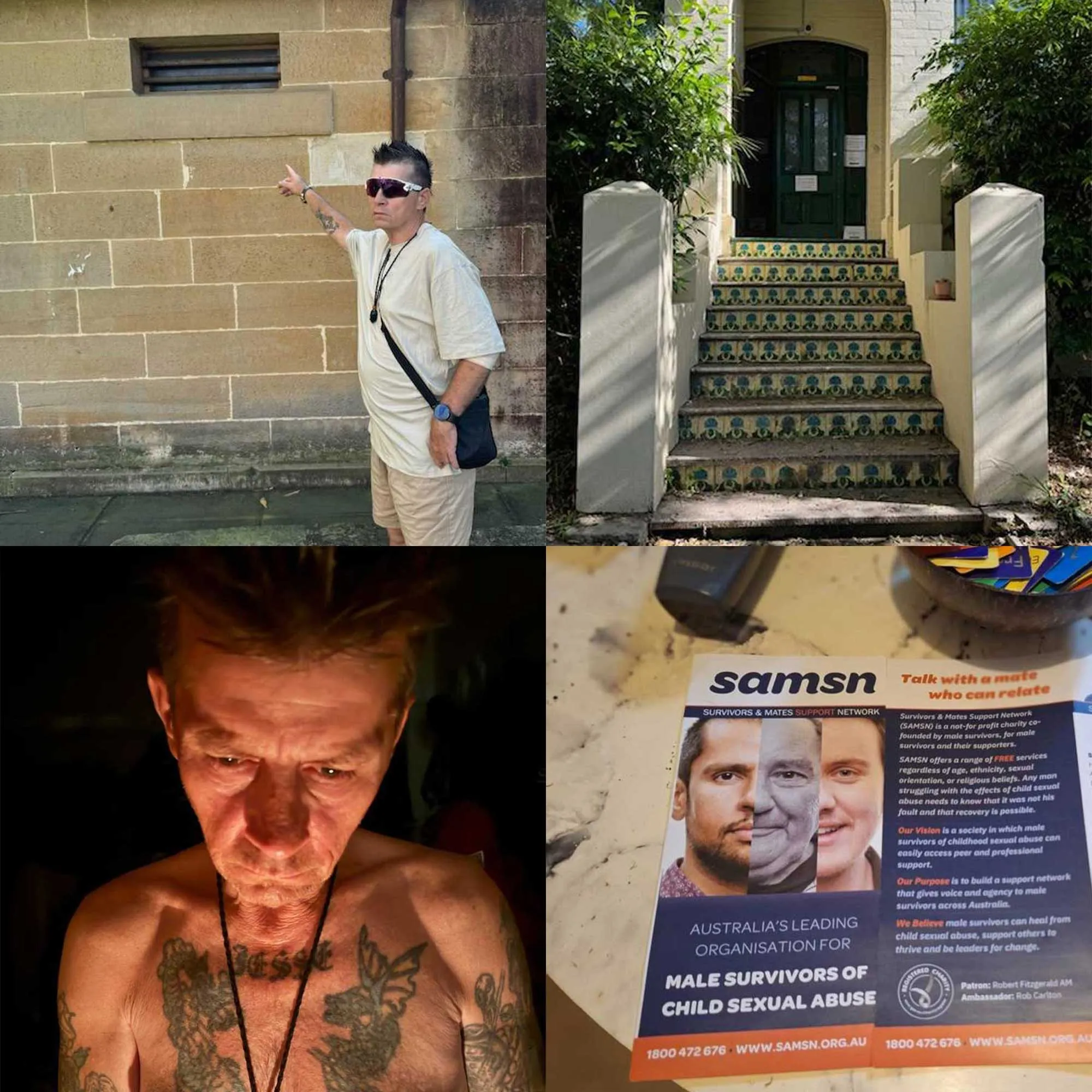
Sometimes, it can be hard for people to tell their stories, especially when trying to describe things that cannot be put into words. Photovoice is a way to deal with this – it is a research method where people take photographs about aspects of their lives or topics that are important to them. Photovoice is often used with people who don’t usually get heard and can open people’s eyes to issues that are often ignored.
At the recent Justice Reform Initiative conference, Dr Patricia Morgan and Mr Bevan Argent shared a photovoice project from the Justice Health program at UNSW Sydney. In this project, five men who had been to prison took photographs describing their lives before, during and after prison. These photographs, and what is said about them, become the main part of the research, giving control to the people telling their stories.
After Patricia explained how photovoice works, Bevan shared his own photos. He talked about what each one meant to him. These are Bevan’s words and photographs, which he presented in front of a large room of people – his first public speaking gig. He hopes his story can help others.
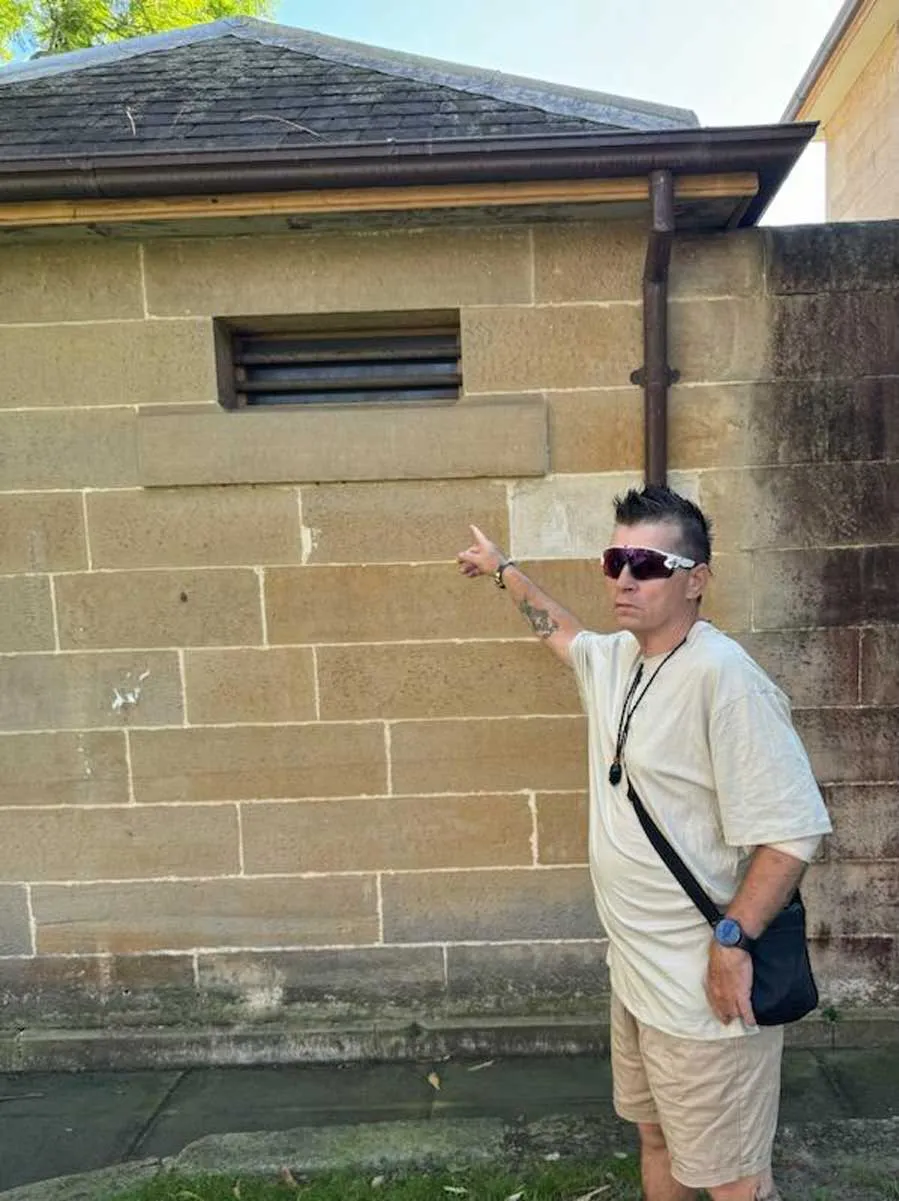
The prison
I took this photograph outside Parramatta Jail because it represents 27 years of my life in and out of boy’s homes, state ward homes and jail. I’ve been out since 4 February 2020, and I’m never going back! I’ve been in the newer prisons, but the majority of my incarceration was always in the draconian old sandstone jails, with the bars on the windows. That was in Long Bay, Parramatta, Grafton and Bathurst.
So, yeah, the sandstone, the bars, represent how much time I spent in those places and wasted my life. Weirdly in some ways it felt like home because of being in them for so long. Then you get out, you’re out for two or three weeks and you’re back in. So it’s a struggle. It’s hard to survive when you get out because you’d get out with half a dole check, they put you up for four weeks in, they call it temporary accommodation and then you’ll end up in a boarding house or a men’s hostel. There’s always drugs around in those places, and you know it’s like a jail, an outside jail, because you know everyone there from jail. It was like being in prison but worse because the rooms are smaller than the jail cells.
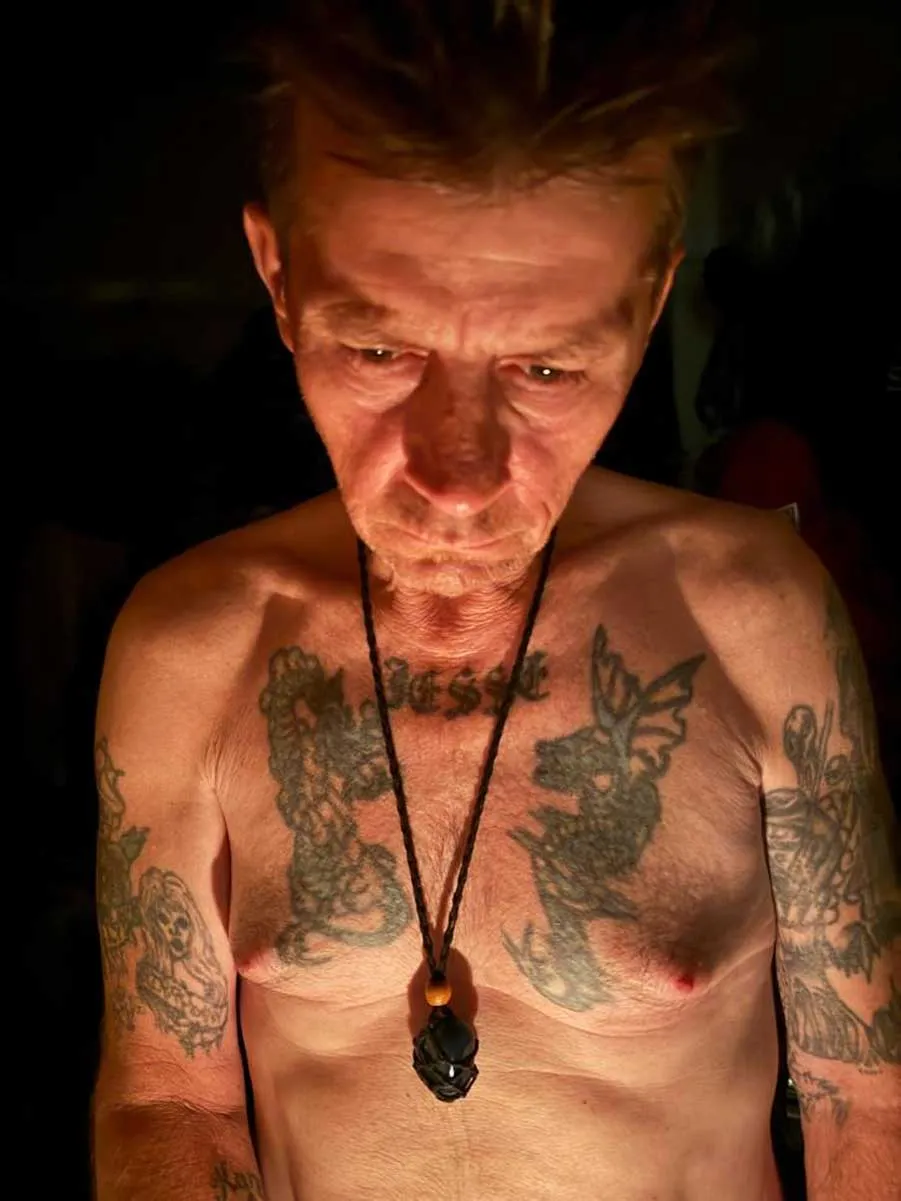
Looking down
When I took this photograph, I didn’t want to look at the camera, so my flatmate took the photograph. I actually had the feeling, it came back up then, of the sadness of not being at my Aunty’s funeral. They wouldn’t let me go because of parole conditions. I was then and am still battling with the grief of losing family members and friends and the child sex abuse, because the redress thing had come up again. And I was struggling with the fact that I successfully sued the state government, and then the other party was supposed to go into mediation afterwards, but the person passed away two weeks prior.
I’m still waiting to go back to a government agency to tell me what I’m worth for what that person did, and I’m getting judged on how much I’m worth. So, when they decide, they ring me, and it’s not like the mediation. They make a one-time offer, and if you don’t take it then that’s it.
So that’s what I was struggling with at the time, and that’s what I tried to represent in this photograph.
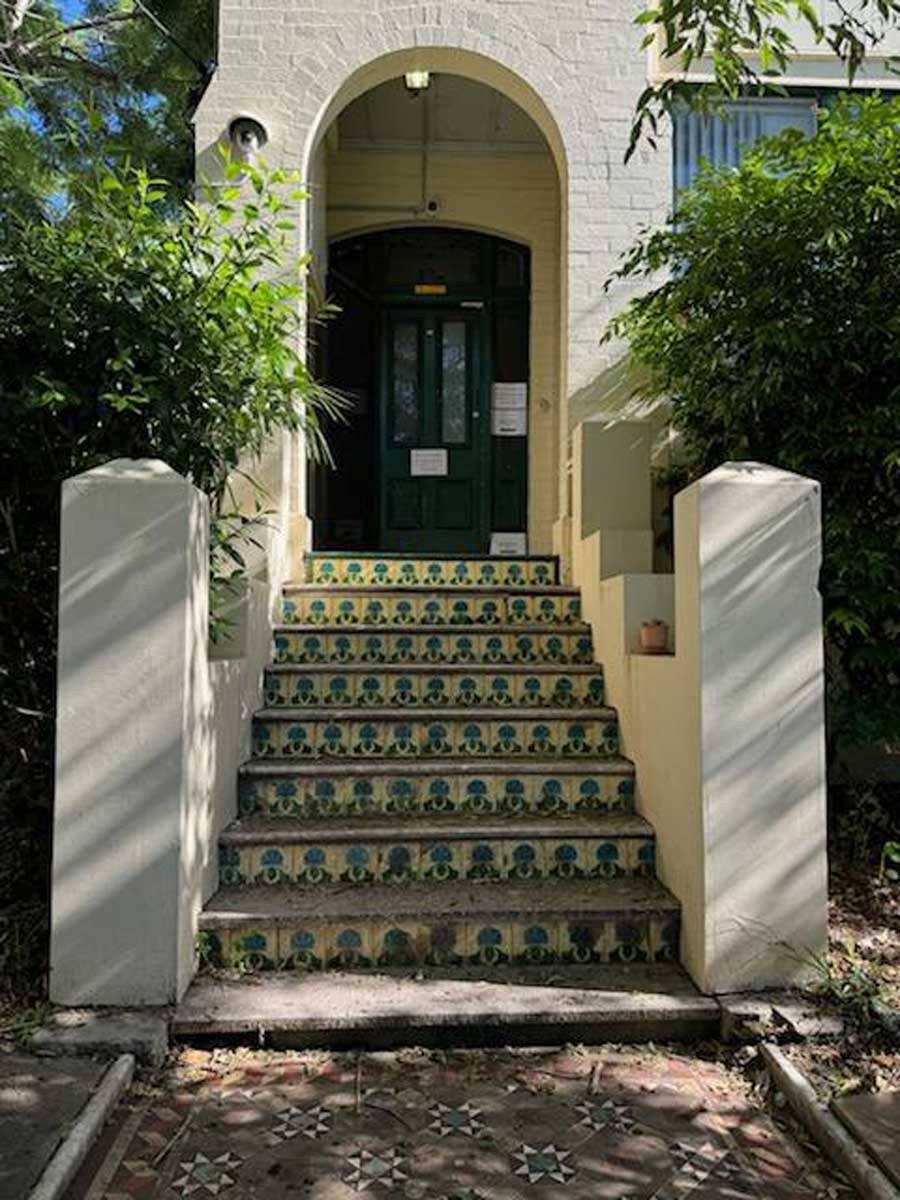
Rainbow lodge
This photograph of Rainbow Lodge represents my past, present and future. I’ve stayed there after getting out of jail, and I still go there sometimes. Because I’m still an outreach client, I get free membership to the Victoria Park Swimming Pool and Gym. So I’ve been going to the gym after work, and then I go for a swim after that.
Rainbow Lodge has helped me get housing, and they’ve helped me in court. They actually signed my lease for me when I was in prison when my lease ran out on my other flat – otherwise I would’ve lost it. I like the fact that they never judge and you’re always welcome. If you ever need something like food, milk, bread, anything, you can go there and ask them. They write support letters for court and they come to court to support you.
You know, the place was opened by Justice Rainbow, who was an Aboriginal judge. He had a vision of opening a place for Aboriginal men, for when they got out of jail, to help them, so they didn’t have to go straight to the street. I like going there and mentoring new people that are scared.
I just took a big bag of clothes that were too big for me, all brand name stuff. You know, because a lot of boys when they get out of jail have just got their greens, they bring the things they got out with and they’ve got nothing in life. Connecting with Rainbow Lodge has helped me remain out of prison and give back to other people. Without going there I’d probably still be going in and out of the prison system.
Samsn
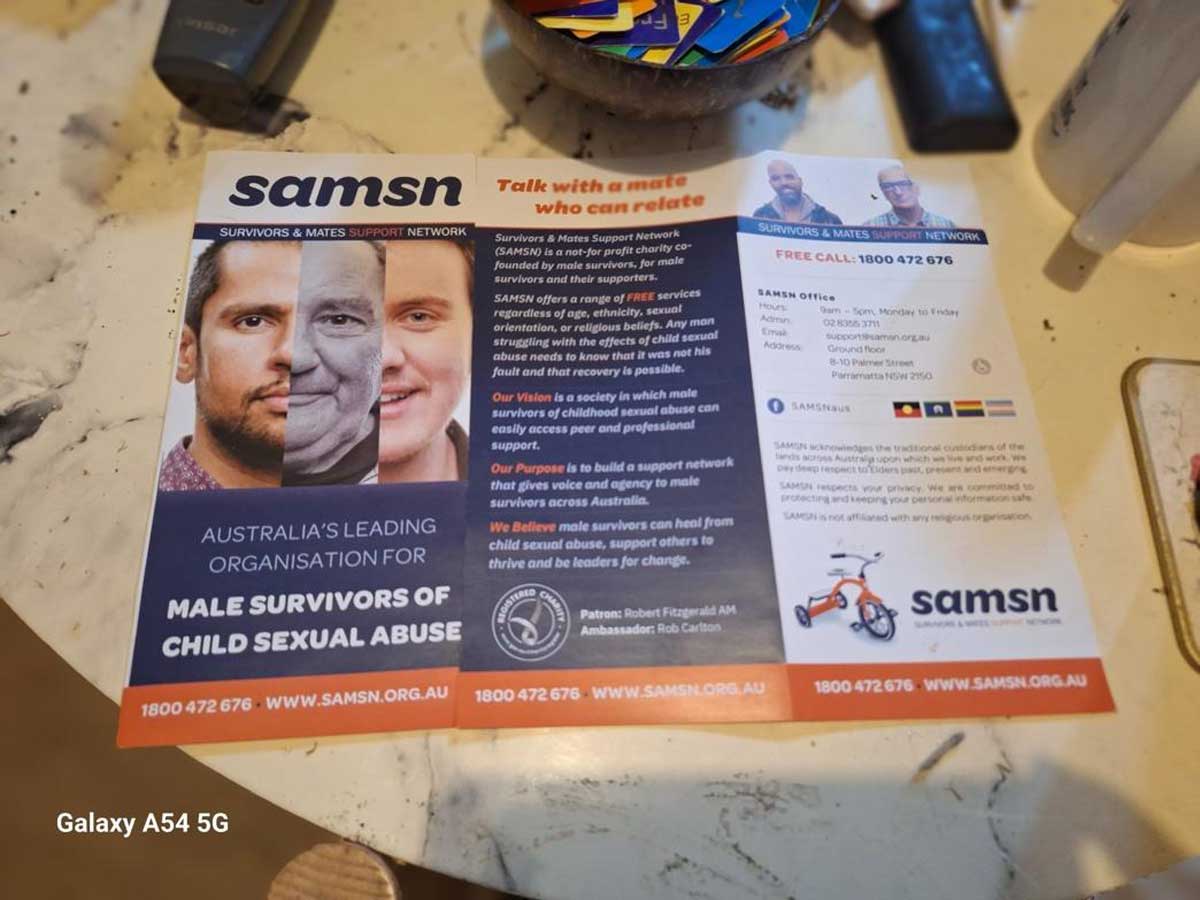
This last photograph is of the Samsn pamphlet. Samsn is an organization that works with male survivors of child sexual abuse. I’ve now done the 8-week program, and I attend their monthly online meeting. I met many men like myself, in different stages of their recovery from childhood sexual abuse.
Sharing stories with each other and listening to each other with respect and getting feedback is very powerful, and it takes a load of weight off your shoulders.
There’s nothing better than talking to a fellow survivor, who knows exactly what you’re going through, how you’re feeling, the mood swings and the changes, and that’s what I’ve experienced in Samsn. It’s great to know that there are people out there willing to help, and this program has helped me in more ways than I can possibly put into words.
The photovoice project has opened my eyes and taken a ton of weight off my shoulders. I’ve learnt so much about myself. It has given me so many tools to help me get on with the rest of my life.
My message to people inside is that, when you’re out, give photovoice a try. It can be a really helpful way to process and document important parts of your life. Give yourself a topic, decide on the number of photos and then write or speak about them with someone close to you.
Rainbow lodge
This photograph of Rainbow Lodge represents my past, present and future. I’ve stayed there after getting out of jail, and I still go there sometimes. Because I’m still an outreach client, I get free membership to the Victoria Park Swimming Pool and Gym. So I’ve been going to the gym after work, and then I go for a swim after that.
Rainbow Lodge has helped me get housing, and they’ve helped me in court. They actually signed my lease for me when I was in prison when my lease ran out on my other flat – otherwise I would’ve lost it. I like the fact that they never judge and you’re always welcome. If you ever need something like food, milk, bread, anything, you can go there and ask them. They write support letters for court and they come to court to support you.
You know, the place was opened by Justice Rainbow, who was an Aboriginal judge. He had a vision of opening a place for Aboriginal men, for when they got out of jail, to help them, so they didn’t have to go straight to the street. I like going there and mentoring new people that are scared.
I just took a big bag of clothes that were too big for me, all brand name stuff. You know, because a lot of boys when they get out of jail have just got their greens, they bring the things they got out with and they’ve got nothing in life. Connecting with Rainbow Lodge has helped me remain out of prison and give back to other people. Without going there I’d probably still be going in and out of the prison system.
Samsn
This last photograph is of the Samsn pamphlet. Samsn is an organization that works with male survivors of child sexual abuse. I’ve now done the 8-week program, and I attend their monthly online meeting. I met many men like myself, in different stages of their recovery from childhood sexual abuse.
Sharing stories with each other and listening to each other with respect and getting feedback is very powerful, and it takes a load of weight off your shoulders.
There’s nothing better than talking to a fellow survivor, who knows exactly what you’re going through, how you’re feeling, the mood swings and the changes, and that’s what I’ve experienced in Samsn. It’s great to know that there are people out there willing to help, and this program has helped me in more ways than I can possibly put into words.
The photovoice project has opened my eyes and taken a ton of weight off my shoulders. I’ve learnt so much about myself. It has given me so many tools to help me get on with the rest of my life.
My message to people inside is that, when you’re out, give photovoice a try. It can be a really helpful way to process and document important parts of your life. Give yourself a topic, decide on the number of photos and then write or speak about them with someone close to you.
Date Published
August 8, 2025
By David
My name is David. I am a proud Yorta Yorta man currently locked up in Victoria.
ISSUE NO. 26
•
3 MIN READ
By Ivan
It was mid-afternoon in the Port Campbell area, with a southerly wind blowing, and Henry and I were just about to leave the Boggy Creek Café.
ISSUE NO. 26
•
3 MIN READ
By Gary Griffiths
Father’s Day can bring pride, guilt, sadness, hope, or all of them at once, and being in jail doesn’t stop that.
ISSUE NO. 26
•
2 MIN READ
By Kelly Flanagan
Being kind is something I find really challenging at times.
ISSUE NO. 25
•
2 MIN READ