How Music Saved Me in Prison
By
Daz Scott
Daz Scott is a former inmate, having served time in Victorian prisons. He is an advocate for positive change in prisons and removing society's stigma associated with current and former inmates.


Your browser window currently does not have enough height, or is zoomed in too far to view our website content correctly. Once the window reaches the minimum required height or zoom percentage, the content will display automatically.
Alternatively, you can learn more via the links below.
Going to prison feels, for most, like the end of life as they knew it. The world keeps moving outside while time inside grinds to a halt. A sentence measured in years can make hope feel like a distant memory.
But even behind bars, there are ways to soften the edges. Ways not just to pass the time, but to leave prison carrying something more than the baggage you came in with.
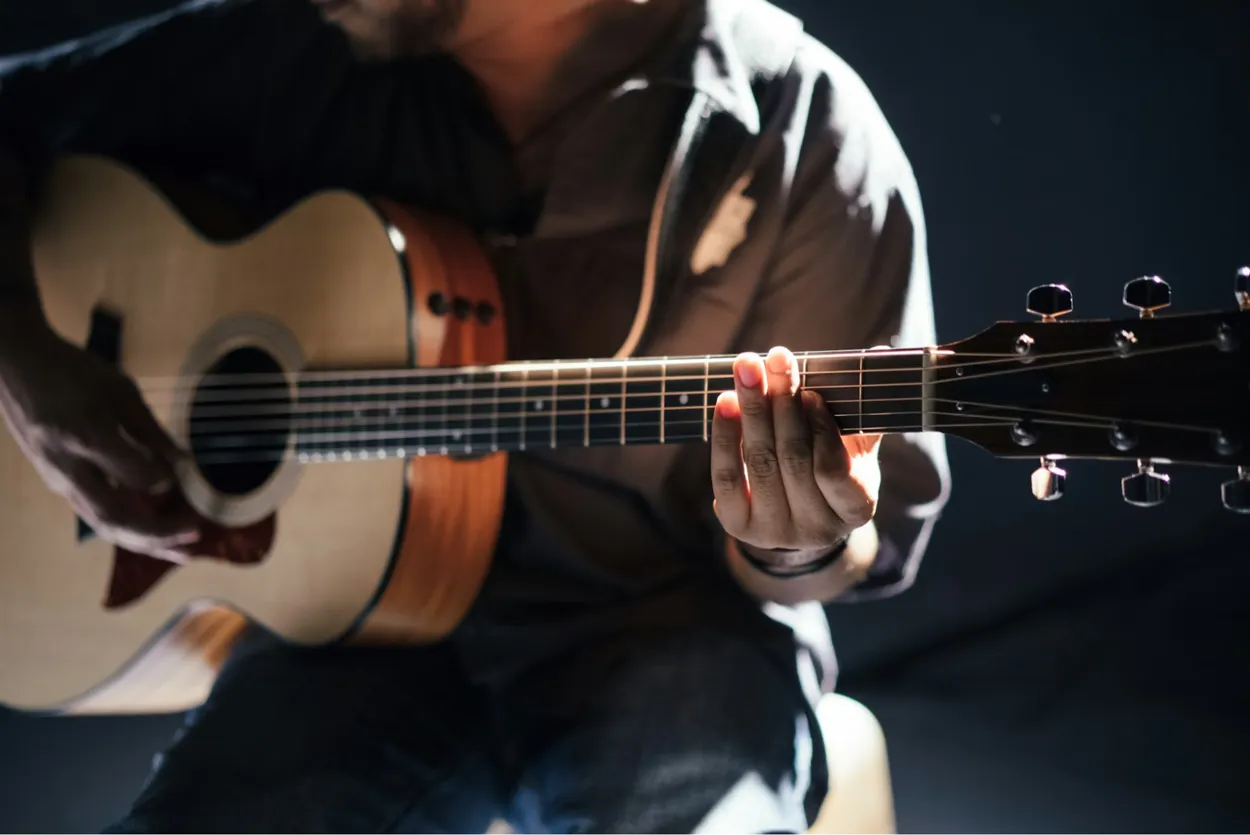
Even long before I went to prison, I’ve always had the need to feed a creative spark. In medium security, I painted and wrote, though opportunities were scarce. It wasn’t until I was moved to a minimum‑security farm that my creativity truly opened up. Access to a pottery studio and kiln felt like a gift. Yet it was music – learning guitar properly – that gave me peace of mind and steadied my soul.
As a kid I’d bounced between lessons: guitar, piano, drums, sports. ADHD kept me restless, always chasing the next thing. I could strum a few chords by ear around a campfire, but I’d never performed, never played a song anyone would recognise. For 30 years an acoustic guitar sat in the corner of my home, strings dusty, silently judging me every time I walked past. “I should sit down and learn properly,” I’d always say. But never did. Never took the time. Life got in the way.
Prison gave me no more excuses. It gave me time – too much of it. Time to reflect, to read, to watch bad TV, to stare at walls. With four years left until parole, I decided I would finally learn. My old guitar was sent in, and I borrowed books from the library. At first my fingers stumbled, clumsy and sore. Then a fellow inmate showed me the simplicity of rhythm and chords. That changed everything. I practiced daily, sometimes for hours, until my fingertips were raw and callused.
Progress came quickly. A mentor appeared in my friend Dave, a professional bass guitarist, who guided me through the craft. Soon I had written my first song – a piece I remain proud of. More songs followed, and with them came a surge of creativity and a lift in my mental health.
Within a year I was performing with Dave on bass and another inmate on drums, playing my own original material. The reception was good. Negativity existed, as it always does, but I learned to block it out. Guitar magazines from a friend on the outside fed my learning, and I eventually bought an electric guitar through the prison hobby shop. We became a band. When Dave was released, I upgraded to a twelve‑string and performed solo, pushing my songwriting further.
Now, at home, I have a studio where I record, write for others, and share videos online. I never aimed to be a rock star. What mattered was the transformation: that dusty guitar and the opportunity to create became more valuable to me than any team of psychologists or programs.
Being in prison is not the end. For some of us, it can be a restart – a reboot of a life that was missing something essential.
I refused to waste my sentence. Every day became an opportunity to create, to learn, to give back. The guitar was only one path. Pottery turned into gifts for friends and loved ones. Leatherwork carried its own satisfaction. Selling artwork after release brought a joy I hadn’t felt in years. And now, I make my living as a writer.
The buzz of playing in front of an appreciative crowd is indescribable – a rush you have to feel to believe. In prison, it’s often fellow inmates who pass on their musical knowledge, because long‑term tutors are hard to secure. Yet the benefits are undeniable. Learning an instrument sharpens the mind, eases stress, and tempers anger. Whenever agitation rose inside me, I reached for my guitar. I still do.
Music gives different gifts to different people. For me, it was salvation, redemption, and a path toward becoming better than I was. Looking back, those eight years were not wasted. They were an enforced pause – the break I needed to rediscover my creative spark.
Progress came quickly. A mentor appeared in my friend Dave, a professional bass guitarist, who guided me through the craft. Soon I had written my first song – a piece I remain proud of. More songs followed, and with them came a surge of creativity and a lift in my mental health.
Within a year I was performing with Dave on bass and another inmate on drums, playing my own original material. The reception was good. Negativity existed, as it always does, but I learned to block it out. Guitar magazines from a friend on the outside fed my learning, and I eventually bought an electric guitar through the prison hobby shop. We became a band. When Dave was released, I upgraded to a twelve‑string and performed solo, pushing my songwriting further.
Now, at home, I have a studio where I record, write for others, and share videos online. I never aimed to be a rock star. What mattered was the transformation: that dusty guitar and the opportunity to create became more valuable to me than any team of psychologists or programs.
Being in prison is not the end. For some of us, it can be a restart – a reboot of a life that was missing something essential.
I refused to waste my sentence. Every day became an opportunity to create, to learn, to give back. The guitar was only one path. Pottery turned into gifts for friends and loved ones. Leatherwork carried its own satisfaction. Selling artwork after release brought a joy I hadn’t felt in years. And now, I make my living as a writer.
The buzz of playing in front of an appreciative crowd is indescribable – a rush you have to feel to believe. In prison, it’s often fellow inmates who pass on their musical knowledge, because long‑term tutors are hard to secure. Yet the benefits are undeniable. Learning an instrument sharpens the mind, eases stress, and tempers anger. Whenever agitation rose inside me, I reached for my guitar. I still do.
Music gives different gifts to different people. For me, it was salvation, redemption, and a path toward becoming better than I was. Looking back, those eight years were not wasted. They were an enforced pause – the break I needed to rediscover my creative spark.
My name is David. I am a proud Yorta Yorta man currently locked up in Victoria.
It was mid-afternoon in the Port Campbell area, with a southerly wind blowing, and Henry and I were just about to leave the Boggy Creek Café.
Father’s Day can bring pride, guilt, sadness, hope, or all of them at once, and being in jail doesn’t stop that.
Being kind is something I find really challenging at times.