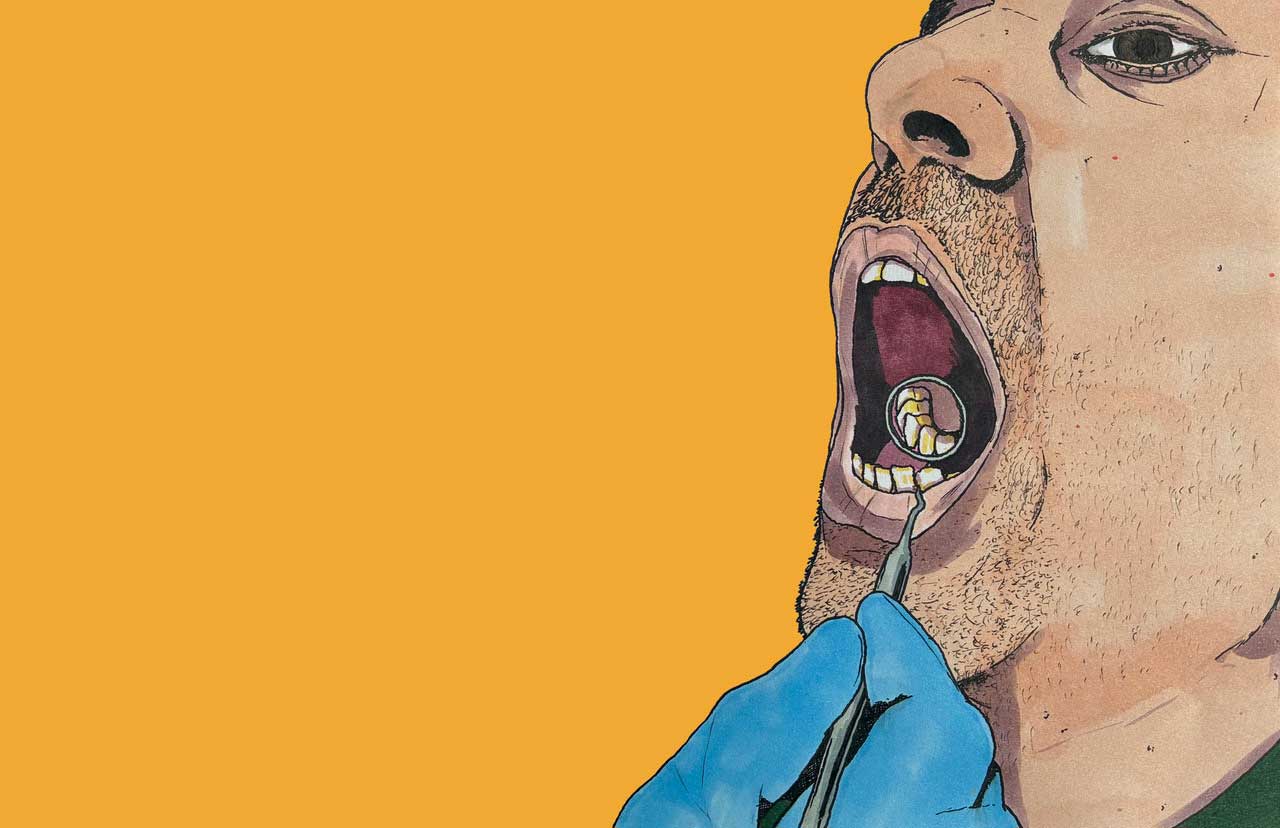
Emily Cooper never had dental problems before she went to prison.
When she left prison, she was missing four teeth.
During her time at the Brisbane Women’s Correctional Centre she had to wait in “agonising” pain for a year at a time in order to get dental care.
Due to these waits, abscesses developed, and when she could finally see a dentist, all they could do was remove the teeth.
“I had four teeth removed because that’s all they’d offer – my teeth could have been saved,” Cooper told About Time.
Cooper said this was a common situation in her prison, with people forced to wait months in pain until they could see a dentist, and then the only option being to remove the tooth.
This is what a number of prison inspectors and health advocacy groups have also found, with dental care in prison identified as a key missed opportunity.
Misty Carey worked as a nurse in Western Australian prisons, and saw the lack of proper dental care on offer. “It’s just a removal service,” Carey told About Time. “Not only that, but it takes months to get in.
“So prisoners are waiting in such extreme pain and having to take heaps of antibiotics and pain relief.”
It is possible to get dentures – fake teeth – while in prison, but there are a range of restrictions across the country.
Carey worked at the Wandoo Rehabilitation Prison, and saw the benefits of a new dental clinic that opened in 2021 and provides dentures. “It’s beautiful – there are women who have lived with awful teeth for their whole life who get a beautiful set of teeth, and they’re so excited,” she said.
“They then get to leave prison with good teeth.”
In NSW prisons, you can get dentures if you apply and are found to need them. In South Australia, dentures are only available to those with at least 12 months left on their sentence, while in Tasmania denture services are run fortnightly, and anyone is eligible.
Many people in prison have not been able to see a dentist before, and providing proper dental care could be very helpful when they return to the community.
“It’s an opportunity to reach people who might not always access it on the outside,” Cooper said. “Dental care is so linked to our self esteem and our ability to feel like we’re part of society.”
“It could make such a difference to have proper dental care.”
According to a study looking at the health of people in prison, more than one in three people leaving prison have dental issues. More than 20 per cent were diagnosed with a dental problem for the first time while they were incarcerated.
Preventable care – providing services and treatment before serious problems start – is especially important for dental care, because if found early enough, most problems can be fixed.
But the dental care provided in most prisons around the country is mainly pulling out teeth and basic care.
The Western Australian Office of the Inspector of Custodial Services in 2021 found that dental care in prisons was poor, and that people were often resorting to pulling out their own teeth due to long waitlists.
It also found that there would need to be 10 times more dentists working in prisons in the state to properly meet the demand.
Prison inspectors around the country have also raised alarm bells with the levels of dental care being provided to people in prison.
Health experts have called for better dental services in prisons, and support for people leaving prison to see a dentist, to help with rehabilitation and reintegration.
A spokesperson for the Victorian Department of Justice said that all people in prison have access to emergency dental care, and all women have access to non-urgent care, while only men who are in prison for 12 months or longer have access to non-urgent care.
In NSW, tele-dentistry appointments have been introduced with an aim of giving preventative treatment. A spokesperson for NSW Justice Health said it was continuing to work to improve access to dental services.
In South Australia, a team of one dentist and one dental assistant are placed in the Port Augusta, Mobilong, Yatala and Adelaide Women’s prisons.
In Tasmania, oral health services are provided in prisons once a week.
Dental problems have been found to impact the chances of getting a job and the chances of someone returning to prison.
Cooper said she found it hard returning to the community when she was missing several teeth.
“I always had really good teeth until I went to jail,” she said. “It impacts your self-esteem – you’re constantly hiding your smile and making excuses for yourself.
“It’s like another marker on you, a stigma against you. It’s horrible – it almost feels like it’s part of the punishment.”
There are schemes in place around the country to help people get dental care for free.
In all states and territories you can receive a Health Care Card if you are getting welfare payments. This card gets you cheaper medicine and healthcare, including access to public dental clinics.
Depending on which state or territory you are in, you will be able to get free or cheaper dental care using this card.
This includes dental check-ups and dentures.
“Remember that when you do get out, you can fix it eventually,” Cooper said. “There are different programs out there – it is possible.”
In Victoria, free dental care is provided to First Nations people, people at risk of homelessness or experiencing homelessness, refugees and asylum seekers, people registered with mental health or disability services and people experiencing
financial hardship.
While it is difficult having to wait a long time to see a dentist, there are some things people in prison can do to help.
Dr Marwa Mostafa worked as a dentist in Victorian prisons for several years. She said that looking after your teeth should be seen as part of your general health. “It’s a major part – it affects your self-esteem, your whole life,” Mostafa told About Time.
“You really need to put this as a priority for your general health.”
And when you get out of prison, try to access free or cheap services before you are in pain, she said. “Look for your closest community clinic, and if you’re Aboriginal, look for the closest Aboriginal clinic, and see where you can actually get an ongoing assessment and treatment,” she said.
“Don’t wait until it’s painful, get ongoing care.”
Cooper said it’s important to keep going with brushing and flossing while on the inside, and to drink a lot of water, especially if you are on an opioid replacement program.
“Put your name down – keep advocating and try to access whatever you can,” she said.
“Don’t let it define your worth. It’s a cosmetic thing and there are hundreds of other people missing their teeth.”
Prison inspectors around the country have also raised alarm bells with the levels of dental care being provided to people in prison.
Health experts have called for better dental services in prisons, and support for people leaving prison to see a dentist, to help with rehabilitation and reintegration.
A spokesperson for the Victorian Department of Justice said that all people in prison have access to emergency dental care, and all women have access to non-urgent care, while only men who are in prison for 12 months or longer have access to non-urgent care.
In NSW, tele-dentistry appointments have been introduced with an aim of giving preventative treatment. A spokesperson for NSW Justice Health said it was continuing to work to improve access to dental services.
In South Australia, a team of one dentist and one dental assistant are placed in the Port Augusta, Mobilong, Yatala and Adelaide Women’s prisons.
In Tasmania, oral health services are provided in prisons once a week.
Dental problems have been found to impact the chances of getting a job and the chances of someone returning to prison.
Cooper said she found it hard returning to the community when she was missing several teeth.
“I always had really good teeth until I went to jail,” she said. “It impacts your self-esteem – you’re constantly hiding your smile and making excuses for yourself.
“It’s like another marker on you, a stigma against you. It’s horrible – it almost feels like it’s part of the punishment.”
There are schemes in place around the country to help people get dental care for free.
In all states and territories you can receive a Health Care Card if you are getting welfare payments. This card gets you cheaper medicine and healthcare, including access to public dental clinics.
Depending on which state or territory you are in, you will be able to get free or cheaper dental care using this card.
This includes dental check-ups and dentures.
“Remember that when you do get out, you can fix it eventually,” Cooper said. “There are different programs out there – it is possible.”
In Victoria, free dental care is provided to First Nations people, people at risk of homelessness or experiencing homelessness, refugees and asylum seekers, people registered with mental health or disability services and people experiencing
financial hardship.
While it is difficult having to wait a long time to see a dentist, there are some things people in prison can do to help.
Dr Marwa Mostafa worked as a dentist in Victorian prisons for several years. She said that looking after your teeth should be seen as part of your general health. “It’s a major part – it affects your self-esteem, your whole life,” Mostafa told About Time.
“You really need to put this as a priority for your general health.”
And when you get out of prison, try to access free or cheap services before you are in pain, she said. “Look for your closest community clinic, and if you’re Aboriginal, look for the closest Aboriginal clinic, and see where you can actually get an ongoing assessment and treatment,” she said.
“Don’t wait until it’s painful, get ongoing care.”
Cooper said it’s important to keep going with brushing and flossing while on the inside, and to drink a lot of water, especially if you are on an opioid replacement program.
“Put your name down – keep advocating and try to access whatever you can,” she said.
“Don’t let it define your worth. It’s a cosmetic thing and there are hundreds of other people missing their teeth.”


