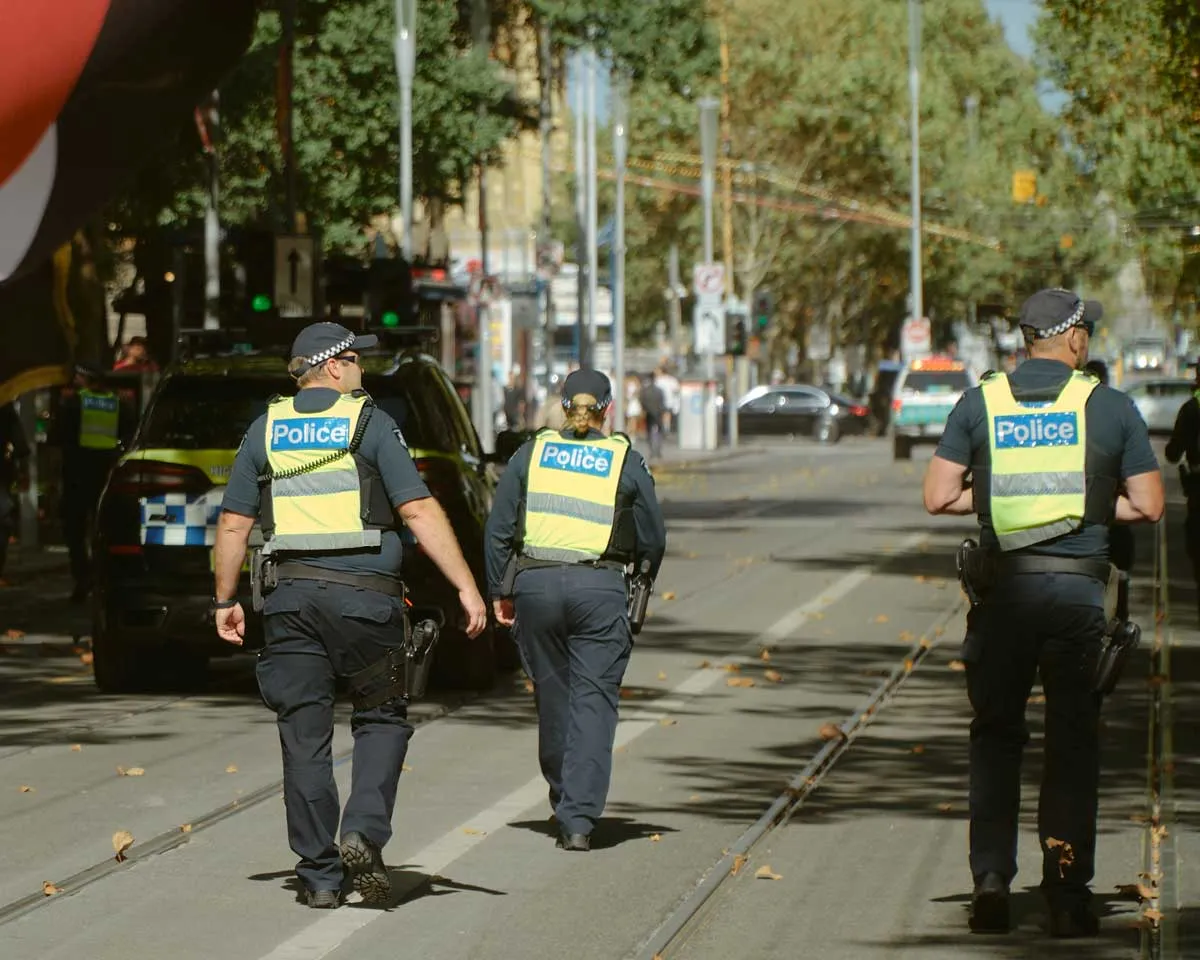
In April 2025, The Alternative First Responder campaign officially launched in Australia, calling for alternative first responses to police that centre care and dignity. Following a year of community consultation and the release of the Alternative First Responder position paper, the campaign was ready to rattle the cage on the public stage.
“100% agreed that, instead of police, first responders must be experienced and skilled in communicating and engaging with individuals in a way that minimises harm and recognises the importance of individual agency.” – Alternative First Responder position paper p2.
Why Do We Need Alternative First Responders?
The position paper outlines the problem. Currently in Australia, there is an over-reliance on police-led responses to community, health and social needs. Research shows us that when police respond to situations requiring care and de-escalation, they cause greater harm to individuals, families and whole communities. Trained to control, contain and use force, the police are not the right people to respond to calls for support:
“This [police] mindset creates the blueprint for the framework of power and control, whilst also creating the need for a ‘victim’ and ‘offender’ – there is little room for nuance. These characteristics are not fit for purpose to respond to social and health needs and do not foster practices such as de-escalation and harm minimisation.” – Alternative First Responder position paper p8.
What Works?
The solution is clear; community organisations, people with lived experience and advocates have been holding the answers and are doing the work. True safety does not come from criminalising mental health, punishing poverty or over-policing. True safety comes from community-led ecosystems of care. Community expertise embedded in models of care, not force, ensure that everyone is treated with dignity and compassion in the first response.
“First Nations models often reject Western frameworks of criminality and punishment, instead embracing culturally grounded approaches that prioritise self-determination and contextualise issues like mental health, homelessness, substance use, violence, and conflict within intergenerational trauma and ongoing colonial violence. These peer-to peer models emphasise cultural safety, First Nations solidarity and resilience.” – Alternative First Responders position paper p12.
The position paper calls on government to boldly invest in alternatives to police and identifies short-term pilot funding as one of the primary failures of government in ensuring communities have access to the right people, the right response, at the right time. The campaign urges governments to move away from systems of over-policing and surveillance, and instead centre community knowledge and expertise in shaping responses grounded in care and cultural safety.
“They [policymakers and government] need to trust that First Nations Peoples know what their community needs and know how to deliver services that address… over policing and prevent unnecessary police intervention,” Murri Watch’s Kristy Lee Costello said.
Who Is Standing With Us For 2026
In one year, the Alternative First Responders campaign has grown to a coalition of 33 national peak bodies, community organisations, researchers and advocates, standing in solidarity against default police-first responses. The campaign has received hundreds of pledges of support from the public and hosted a national symposium with international speakers, community leaders and over 200 in attendance.
With this momentum, the Alternative First Responders campaign drives forward, advocating for community-led solutions and long-overdue policy change in governments across Australia. It moves us towards a future where all people feel safe and supported; where community-led services are sustainably funded; and where governments invest in first responses rooted in dignity, care, and love.
“When we choose to love, we choose to move against fear, against alienation and separation. The choice to love is a choice to connect, to find ourselves in the other.” – Bell Hooks, 2014.
Want To Share Your Story Or Show Your Support?
If you would like to add your voice to the campaign for alternative first responders, you can pledge your support and share your story
www.alternativefirstresponders.com.au
You can also access the Alternative First Responders Position Paper online:
www.alternativefirstresponders.com.au/wp-content/uploads/2025/12/NJP_AFR_Position-Paper2025.pdf
Who Is Standing With Us For 2026
In one year, the Alternative First Responders campaign has grown to a coalition of 33 national peak bodies, community organisations, researchers and advocates, standing in solidarity against default police-first responses. The campaign has received hundreds of pledges of support from the public and hosted a national symposium with international speakers, community leaders and over 200 in attendance.
With this momentum, the Alternative First Responders campaign drives forward, advocating for community-led solutions and long-overdue policy change in governments across Australia. It moves us towards a future where all people feel safe and supported; where community-led services are sustainably funded; and where governments invest in first responses rooted in dignity, care, and love.
“When we choose to love, we choose to move against fear, against alienation and separation. The choice to love is a choice to connect, to find ourselves in the other.” – Bell Hooks, 2014.
Want To Share Your Story Or Show Your Support?
If you would like to add your voice to the campaign for alternative first responders, you can pledge your support and share your story
www.alternativefirstresponders.com.au
You can also access the Alternative First Responders Position Paper online:


