Donate Here

Letters

Strip Searches

By
Nikita

Nikita writes from VIC.

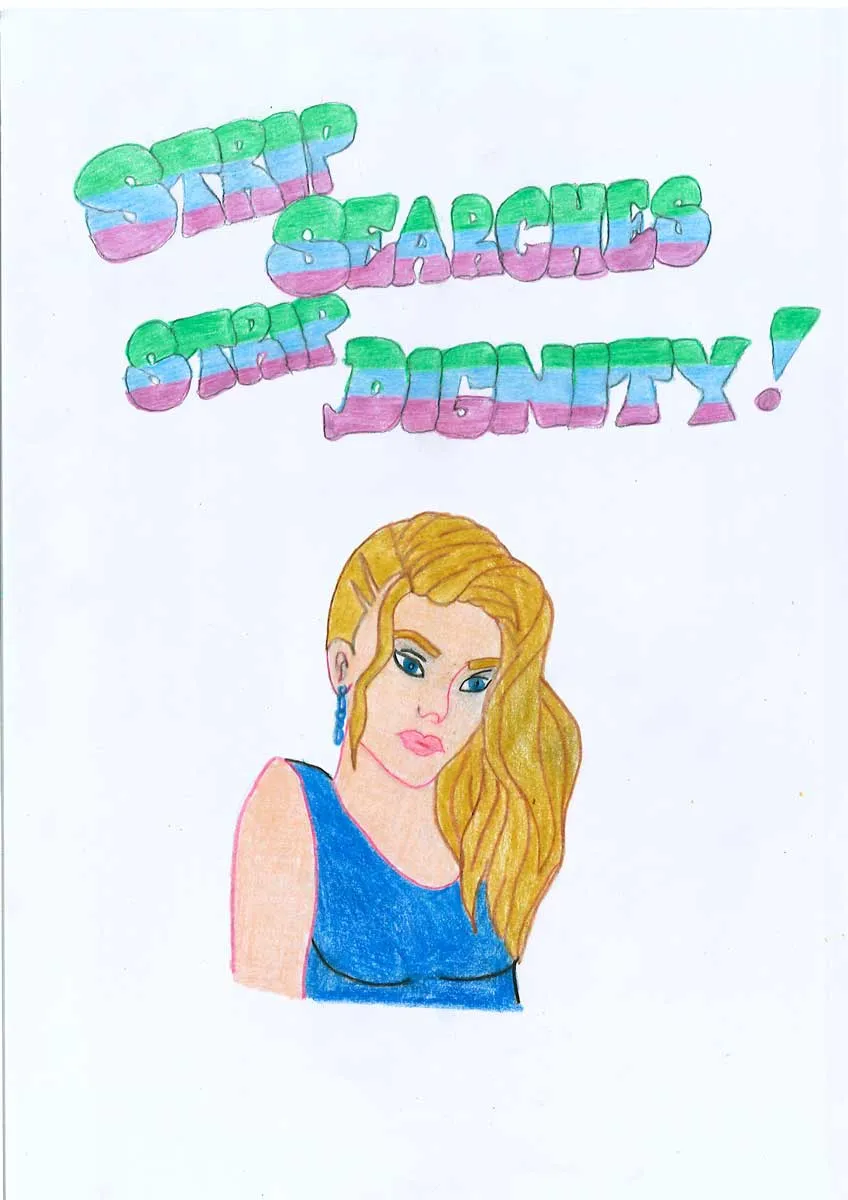
Artwork by Nikita

Strip searching strips our dignity.

It’s daunting enough when you get arrested by police, then placed into custody and thrown into a cell. Then you have to go through a degrading strip search. You have to strip naked, turn around, and “bend and part” in front of complete strangers.

This process is so demoralising and, for many, it triggers a trauma response from past child abuse or sexual abuse. It’s not only humiliating, but it can also lead to mental health issues like depression, body dysmorphia and PTSD, to name a few.

In a lot of cases, incarcerated people are moved between cells and subjected to multiple strip searches before even reaching prison. Then there’s the prison system which, upon arrival, makes people repeat this process in front of multiple strangers, repeating the traumatisation. When attending court proceedings, you are dehumanised even further as the process repeats when you are placed in holding cells at court, and again when you are returned to the prison site.

Strip searches are also conducted if you are placed in management cells within the prison, which can affect normal sexual experiences with yourself and others. This can continue for many years post-incarceration and can develop into serious relational problems.

There are X-ray machines in all prisons now and they can be used as an alternative to these invasive searches.

Please petition against this abuse here:

www.endstripsearching.com

Thank you,

Nikita.

Strip searching strips our dignity.

It’s daunting enough when you get arrested by police, then placed into custody and thrown into a cell. Then you have to go through a degrading strip search. You have to strip naked, turn around, and “bend and part” in front of complete strangers.

This process is so demoralising and, for many, it triggers a trauma response from past child abuse or sexual abuse. It’s not only humiliating, but it can also lead to mental health issues like depression, body dysmorphia and PTSD, to name a few.

In a lot of cases, incarcerated people are moved between cells and subjected to multiple strip searches before even reaching prison. Then there’s the prison system which, upon arrival, makes people repeat this process in front of multiple strangers, repeating the traumatisation. When attending court proceedings, you are dehumanised even further as the process repeats when you are placed in holding cells at court, and again when you are returned to the prison site.

Strip searches are also conducted if you are placed in management cells within the prison, which can affect normal sexual experiences with yourself and others. This can continue for many years post-incarceration and can develop into serious relational problems.

There are X-ray machines in all prisons now and they can be used as an alternative to these invasive searches.

Please petition against this abuse here:

www.endstripsearching.com

Thank you,

Nikita.

This
letter
was originally printed in the
June 2026
edition of About Time.

Staying Out Is the Hard Part

By DJ

Why would anybody want to come back to the system and add to that statistic?

Letters

ISSUE NO. 25

2 MIN READ

Recognising Veterans on the Inside

By Colin

We have an active veterans’ affairs type meeting here every month and an outside group called “Buddy Up” that sends two of their volunteers in.

Letters

ISSUE NO. 25

1 MIN READ

Staying Out of Politics and Working on Myself

By Dylan

I’m only 23 years old but I feel like I’m 43. Being in prison definitely preserves your body but makes your mind and soul feel so much older if you know what I mean.

Letters

ISSUE NO. 25

1 MIN READ

How Do You Cope With Lockdowns?

By Darren

I’ve been in prison for 14 years now, and lockdowns have always been a feature of prison life, but I have also noticed that over the years they have gotten worse and worse.

Letters

ISSUE NO. 25

1 MIN READ

Welcome to About Time

About Time is the national newspaper for Australian prisons and detention facilities

Your browser window currently does not have enough height, or is zoomed in too far to view our website content correctly. Once the window reaches the minimum required height or zoom percentage, the content will display automatically.

Alternatively, you can learn more via the links below.

Donations via GiveNow

Email

Instagram

LinkedIn