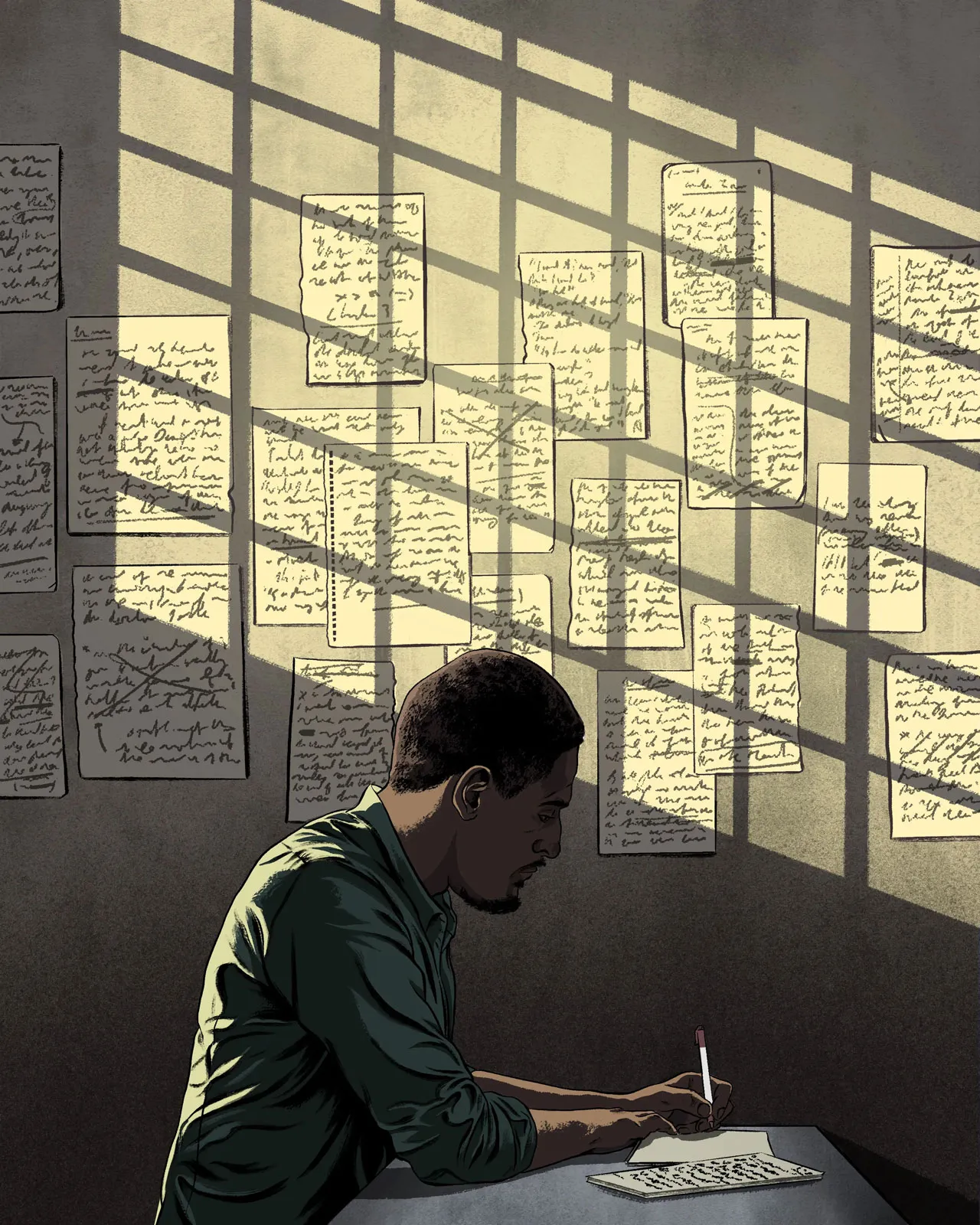
The more I think about life, the more I realise we have been given the greatest gift of all. Think about it, we could, just as easily, not exist if our parents never met each other when they did then we wouldn’t; but they did, and we do. Therefore, I don’t want to waste any more of this precious gift sat behind a prison door.
Lately, my primary focus has been on freedom. With the question of how do you attain it? Consuming my thoughts, my answer to this question may seem paradoxical at first, because whenever people hear the word ‘rules’, they automatically envisage slavery; especially us prisoners, being the antisocial bunch we are. However, it is by imposing a disciplinary structure on ourselves that leads to the development of free men and women. To put it another way, it is by consciously creating our own rules for life, and then imposing them on ourselves, that we attain freedom.
Everybody lives by some sort of rules, even criminals. Whether we realise it or not, we all make conscious or unconscious rules for ourselves. Rules are what enable us to make decisions and pursue our aims, they are the framework we put around behaviour.
There are three rules that I now live by:
- All progress takes place outside of your comfort-zone. Our comfort-zone is somewhere we know, a place where we feel safe, and, as the name suggests – a zone in which we are comfortable. Therefore, if all progress takes place outside of this, then by stepping out into the unknown, facing our fears and embracing the uncomfortable feelings we experience, we grow as a result of it.
- You get what you give. As the saying goes – what you put in is what you get back out. We don’t get what we wish for. Therefore, by being diligent in the pursuit of the things we want, we can achieve it.
- You are only as good as the company you keep. Other people have more of an influence on us than we realise.
If we are around those who commit crime and take drugs then we will do the same, because we tend to morph into the people we spend the most time with. Therefore, it is key to get around those we want to become like, because it is easy for us to take on the habits of those we are around.
The biggest problem I have is that I am prisoner who does not have a release date. A lot of things are out of my control. However, by creating my own rules and imposing them on my life, it has enabled me to start making the right decisions, for a change; all of which have put me in the best possible position to attain release at my next oral hearing.
The more I think about life, the more I realise we have been given the greatest gift of all. Think about it, we could, just as easily, not exist if our parents never met each other when they did then we wouldn’t; but they did, and we do. Therefore, I don’t want to waste any more of this precious gift sat behind a prison door.
Lately, my primary focus has been on freedom. With the question of how do you attain it? Consuming my thoughts, my answer to this question may seem paradoxical at first, because whenever people hear the word ‘rules’, they automatically envisage slavery; especially us prisoners, being the antisocial bunch we are. However, it is by imposing a disciplinary structure on ourselves that leads to the development of free men and women. To put it another way, it is by consciously creating our own rules for life, and then imposing them on ourselves, that we attain freedom.
Everybody lives by some sort of rules, even criminals. Whether we realise it or not, we all make conscious or unconscious rules for ourselves. Rules are what enable us to make decisions and pursue our aims, they are the framework we put around behaviour.
There are three rules that I now live by:
- All progress takes place outside of your comfort-zone. Our comfort-zone is somewhere we know, a place where we feel safe, and, as the name suggests – a zone in which we are comfortable. Therefore, if all progress takes place outside of this, then by stepping out into the unknown, facing our fears and embracing the uncomfortable feelings we experience, we grow as a result of it.
- You get what you give. As the saying goes – what you put in is what you get back out. We don’t get what we wish for. Therefore, by being diligent in the pursuit of the things we want, we can achieve it.
- You are only as good as the company you keep. Other people have more of an influence on us than we realise.
If we are around those who commit crime and take drugs then we will do the same, because we tend to morph into the people we spend the most time with. Therefore, it is key to get around those we want to become like, because it is easy for us to take on the habits of those we are around.
The biggest problem I have is that I am prisoner who does not have a release date. A lot of things are out of my control. However, by creating my own rules and imposing them on my life, it has enabled me to start making the right decisions, for a change; all of which have put me in the best possible position to attain release at my next oral hearing.


